
Effect of Glucagon-like peptide-1 Receptor Agonists on Cardiac Arrhythmias: Systematic Review and Meta-analysis
Abstract Body (Do not enter title and authors here): Background and aims Glucagon-like peptide-1 receptor agonists (GLP-1RAs) have transformed the management of type 2 diabetes mellitus(T2DM) and overweight/obesity, and are increasingly used for the secondary prevention of atherosclerotic cardiovascular disease and heart failure. However, their effect on different types of cardiac arrhythmias is uncertain. Therefore, we conducted a systematic review and meta-analysis of randomized controlled trials (RCTs) to evaluate the anti-arrhythmic effect of GLP-1RA therapy.
Methods We performed a comprehensive systematic search following PRISMA guidelines across five electronic databases (Cochrane, Embase, PubMed, Scopus and Web of Science) to identify all RCTs that evaluated GLP-1RAs in individuals with T2DM or overweight/obesity. We included all placebo-controlled studies that reported data on the following cardiac arrhythmic events: atrial flutter/fibrillation, sick sinus syndrome, supraventricular tachycardia, premature depolarizations, conduction system disease (atrioventricular, bundle branch, and fascicular blocks), and ventricular arrhythmias (tachycardia and fibrillation). Meta-analyses were conducted using a random-effects model and subgroup analyses were performed to estimate odds ratios (OR).
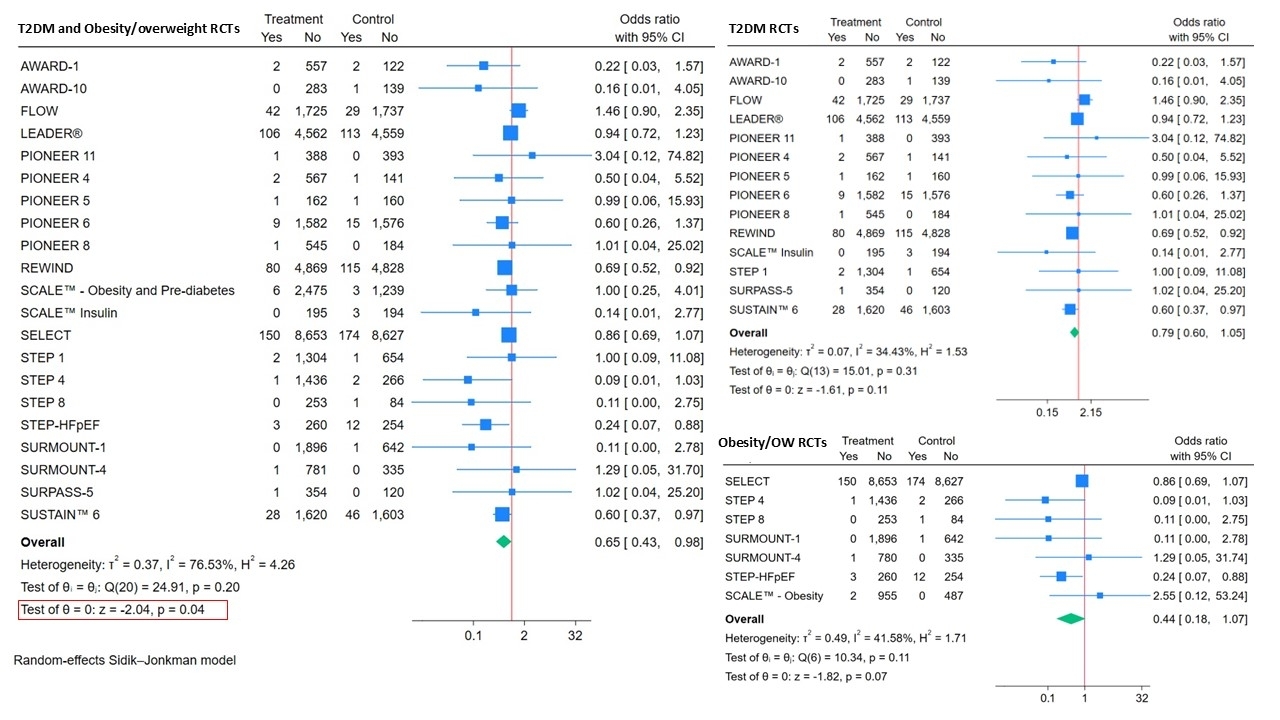
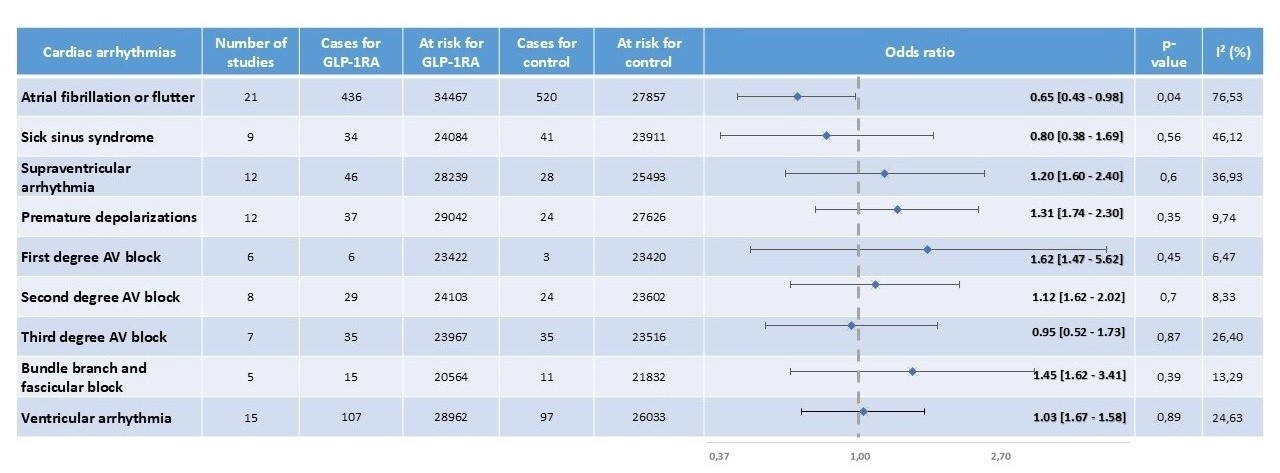
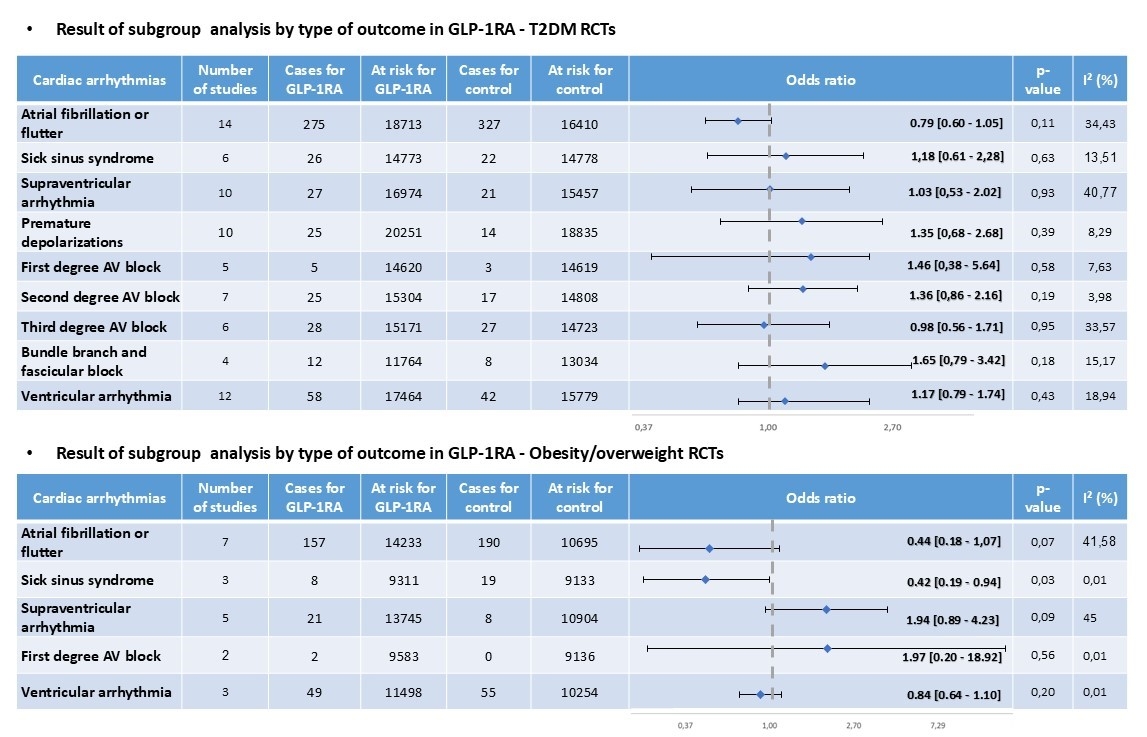
Results The analysis included 39 RCTs that enrolled 79,674 participants, with an average follow-up time of 78.9 ± 54.5 weeks. Treatment with GLP-1RAs was associated with a 35% reduction in the risk of atrial fibrillation and atrial flutter compared to placebo (OR 0.65, 95% confidence interval [CI] 0.43–0.98; p =0.04) (Figure 1). No significant differences were observed between GLP-1RAs and placebo with respect to other cardiac arrhythmic events (Figure 2). In subgroup analyses, long-acting GLP-1RA use was related with a significantly lower incidence of sick sinus syndrome in individuals with overweight/obesity (OR 0.42, 95% CI 0.19–0.94; p = 0.03), an effect not observed in patients with T2DM (Figure 3).
Conclusions: Our systematic review of all GLP-1RA RCTs reporting cardiac arrhythmic events found that treatment with GLP-1RA significantly reduces the incidence of atrial fibrillation and atrial flutter but not other arrhythmias. Subgroup analyses suggest a reduction in sick sinus syndrome in patients with overweight/obesity that are being treated with long-acting formulations. Our study provides additional evidence of the benefit of GLP-1RAs. Patients at increased risk of arrhythmias may be prioritized for GLP-1RA therapy.
Patino, Carlos
( Mount Auburn Hospital
, Cambridge
, Massachusetts
, United States
)
Lo, Shao-wei
( Harvard School of Public Health
, Boston
, Massachusetts
, United States
)
Xanthavanij, Nutchapon
( Mount Auburn Hospital
, Cambridge
, Massachusetts
, United States
)
Wang, Tsu-hsien
( University at Buffalo-Catholic Health System
, Buffalo
, New York
, United States
)
See, Xin Ya
( Unity Hospital
, Rochester
, New York
, United States
)
Chiang, Cho Han
( Harvard Medical School
, Cambridge
, Massachusetts
, United States
)
Kazi, Dhruv
( BIDMC
, Boston
, Massachusetts
, United States
)
Author Disclosures:
Carlos Patino:DO NOT have relevant financial relationships
| Shao-Wei Lo:DO NOT have relevant financial relationships
| Nutchapon Xanthavanij:No Answer
| Tsu-Hsien Wang:DO NOT have relevant financial relationships
| Xin Ya See:No Answer
| Cho Han Chiang:DO NOT have relevant financial relationships
| Dhruv Kazi:DO NOT have relevant financial relationships