Automated Aortic Valve Motion Analysis from Echocardiography for Efficient Classification of Aortic Stenosis Severity
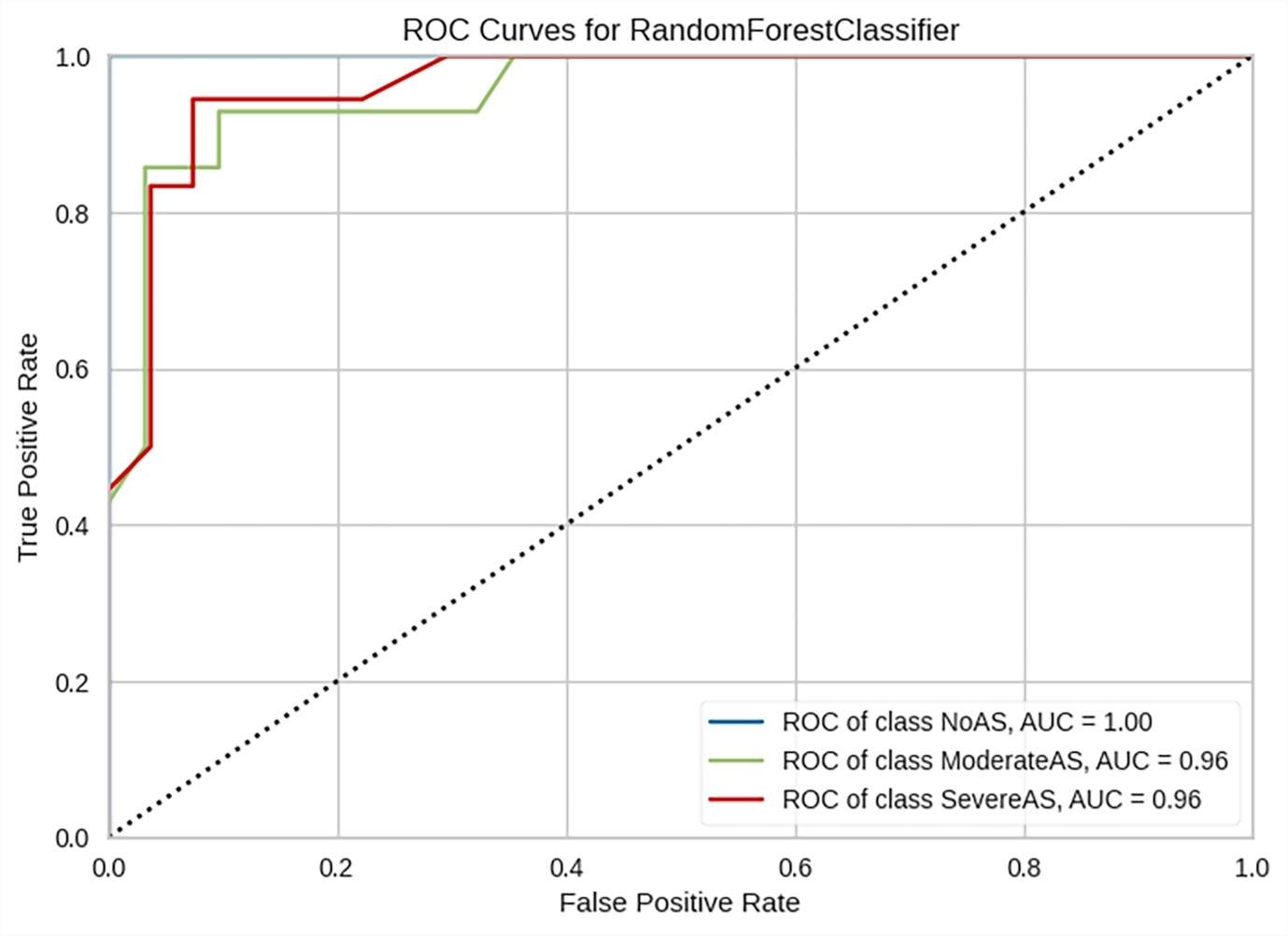
Abstract Body (Do not enter title and authors here): Background: Aortic stenosis (AS) severity assessment traditionally relies on Doppler echocardiography, which is time-consuming and may be inconclusive in a subset of patients. Efficient, automated approaches using routinely acquired 2D echocardiographic views could support clinical workflows by rapidly classifying AS severity with minimal user input. Research Question: Can a computer vision algorithm applied to a single echocardiographic view efficiently classify AS severity based on aortic valve leaflet motion? Methods: We conducted a retrospective analysis of 223 echocardiograms from patients undergoing routine clinical evaluation for suspected AS across the entire severity spectrum. All studies included parasternal long-axis (PLAX) views for visualising aortic valve motion. A semi-automated computer vision algorithm was developed to track the angular motion of the right coronary cusp (RCC) of the aortic valve. From this, we derived a novel quantitative feature, leaflet angular displacement. To normalise for hemodynamic variability, leaflet displacement was indexed by transaortic volumetric flow rate derived from Doppler measurements, resulting in a derived metric termed displacement:flow ratio. AS severity was classified into three categories – no AS, moderate AS, and severe AS – based on current clinical guidelines. We evaluated model performance using area under the receiver operating characteristic curve (AUC), accuracy, sensitivity, and specificity. Results: Of the 223 patients included, 65 had no AS, 69 had moderate AS, and 89 had severe AS. The algorithm achieved an overall classification accuracy of 87.13%, with an AUC of 0.96 (Figure 1), demonstrating excellent discriminative capability. The sensitivity for detecting AS was 95.24%, while the specificity was 84.38%. Performance was highest in studies with optimal leaflet visualisation, where the algorithm exhibited robust tracking and consistent measurements. Conclusions: Leaflet motion analysis from the PLAX view using computer vision enables efficient classification of AS severity without the need for Doppler data. This approach holds promise as a rapid screening tool to augment existing clinical workflows, particularly where Doppler measurements are challenging or unavailable. Future work will focus on improving robustness to suboptimal imaging, extending the approach to incorporate additional echocardiographic views, and validating model performance to support generalizability and translation.
Mohammed, Farhan
(
Victor Chang Cardiac Research
, Sydney , New South Wales , Australia )
Meredith, Tom
(
Victor Chang Cardiac Research
, Sydney , New South Wales , Australia )
Pomeroy, Amy
(
Victor Chang Cardiac Research
, Sydney , New South Wales , Australia )
Barbieri, Sebastiano
(
University of New South Wales
, Sydney , New South Wales , Australia )
Meijering, Erik
(
University of New South Wales
, Sydney , New South Wales , Australia )
Kovacic, Jason
(
Victor Chang Cardiac Research
, Sydney , New South Wales , Australia )
Hayward, Christopher
(
St Vincents Hospital, Sydney
, St Leonards , New South Wales , Australia )
Muller, David
(
St Vincent's Hospital, Sydney
, Darlinghurst , New South Wales , Australia )
Feneley, Michael
(
St Vincents Hospital
, Darlinghurst , New South Wales , Australia )
Namasivayam, Mayooran
(
St Vincent's Hospital Sydney
, Darlinghurst , New South Wales , Australia )
Author Disclosures:
Farhan Mohammed:DO NOT have relevant financial relationships
| Mayooran Namasivayam:No Answer
| Tom Meredith:No Answer
| Amy Pomeroy:No Answer
| Sebastiano Barbieri:DO NOT have relevant financial relationships
| Erik Meijering:No Answer
| Jason Kovacic:DO NOT have relevant financial relationships
| Christopher Hayward:No Answer
| David Muller:DO have relevant financial relationships
;
Consultant:Medtronic:Active (exists now)
; Researcher:HighLife Medical:Active (exists now)
; Researcher:VDyne:Active (exists now)
; Consultant:Edwards LifeSciences:Active (exists now)
; Consultant:Abbott:Active (exists now)
| Michael Feneley:DO NOT have relevant financial relationships