High-Intensity Interval Training Versus Moderate Continuous Training in Heart Failure with Preserved Ejection Fraction Patients with Chronotropic Incompetence: A 2025 Systematic Review
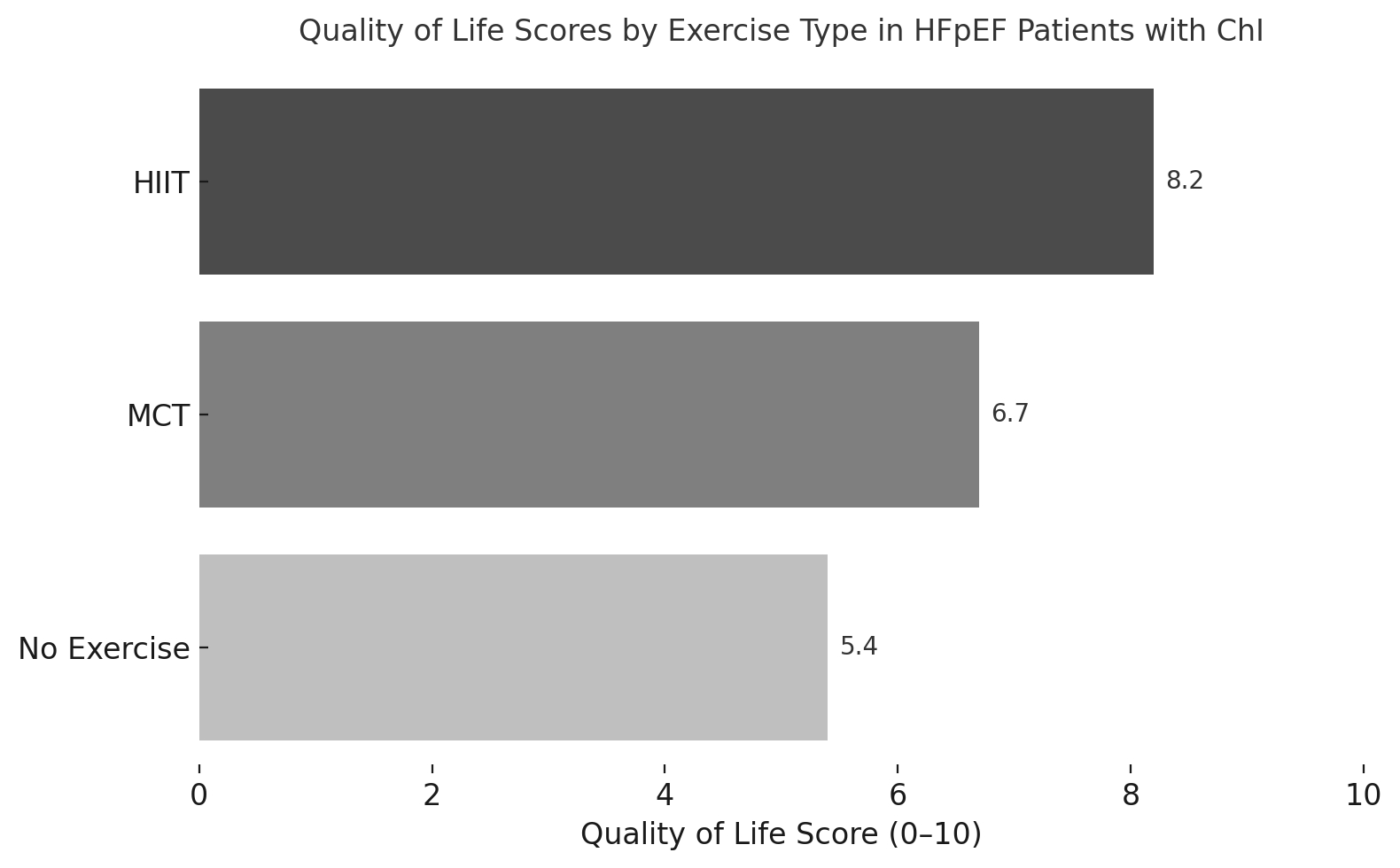
Abstract Body (Do not enter title and authors here): Background: Heart failure with preserved ejection fraction (HFpEF) frequently co-occurs with chronotropic incompetence (ChI), impairing the heart's ability to appropriately increase its rate during exertion. This combination causes significant functional impairment and diminished quality of life. While traditional moderate-intensity continuous training (MCT) yields limited cardiovascular improvements, high-intensity interval training (HIIT) – featuring alternating high-effort intervals and recovery – may offer superior benefits. Introduction: Although HFpEF and ChI are recognized as key drivers of declining function, the optimal rehabilitation strategy is debated. Emerging evidence indicates HIIT might improve peak oxygen uptake (VO2peak) and alleviate symptoms more effectively than MCT. This review synthesizes current evidence comparing the clinical effectiveness of HIIT versus MCT for improving outcomes in patients with HFpEF and ChI. Methods: A PRISMA-guided review searched PubMed, Embase, and Cochrane Library (2015–2025) for studies comparing HIIT vs. MCT in adults with HFpEF and ChI, reporting VO2peak or physiologic adaptation. Eligible designs included RCTs, meta-analyses, and mechanistic studies. Of 412 records, 28 full texts were reviewed; 8 met inclusion. Extracted data included study design, population, interventions, and outcomes. QoL was assessed using tools like the Kansas City Cardiomyopathy Questionnaire (KCCQ), evaluating social limits, function, and symptoms. Results: Eight studies met criteria: three RCTs, two meta-analyses, and three mechanistic reports. The TRAINING-HR trial (n=120) showed VO2peak gains of +2.3 mL/kg/min (p<0.01) and improved QoL with HIIT. A 2025 meta-analysis (n=1,027) found greater VO2peak gains with HIIT (+1.7 mL/kg/min), though functional scores were similar. Mechanistic data linked HIIT to enhanced chronotropic response, autonomic flexibility, and vascular compliance. Across studies, HIIT showed consistent trends toward improved cardiopulmonary outcomes and tolerability. Limitations included short duration, small samples, and underrepresentation of older or multimorbid patients. Conclusion: Emerging data suggest HIIT may outperform steady regimens in improving VO2peak and physical capacity in HFpEF/ChI. Intermittent training improves performance, efficiency, and symptoms. While long-term effects remain unclear, findings support incorporating intensity-driven rehabilitation into care for this group.
Asif, Sami
(
Rowan-Virtua SOM
, Stratford , New Jersey , United States )
Mushtaq, Ayesha
(
Rowan-Virtua SOM
, Stratford , New Jersey , United States )
Author Disclosures:
Sami Asif:DO NOT have relevant financial relationships
| Ayesha Mushtaq:DO NOT have relevant financial relationships