Use Of Glucagon Like Peptide 1 Receptor Agonists In Non Diabetic Patients With Dilated Cardiomyopathy
Abstract Body (Do not enter title and authors here): Background: Glucagon-like peptide 1 (GLP-1) receptor agonists have demonstrated cardiovascular benefits in diabetic patients. However, their role in patients with dilated cardiomyopathy (DCM) without diabetes remains unclear.
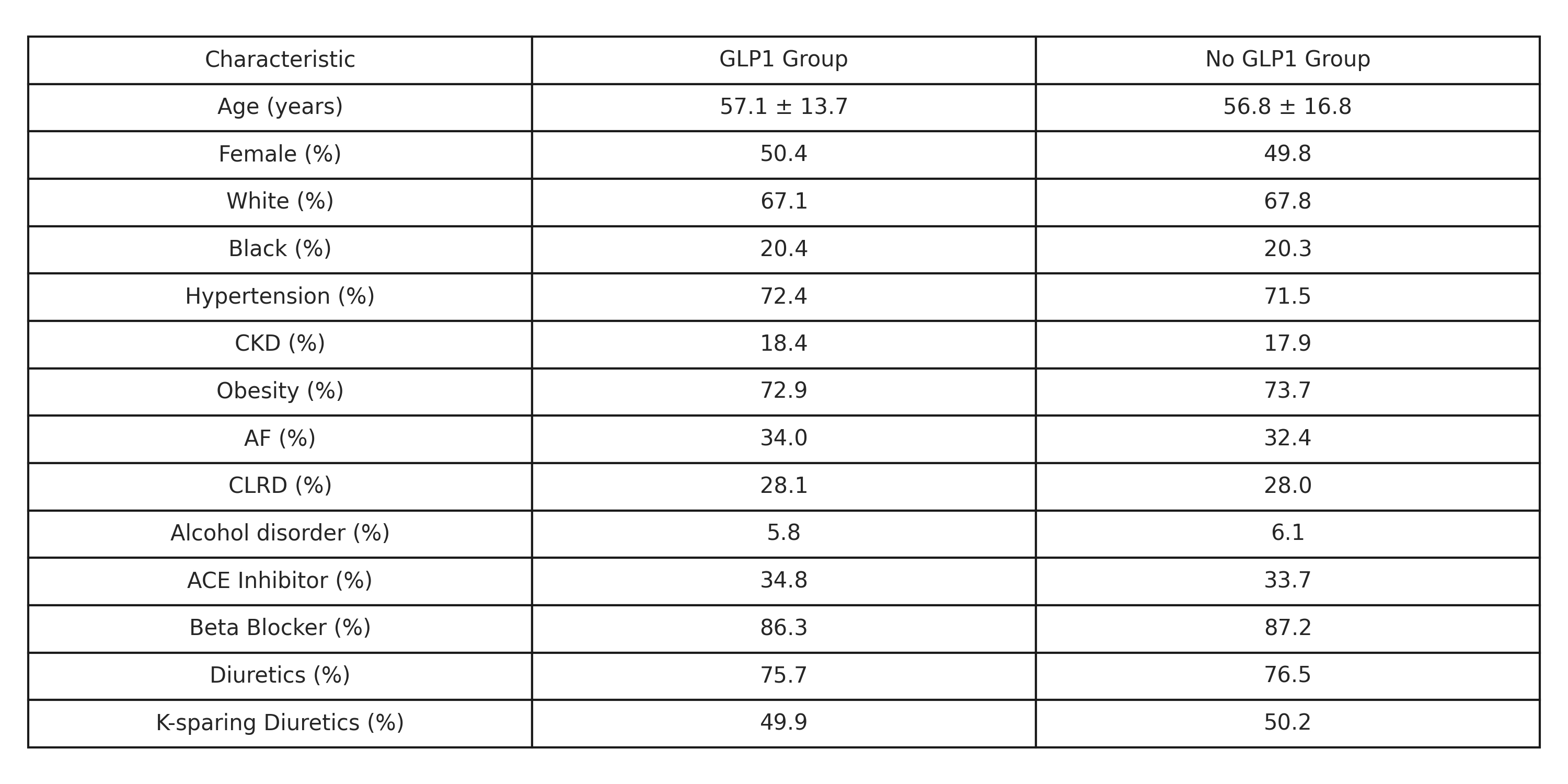
Methods: We conducted a real-world, retrospective cohort study using the TriNetX Global Collaborative Network. Adults aged 18 or older with a diagnosis of DCM (ICD-10 I42.0) and no diagnosis of diabetes (ICD-10 E10–E13) were identified. Patients were stratified based on GLP-1 receptor agonist use (liraglutide, semaglutide, dulaglutide, lixisenatide, tirzepatide, pramlintide). Propensity score matching (1:1) was performed to balance demographics, comorbidities, and cardiovascular medications, yielding 2,871 patients per group. Outcomes were assessed from 1 day to 365 days after the index event. The primary outcome was all-cause mortality; secondary outcomes included hospitalization, myocardial infarction (MI), and heart failure exacerbation (HF-exa). Median follow-up time was approximately 11 months in both groups.
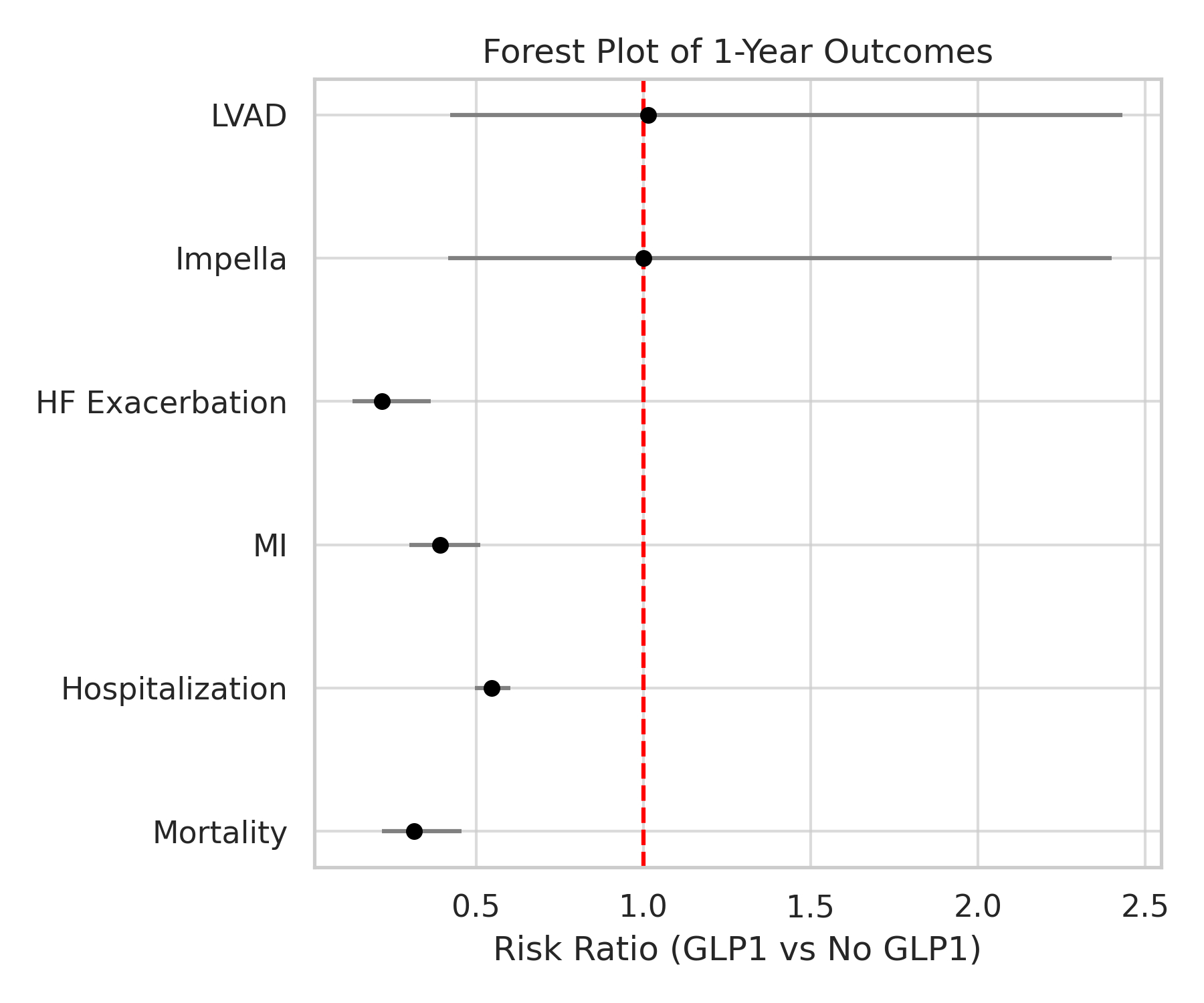
Results: GLP-1 receptor agonist use was associated with significantly lower risks of all-cause mortality (1.3% vs 4.1%; risk ratio [RR] 0.316; 95% CI 0.219–0.456; p<0.001), hospitalization (17.5% vs 32.0%; RR 0.547; p<0.001), MI (2.5% vs 6.5%; RR 0.392; p<0.001), and HF-exa (0.8% vs 3.7%; RR 0.220; p<0.001). Kaplan-Meier analysis confirmed higher 1-year survival probabilities and lower event rates in the GLP-1 group across all endpoints. No significant differences were observed in use of mechanical circulatory support devices (LVAD or Impella).
Conclusion: In this real-world, propensity-matched study of non-diabetic patients with DCM, GLP-1 receptor agonists were associated with substantial reductions in 1-year mortality, hospitalization, MI, and HF exacerbation. Although a 3-year follow-up window was available, median follow-up (~11 months) supported 1 year as the most reliable endpoint. Limitations include lack of LVEF or biomarker data, unmeasured confounding, and inability to confirm long-term medication adherence or persistence. Additionally, GLP-1 use may reflect closer outpatient monitoring or healthier behaviors not captured in the dataset. These findings warrant prospective trials to evaluate GLP-1 receptor agonists as cardioprotective therapies in heart failure beyond glycemic control.
Jarrar, Yaman
(
Lehigh Valley Health Network
, Allentown , Pennsylvania , United States )
Alkhatib, Ahmad
(
MedStar Health
, Baltimore , Maryland , United States )
Al Shaikhli, Mustafa
(
Rutgers-Jersey City Medical Center
, Jersey City , New Jersey , United States )
Otabor, Emmanuel
(
Jefferson Einstein Philadelphia
, Philadelphia , Pennsylvania , United States )
Alomari, Laith
(
Jefferson Einstein Philadelphia
, Philadelphia , Pennsylvania , United States )
Author Disclosures:
Yaman Jarrar:DO NOT have relevant financial relationships
| Ahmad Alkhatib:DO NOT have relevant financial relationships
| Mustafa Al shaikhli:DO NOT have relevant financial relationships
| Emmanuel Otabor:DO NOT have relevant financial relationships
| Laith Alomari:No Answer