
Logo

American Heart Association

  19
  0


Final ID: Sa2078

Telemetry Optimization: Improving Efficiency and Adherence to Cardiac Monitoring Guidelines

Abstract Body (Do not enter title and authors here): Background
The American Heart Association (AHA) provides telemetry guidelines for hospitalized patients. However, 43% of telemetry orders lack an AHA-recommended indication. Telemetry use beyond the guidelines leads to unnecessary testing, increased lengths of stay, and increased healthcare cost. Using the FOCUS-PDSA framework, we aimed to significantly decrease both inappropriate telemetry orders and expired telemetry patient-days.
Methods
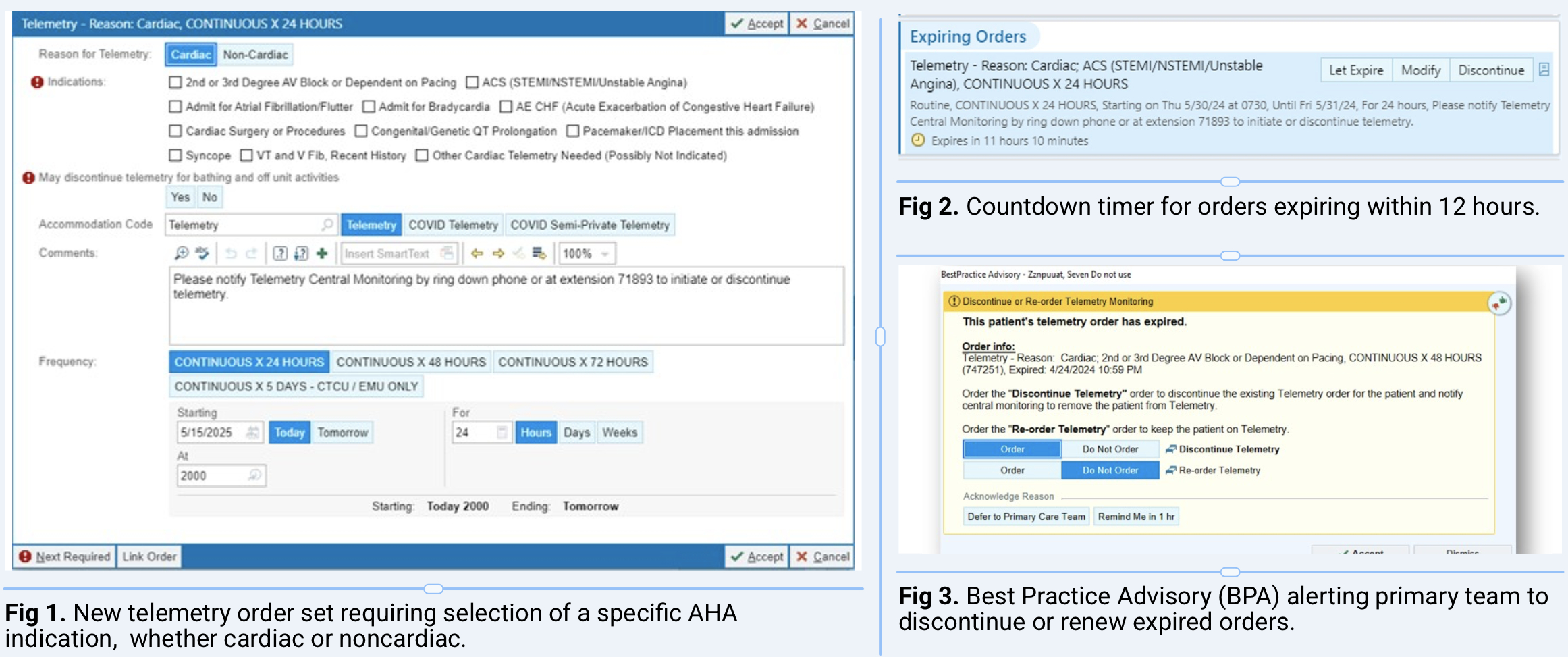
Pre-intervention data were obtained via retrospective study of telemetry monitoring data on three 16-bed medical/surgical units at Jennie Sealy Hospital in December 2023. We classified telemetry orders as appropriate or inappropriate and subsequently modified the EPIC telemetry order set, requiring selection of AHA indication. A best practice advisory was also created to prompt renewal or discontinuation of expired orders. Post-intervention data was collected in July 2024. A chi-square test then compared the proportion of inappropriate telemetry orders and expired days pre- and post-intervention with a significance threshold of p<0.05.
Results
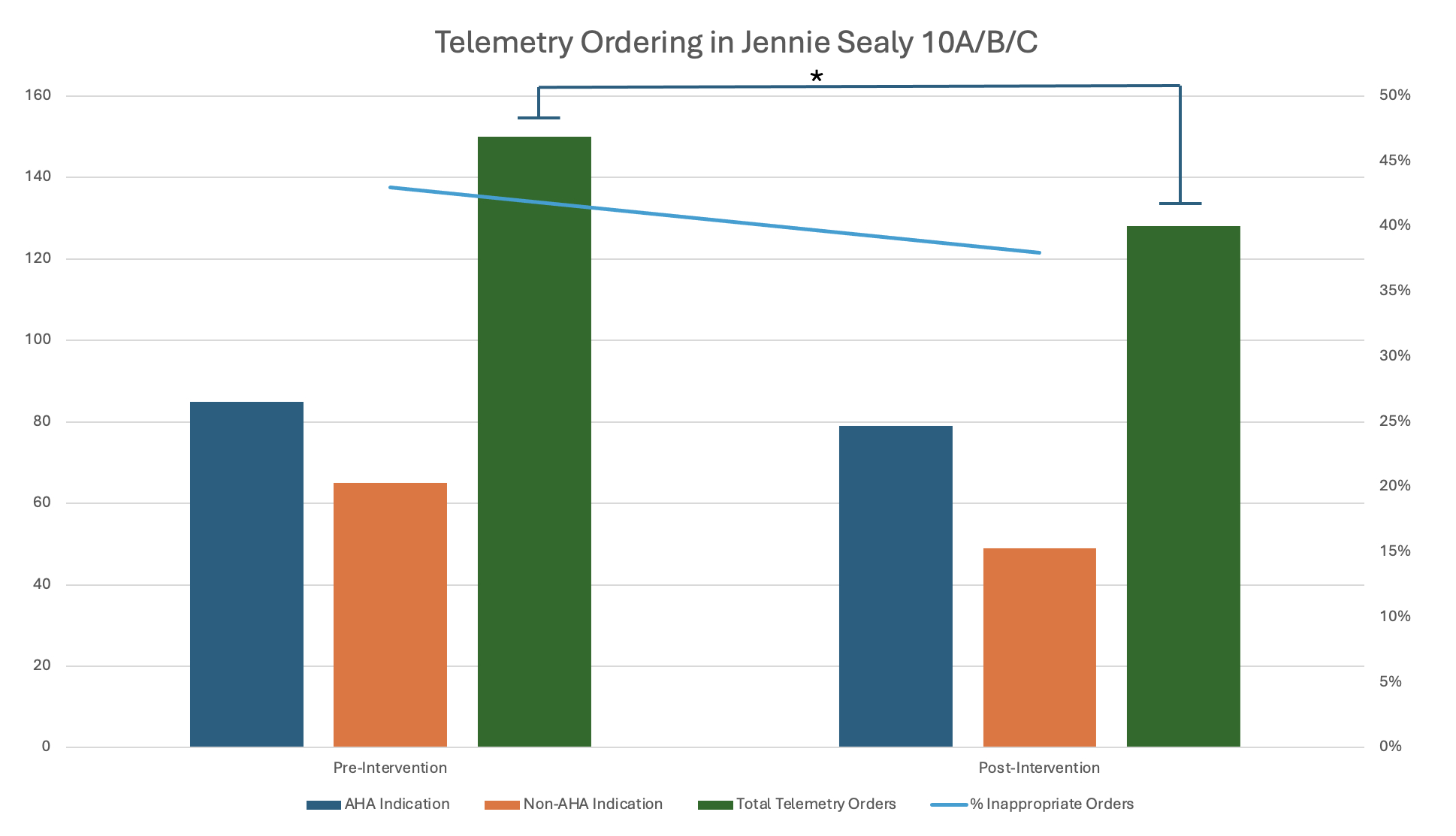
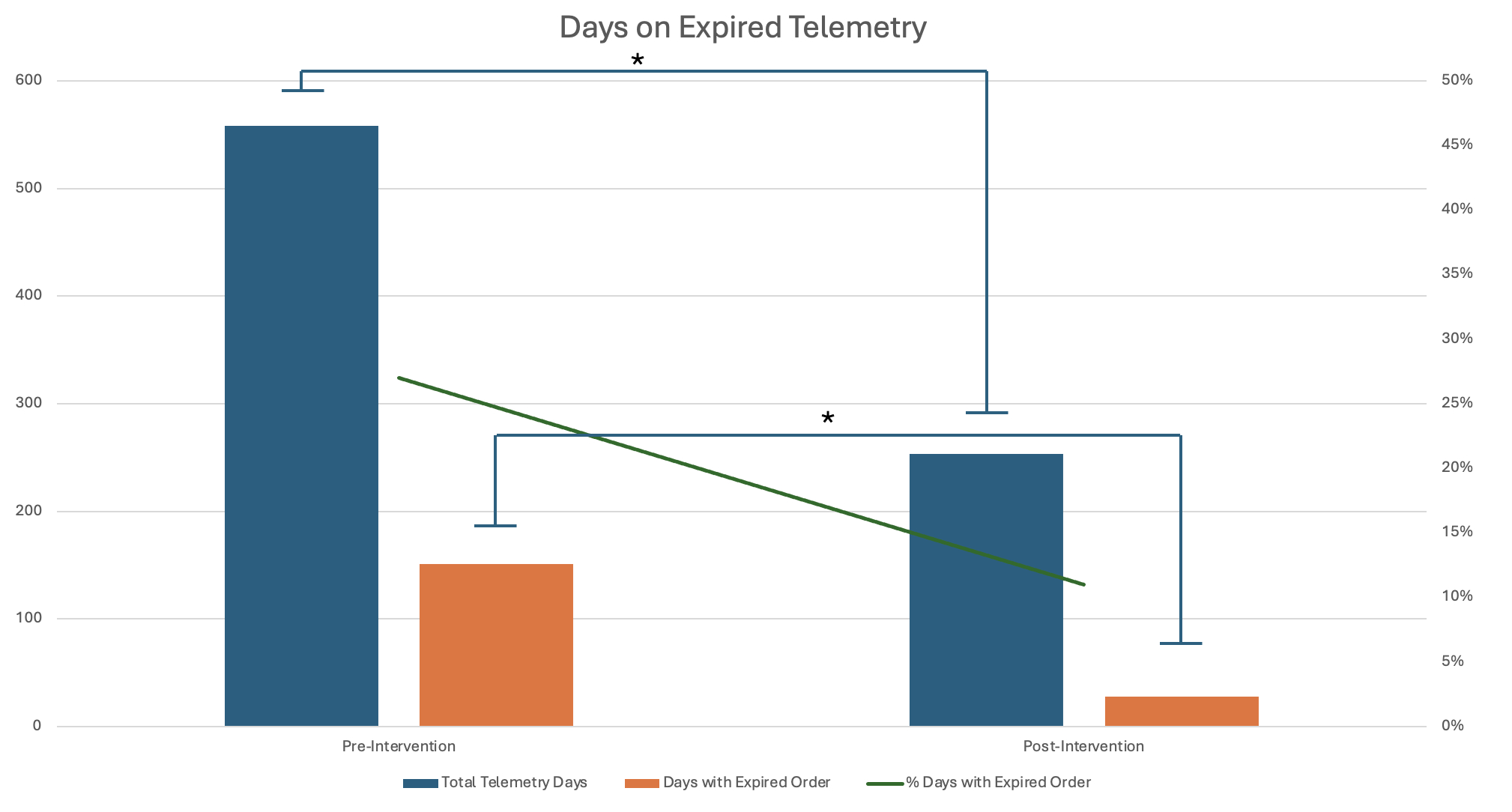
The pre-intervention dataset included 150 telemetry orders, with 43% placed under inappropriate indications. Of the 558 total telemetry patient-days, 151 were with expired telemetry orders (27%). In comparison, the post-intervention dataset included 128 telemetry orders, with 38% placed under inappropriate indications. Of the 253 total telemetry patient-days, 28 were with expired telemetry orders (11%). Overall, there were 15% fewer telemetry orders with a 55% decrease in telemetry patient-days. While the 12% reduction in inappropriate orders was not statistically significant, we significantly reduced expired telemetry days by 59% (p<0.001).
Conclusions
The implemented interventions encourage physicians to reconsider the necessity of telemetry for hospitalized patients, likely improving adherence to AHA guidelines. The significant reduction in expired telemetry patient-days demonstrates efficient management of telemetry monitoring, with an estimated $4,200.00 saved during the study period and a projected annual savings of over $50,000 based on prior cost analyses. Next PDSA cycle will include an educational component and continued optimization of our order set. Optimizing telemetry use in the inpatient setting enhances the ability of healthcare teams to detect critical arrhythmias and avoid unnecessary procedures, ultimately improving clinical efficiency and reducing healthcare costs.
  • Khwaja, Bisma  ( UTMB , Galveston , Texas , United States )
  • Dostal, Carlos  ( UTMB , Galveston , Texas , United States )
  • Author Disclosures:
    Bisma Khwaja: DO NOT have relevant financial relationships | Carlos Dostal: No Answer
Meeting Info:

Scientific Sessions 2025

2025

New Orleans, Louisiana

Session Info:

Risk Redefined: Climate, Chronic Conditions, and the Cost of Cardiovascular Care

Saturday, 11/08/2025 , 02:30PM - 03:30PM

Abstract Poster Board Session

More abstracts on this topic:
Acute clinical outcomes following virtual reality implementation in the electrophysiology laboratory

Romano Letizia, Calvelli Pierangelo, Quirino Gianluca, Tomaselli Caterina, Talarico Antonello, Pasqua Pino, Curcio Antonio

A Report of 2000 Consecutive Patients Undergoing Imaging with Pacemakers and ICDs in the MRI Environment; the Additive Value of a Large, Prospective ~20-Year Observational Study

Biederman Robert, Shah Moneal, Boltralik Mark, Williams Ronald, Lombardi Richard, Mangini Francesco, Doyle Mark

More abstracts from these authors:
Interatrial Septal Thickening as a Predictor of Atrial Fibrillation and Structural Heart Remodeling

Swanson Dallin, Abdelmaseih Ramy, Kochkarian Thierry, Amin Zahir, Khwaja Bisma, Yaqub Maha, Saxena Ritika, Khalife Wissam

You have to be authorized to contact abstract author. Please, Login
Not Available