
Logo

American Heart Association

  19
  0


Final ID: Sa3118

Isolated Polyvalvular Heart Disease Associated with a TAB2 Variant: Expanding the Phenotypic Spectrum of TAB2-Related Cardiovascular Disease

Abstract Body (Do not enter title and authors here): Polyvalvular heart disease (PVD) has historically been associated with syndromic conditions such as Trisomy 13, Trisomy 18, and connective tissue disorders. Emerging evidence suggests that rare, single-gene variants can underlie isolated or familial valvular disease. TAB2 mutations have primarily been reported in syndromic congenital heart disease (CHD) with extracardiac anomalies. However, nonsyndromic presentations remain underrecognized.

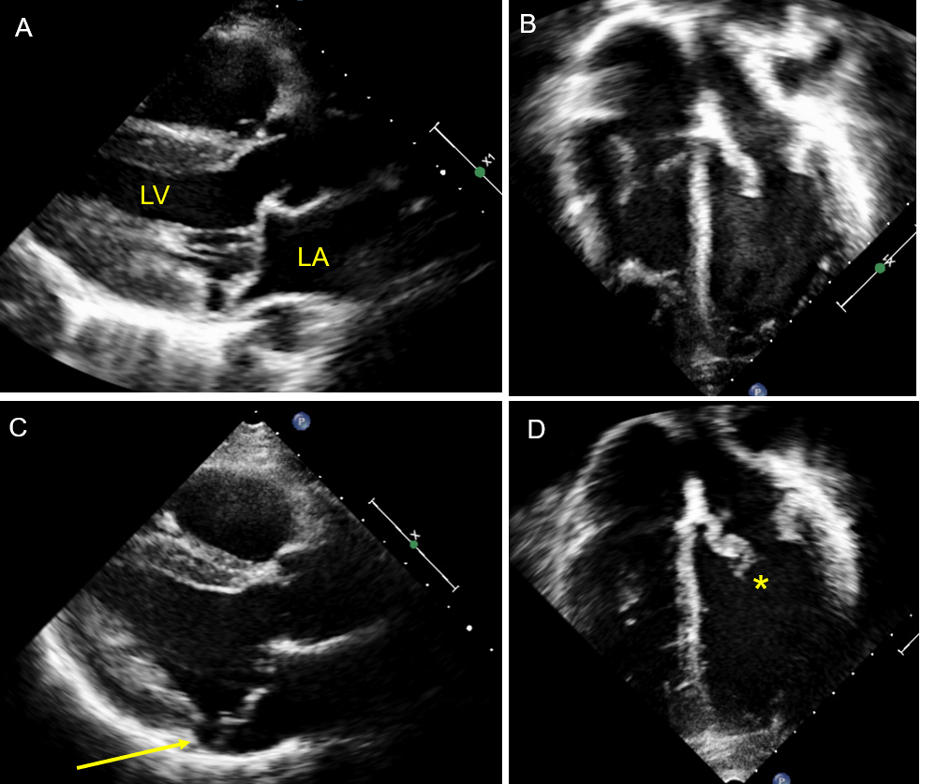
We report a 20-year-old nonsyndromic female with a history of PVD identified at age 6 following evaluation for palpitations. Early echocardiography revealed mitral valve prolapse (MVP) without regurgitation and tricuspid valve prolapse with mild regurgitation. By age 13, echocardiography demonstrated redundant dysplastic atrioventricular valves with mild regurgitation across all valves. Physical exam revealed hypermobility (Beighton score 9) without other cutaneous or skeletal features of a connective tissue disorder. Genetic testing was negative for FLNA variants.
A three-generation family history revealed MVP and progressive valvular disease in the patient’s mother and maternal aunt. The aunt, who experienced heart failure and required implantable cardioverter-defibrillator (ICD) placement and ablation for ventricular arrhythmias, was found to carry a heterozygous nonsense variant in TAB2 (c.430C>T; Q135X). This variant is absent in large population databases and is classified as likely pathogenic. Cascade testing identified the variant in the proband and mother, confirming segregation with disease. The maternal grandmother lacked the variant and was asymptomatic.

This case expands the phenotypic spectrum of TAB2-associated cardiovascular disease to include nonsyndromic, isolated polyvalvular heart disease with connective tissue features. Notably, there were no extracardiac anomalies, distinguishing this presentation from classic syndromic TAB2-related disease. Prior reports have highlighted the presence of developmental delays and this was not present in this family, with all affected members completing college degrees. It highlights the value of cascade genetic testing and comprehensive family history in evaluating PVD of uncertain etiology. Clinicians should consider TAB2 as a candidate gene in familial valvular disease—even in the absence of syndromic features—to guide early diagnosis, surveillance, and risk stratification.
  • Patel, Paula  ( Emory University; CHOA , Atlanta , Georgia , United States )
  • Sallee, Denver  ( Children's Healthcare of Atlanta Cardiology , Atlanta , Georgia , United States )
  • Demo, Erin  ( Children's Healthcare of Atlanta Cardiology , Atlanta , Georgia , United States )
  • Iannucci, Glen  ( Children's Healthcare of Atlanta Cardiology , Atlanta , Georgia , United States )
  • Author Disclosures:
    Paula Patel: DO NOT have relevant financial relationships | Denver Sallee: No Answer | erin demo: No Answer | Glen Iannucci: No Answer
Meeting Info:

Scientific Sessions 2025

2025

New Orleans, Louisiana

Session Info:

Mitral Focus: Advances in Mitral Valve Disease Mechanisms and Management

Saturday, 11/08/2025 , 10:30AM - 11:30AM

Abstract Poster Board Session

More abstracts on this topic:
Early Reported Events with the TriClip™ System for Transcatheter Tricuspid Valve Repair: Insights from FDA's MAUDE Database

Khanna Tejasvini, Futela Pragyat, Bansal Kannu, Chatterjee Arka

Beyond the Valve: Rethinking the Role of SGLT2 Inhibitors in Aortic Stenosis — A Systematic Review and Meta-Analysis of Mortality and Heart Failure Outcomes

Nandyal Shreyas, Amdetison Gedion Yilma, Varma Revati, Odoi Samuel, Gajjar Rohan, Banthiya Sukriti, Caputi Zuniga Angelo, Vij Aviral

You have to be authorized to contact abstract author. Please, Login
Not Available