Impact of Transition from Micra VR to Micra AV on Heart Failure Hospitalizations in Patients with Atrioventricular Block
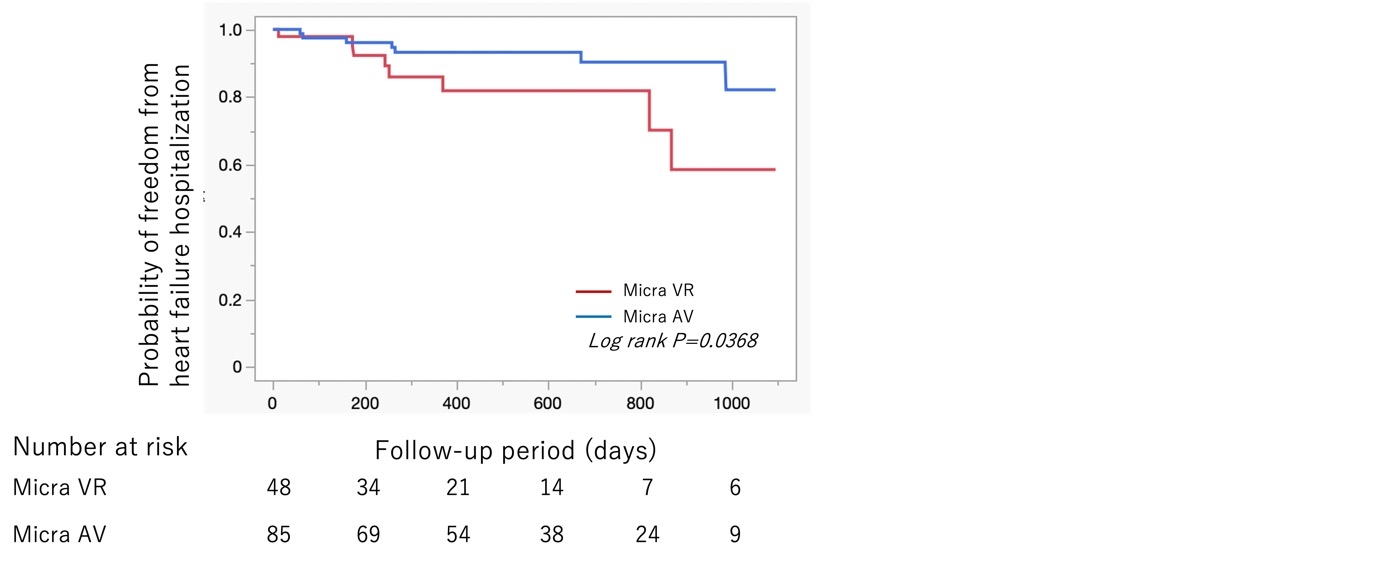
Abstract Body (Do not enter title and authors here): Background: Leadless pacemaker provides clinical advantages over traditional transvenous systems, including reduced risk of infections, thromboembolism, and lead-related complications, all of which adversely affect patient safety and quality of life. Recent advancement in the transition from VVI to VDD mode in leadless pacemaker is theoretically advantageous, as atrioventricular (AV) synchronization may enhance hemodynamic performance and alleviate symptoms of heart failure. However, the clinical impact of this mode transition has not systematically studied. Methods: This retrospective cohort study analyzed 133 consecutive patients (mean age: 85.6±6.5 years old, male: 54%, transition from VVI to VDD mode [Micra VR]: 63.9%) who diagnosed with AV block and underwent de novo implantation of leadless pacemakers between September 2017 and March 2024. The outcome measure was heart failure hospitalizations. Multivariate analyses were performed to identify factors associated with heart failure hospitalization within 3 years. Results: The follow-up periods were 323 days (interquartile range [IQR]: 132–613) for the Micra VR group and 392 days (IQR: 266–620) for the Micra AV group, statistically significant difference observed. Both groups had comparable patient backgrounds, with no significant differences in notable risk factors including age, sex, history of heart failure, presence of atrial fibrillation (AF), diabetes, or chronic kidney disease. The Kaplan-Meier analysis revealed that patients with Micra VR had a significantly higher rate of heart failure hospitalizations compared to those with Micra AV (Log Rank, p =0.037). Multivariate analysis showed that Micra VR (HR, 3.22; 95% CI, 1.15-8.98; P =0.026) and history of AF (HR, 5.69; 95% CI, 2.00-16.2; P =0.001) were significantly associated with heart failure hospitalization. Conclusion: The current study revealed that the transition from Micra VR to Micra AV was significantly associated with a reduced risk of heart failure hospitalizations compared to Micra VR over a follow-up period of up to 3 years, potentially due to improved atrioventricular synchrony.