Postpartum Bradycardia-Induced Ventricular Tachycardia in Congenitally Corrected Transposition of Great Arteries with Complete Heart Block: A Rare and Life-Threatening Complication
Abstract Body (Do not enter title and authors here): INTRODUCTION Congenitally corrected transposition of the great arteries(CCTGA) is a rare congenital heart defect characterized by L-looping of the heart tube,resulting in atrioventricular(AV) and ventriculoarterial(VA) discordance.Despite physiologically normal circulation, complications like complete heart block(CHB),VSD,pulmonary stenosis,tricuspid valve regurgitation,and right heart failure are common.Pregnant women with CCTGA may have successful outcomes but face increased maternal and fetal risks,especially with cyanosis or CHB.We report a rare case of a primigravida with CCTGA and CHB who suffered postpartum cardiac arrest from bradycardia-induced polymorphic ventricular tachycardia(PMVT).
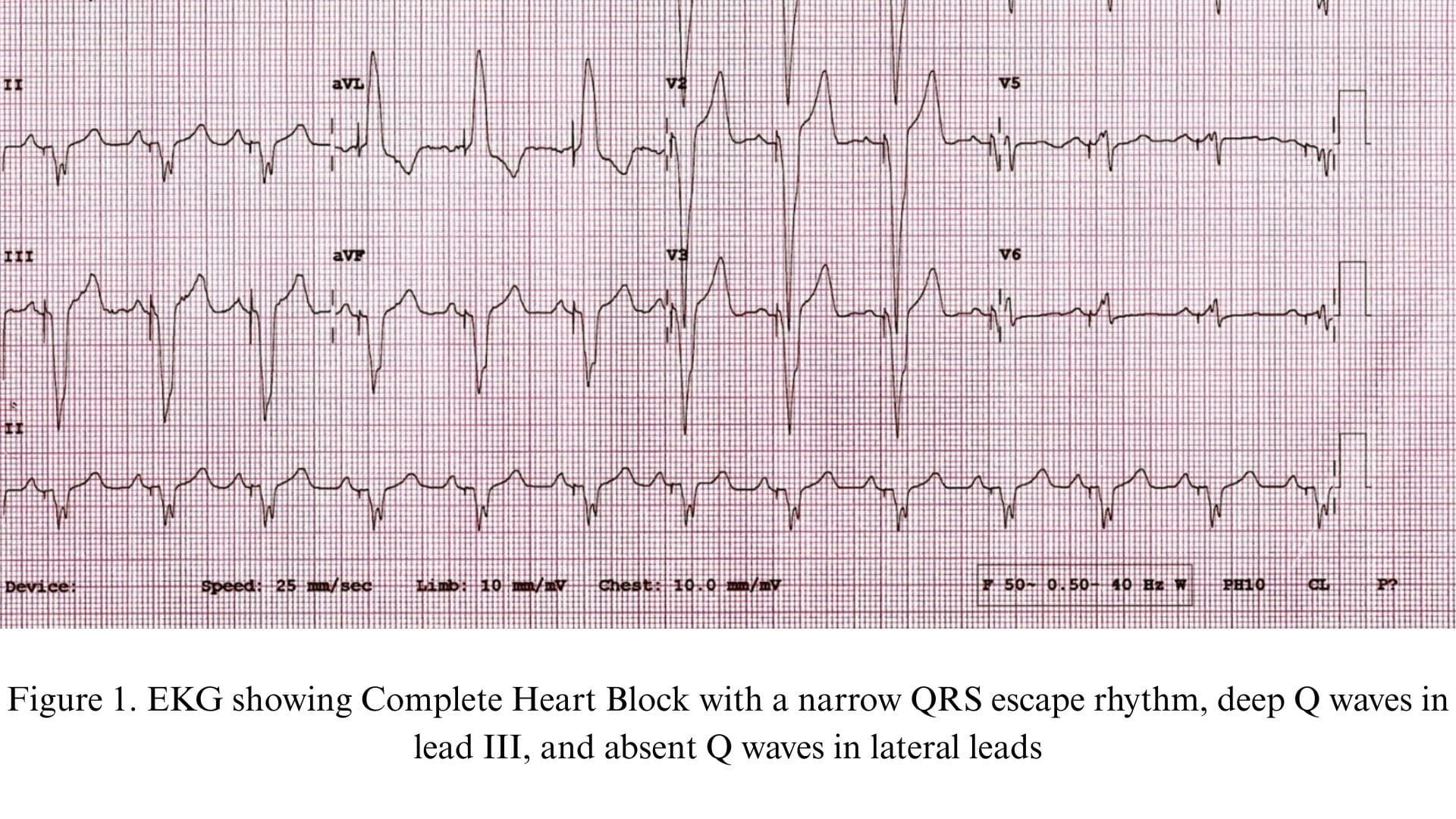
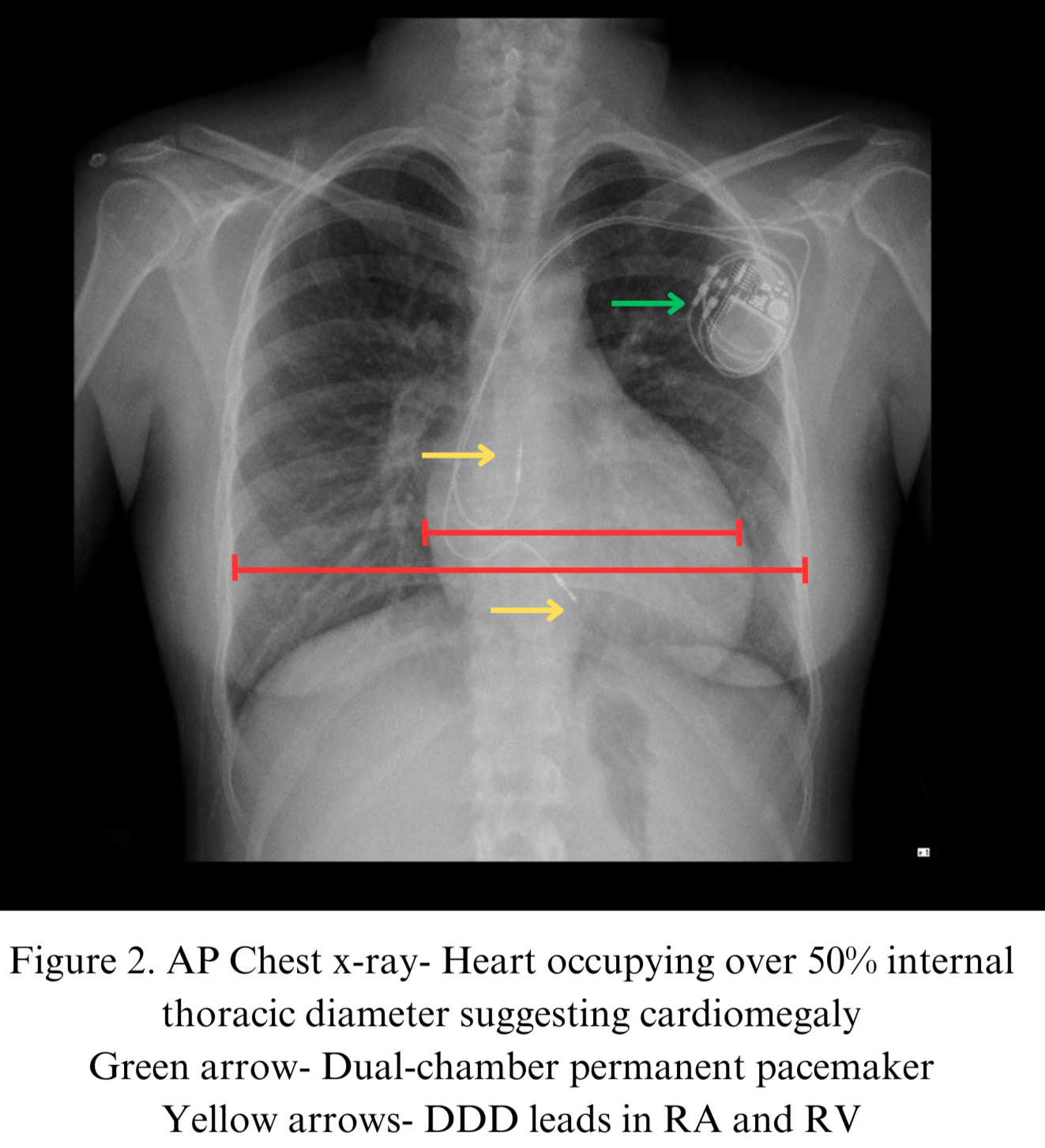
CASE DESCRIPTION A 24-year-old primigravida at 35 weeks’ gestation with history of CCTGA presented with fatigue,bradycardia,and reduced fetal movements.Examination revealed bradycardia,cannon waves in the JVP,regular pulse,and varying first heart sound intensity without murmur.EKG showed CHB.Echocardiography revealed situs solitus with levocardia,AV and VA discordance,Ebstein-like systemic AV valve,moderate regurgitation,and reduced systemic ventricular EF.A temporary pacemaker was placed preoperatively,and an emergency cesarean was performed.On postoperative day 11,she had a cardiac arrest with seizure and was resuscitated.ECG showed CHB,narrow QRS escape rhythm,bradycardia-induced PMVT,deep Q waves in lead III,and absent Q waves in lateral leads(Fig.1).She was intubated,admitted to the cardiac ICU,and managed with temporary pacing.After stabilization,she underwent dual-chamber(DDD) permanent pacemaker implantation(Fig.2) and was discharged on medical therapy with dietary advice,pacemaker checks,and regular follow-up.
DISCUSSION CCTGA is rare,occurring in ~0.02 per 1000 live births and comprising <1% of congenital heart disease.It involves AV and VA discordance.Presentation depends on associated lesions,with many patients exhibiting bradycardia from complete heart block,murmur,cyanosis,or heart failure and pregnancy imposes additional hemodynamic stress, making management challenging.Our case underscores this complexity, which was further compounded by bradycardia-induced polymorphic ventricular tachycardia, a rare arrhythmia in this setting.It highlights the importance of continuous cardiac monitoring not only antepartum, but also postpartum, and emphasizes close multidisciplinary monitoring and timely intervention to optimize both maternal and fetal outcomes.
Jain, Muskan
(
Kasturba Medical College Manipal
, Manipal , India )
Choudhary, Vatsalya
(
Kasturba Medical College Manipal
, Manipal , India )
Kamal Khan, Hiba
(
Kasturba Medical College Manipal
, Manipal , India )
Dwivedi, Siddharth
(
Kasturba Medical College Manipal
, Manipal , India )
Author Disclosures:
Muskan Jain:DO NOT have relevant financial relationships
| Vatsalya Choudhary:DO NOT have relevant financial relationships
| Hiba Kamal Khan:DO NOT have relevant financial relationships
| Siddharth Dwivedi:DO NOT have relevant financial relationships