Logo

American Heart Association

  23
  0


Final ID: MP2788

Therapeutic effects of extracellular vesicles from hPSC-derived epicardial cells in myocardial infarct healing

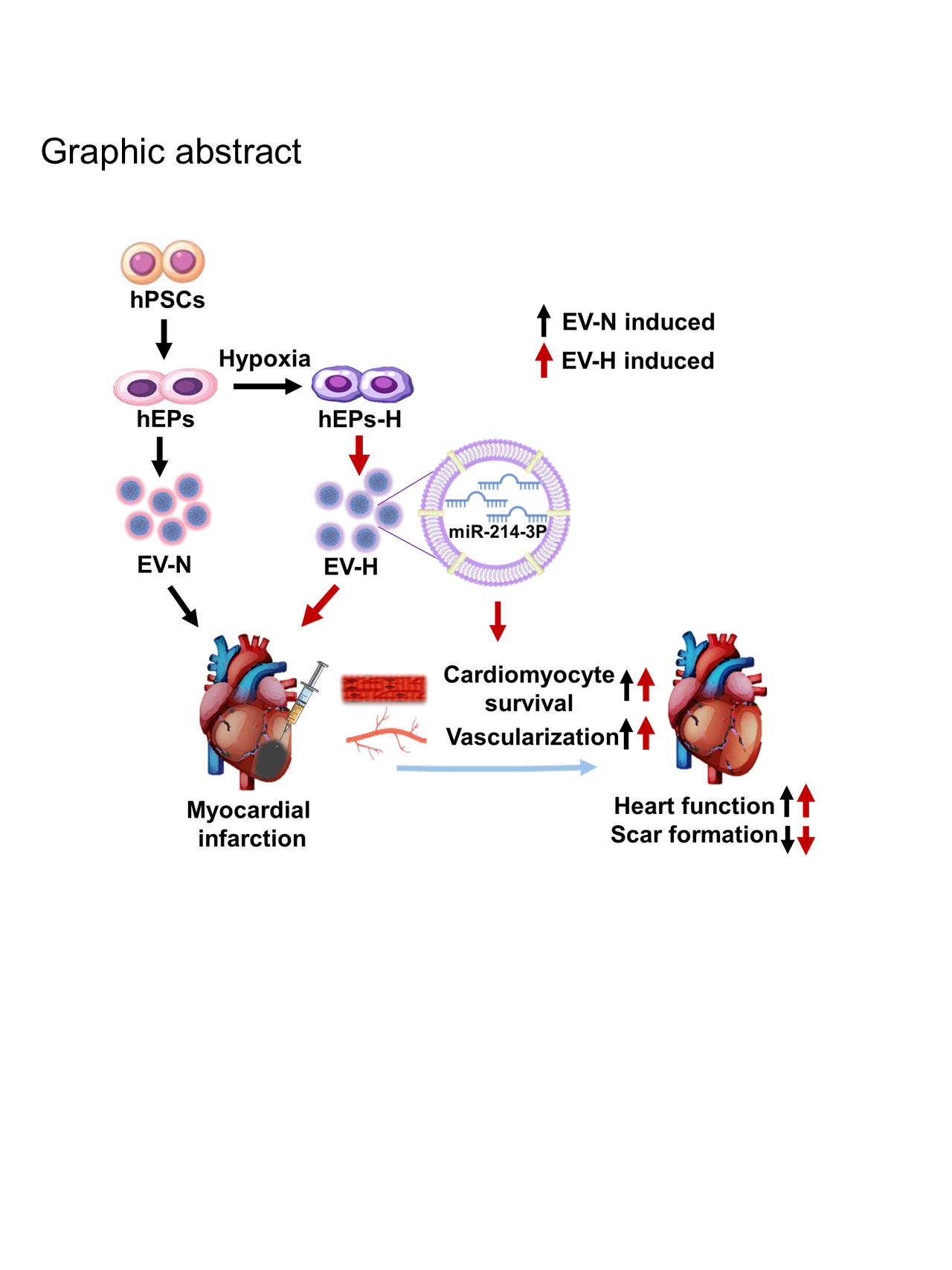
Abstract Body (Do not enter title and authors here): Background: hPSC-derived epicardial cells (hEPs) have been demonstrated to promote infarct healing. However, the therapeutic potential of extracellular vesicles (EVs) secreted by hEPs (hEP-EVs) for infarcted hearts remains to be elucidated. The epicardium undergoes epithelial-mesenchymal transition (EMT) process following myocardial infarction (MI) to regulate tissue repair, and the differentiation of epicardial cells is induced after hypoxia in vitro. However, the potential of hypoxia to initiate EMT of hEPs and the subsequent reanimation of the dynamic roles of hEP-EVs in cardiac repair remains unclear. Aims: to determine and compare the cardioprotective effects of the hEP-EVs under normoxic (EV-N) and hypoxic (EV-H) conditions in the infarcted heart, and identify the miRNA-related mechanisms involved. Results: Following a 48-hour culture under hypoxic conditions, a significant decrease in the expression of epicardial marker and an increase in levels of EMT-related genes were observed in the hEPs. Furthermore, immunostaining analysis demonstrated an increased number of hEPs expressing vimentin and α-smooth muscle actin. Subsequently, the hEP-EVs were collected and confirmed. Intramyocardial injection of hEP-EVs enhanced cardiac function, while only EV-H alleviated the progression of left ventricular dilation. Consistently, the scar formation was reduced by EV-N and further inhibited by EV-H at day 28 post-MI, concomitantly with enhanced pro-survival and pro-vascularization effects (vs. EV-N). Meanwhile, the EV-H was more efficacious than EV-N in promoting the tube formation and migration of HUVECs and diminishing the apoptotic cardiomyocytes and lactate activity following oxygen-glucose deprivation (OGD) injury. Further miRNA seq analysis revealed altered miRNA composition, with 115 upregulated miRNAs in EV-H than EV-N, in which the miR-214-3p was particularly prominent. Intramyocardial injection of miR-214-3p mimic ameliorated functional worsening and scar formation at day 28 post-MI. Further, miR-214-3p mimic enhanced the cardiomyocyte survival and vascularization both in vivo and in vitro. Conversely, the antagomir-mediated inhibition of miR-214-3p in the EV-H resulted in the suppression of these effects in vitro. Conclusions: This study demonstrates the reparative effects of hEP-EVs in infarcted heart and reveal the enhanced efficacy of hEP-EVs after cell hypoxia-conditioning, which may be partially attributed to the presence of miR-214-3p.
  • Qiu, Zhi-xuan  ( Shanghai East Hospital, School of Medicine, Tongji University, , Shanghai 200123 , China )
  • Zhang, Peng-fei  ( Shanghai East Hospital, School of Medicine, Tongji University, , Shanghai 200123 , China )
  • Hao, Li  ( Shanghai East Hospital, School of Medicine, Tongji University, , Shanghai 200123 , China )
  • Gong, Yan-shan  ( Shanghai East Hospital, School of Medicine, Tongji University, , Shanghai 200123 , China )
  • Yu, Yao-xian  ( Shanghai East Hospital, School of Medicine, Tongji University, , Shanghai 200123 , China )
  • Gao, Ling  ( Shanghai East Hospital, School of Medicine, Tongji University, , Shanghai 200123 , China )
  • Jiang, Yun  ( Shanghai East Hospital, School of Medicine, Tongji University, , Shanghai 200123 , China )
  • Author Disclosures:
    Zhi-Xuan Qiu: No Answer | Peng-Fei Zhang: No Answer | li hao: DO NOT have relevant financial relationships | Yan-Shan Gong: No Answer | Yao-Xian Yu: No Answer | Ling Gao: DO NOT have relevant financial relationships | Yun Jiang: DO NOT have relevant financial relationships
Meeting Info:

Scientific Sessions 2025

2025

New Orleans, Louisiana

Session Info:

Preclinical and Early Clinical Repair of the Failing Heart

Monday, 11/10/2025 , 12:15PM - 01:30PM

Moderated Digital Poster Session

You have to be authorized to contact abstract author. Please, Login
Not Available