Sex and Social Disparities in Functional Recovery in Long COVID: A Cohort Study From a Latin American Population
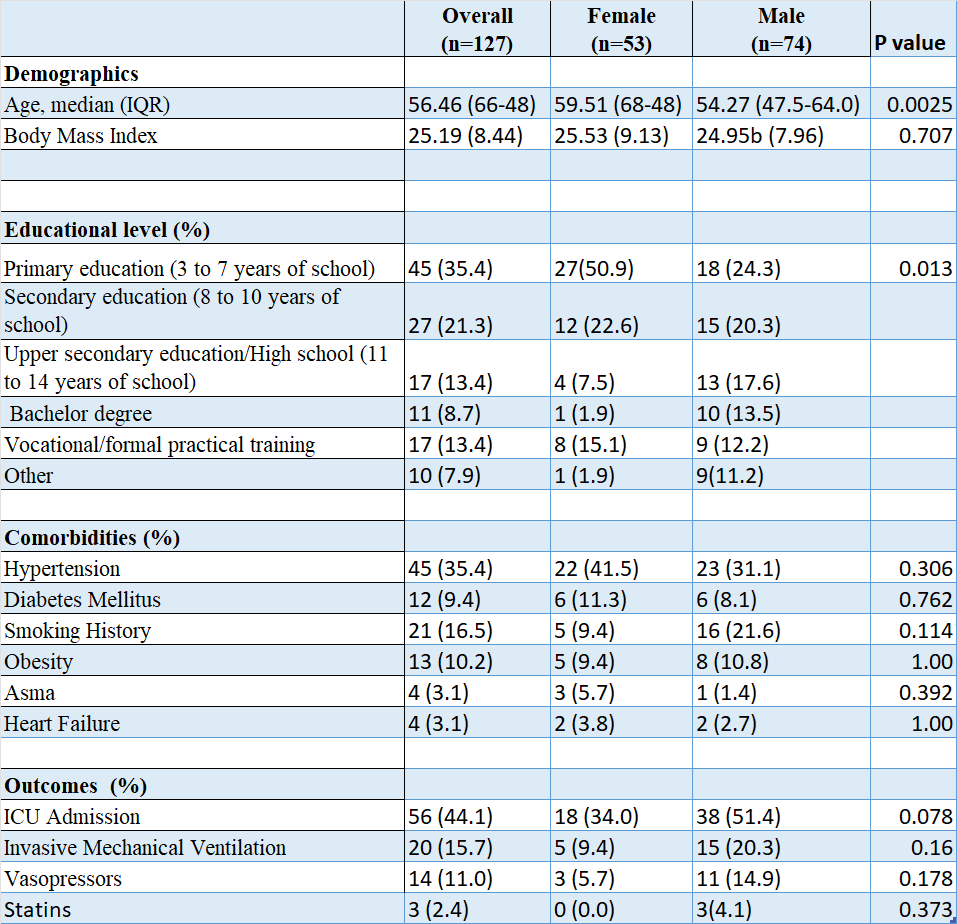
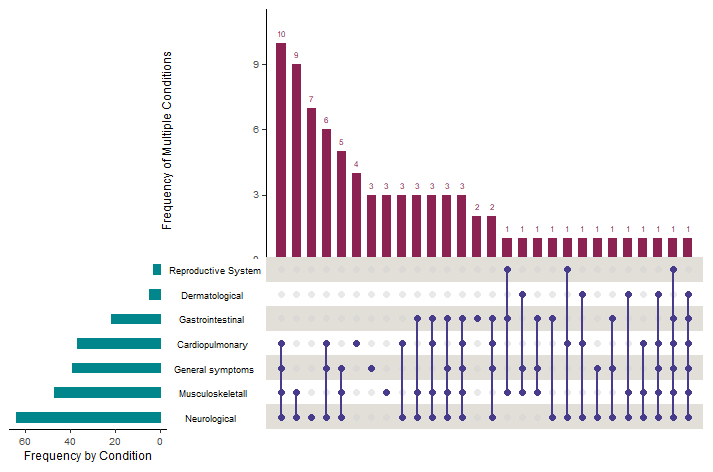
Abstract Body (Do not enter title and authors here): Background: Long COVID is defined as a chronic condition that occurs after SARS-CoV-2 infection and persists for at least 3 months. It encompasses a wide spectrum of symptoms that may fluctuate or persist, often involving cardiovascular, pulmonary, and neurological systems. Data from Latin American populations remain limited, especially regarding cardiovascular symptoms and objective measures of recovery. Objective: To assess cardiopulmonary symptoms, physical performance, and pulmonary function at 6 months in adults with Long COVID, highlighting disparities by sex and educational level. Methods: A prospective cohort of 127 adults with Long COVID at 6 months was enrolled at a tertiary center in Colombia. Cardiovascular symptoms (dyspnea/fatigue, palpitations, dizziness, peripheral edema), pulmonary function (FEV1, FVC), and six-minute walk test (6MWT) were evaluated. Deviation from predicted 6MWT distance was calculated. Sociodemographic characteristics were compared by sex. Mann–Whitney U and chi-square or Fisher’s exact tests were used. Results: Of 127 participants, 53 (41.7%) were women. Females were older than males (59.5 ± 11.0 vs. 54.3 ± 13.9 years, p = 0.025) and more frequently had no formal education (50.9% vs. 24.3%, p = 0.013). Among women, 28.3% reported dyspnea or fatigue, 17.9% peripheral edema, 11.7% dizziness, and 9.4% palpitations. Mean FEV1 and FVC were significantly lower in women (2.57 ± 0.62 L and 3.05 ± 0.68 L) than in men (3.27 ± 0.75 L and 4.03 ± 0.82 L), both p < 0.001. Median deviation from predicted 6MWT distance was –228 m (IQR: –282 to –163), with 91.3% walking below expected thresholds (p < 0.0001). Most participants (73%) reported symptoms involving three or more organ systems. In this population, women and individuals with lower educational attainment appeared to experience greater functional impairment, which may have contributed to a more prolonged recovery. Conclusions: This study reveals a significant and persistent cardiopulmonary burden in individuals with Long COVID from an underrepresented Latin American cohort. The disproportionate impact observed in women and those with lower education demands urgent attention. Tailored, sex-sensitive, and socially responsive strategies are critically needed to ensure equitable cardiovascular recovery and long-term care for vulnerable populations.
Ramirez M., Lev Bladimir
(
Universidad de La Sabana
, Bogota DC , Colombia )
Cobos Moya, Camila
(
Universidad de La Sabana
, Bogota DC , Colombia )
Author Disclosures:
Lev Bladimir Ramirez M.:DO NOT have relevant financial relationships
| Camila Cobos Moya:DO NOT have relevant financial relationships