Increasing Risk of Fournier’s Gangrene and Other Rare Genital Infections in Heart Failure Patients with and without Sodium-Glucose Cotransporter 2 Inhibitors (SGLT2i): A Multicenter Cohort Study
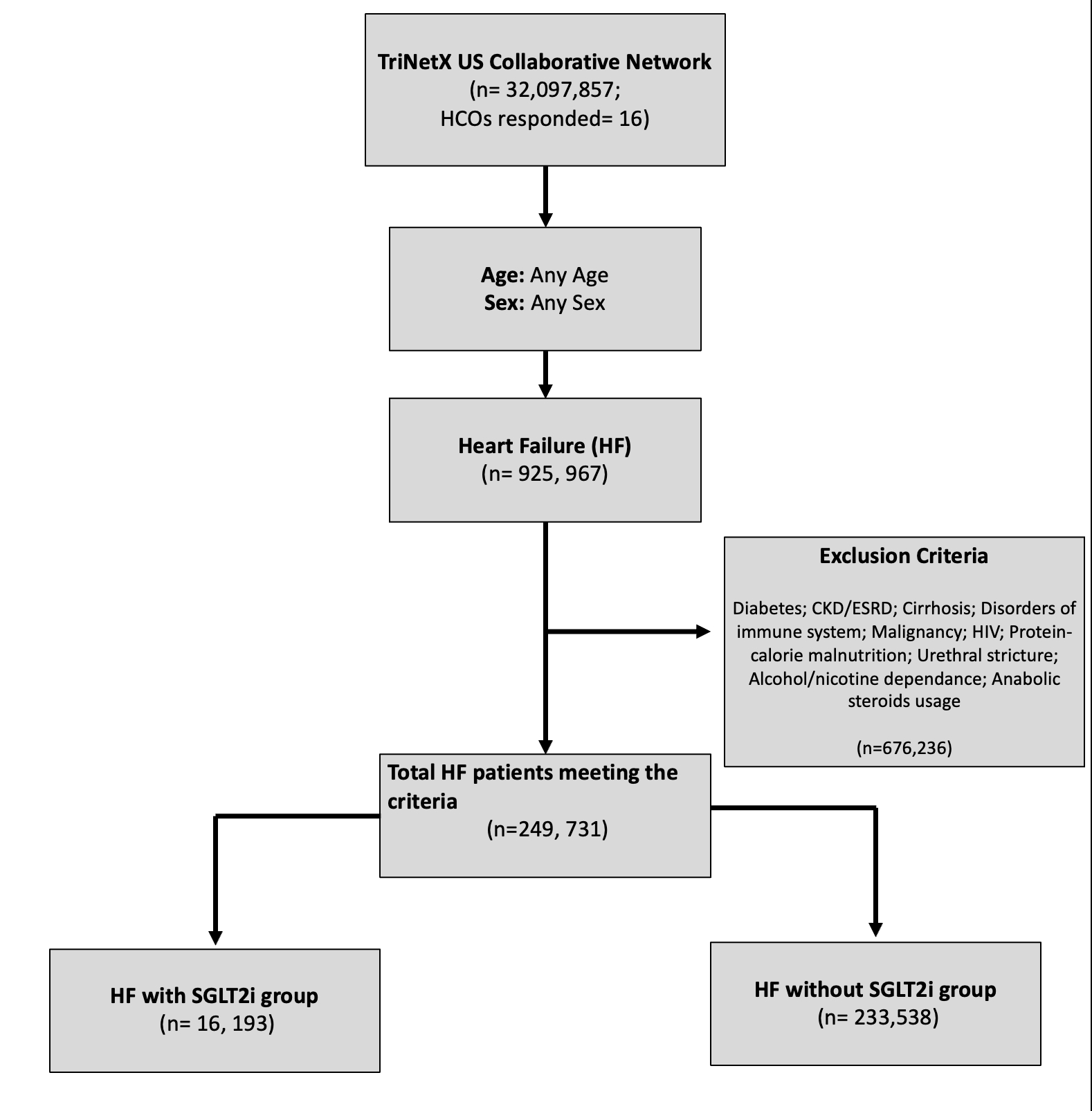
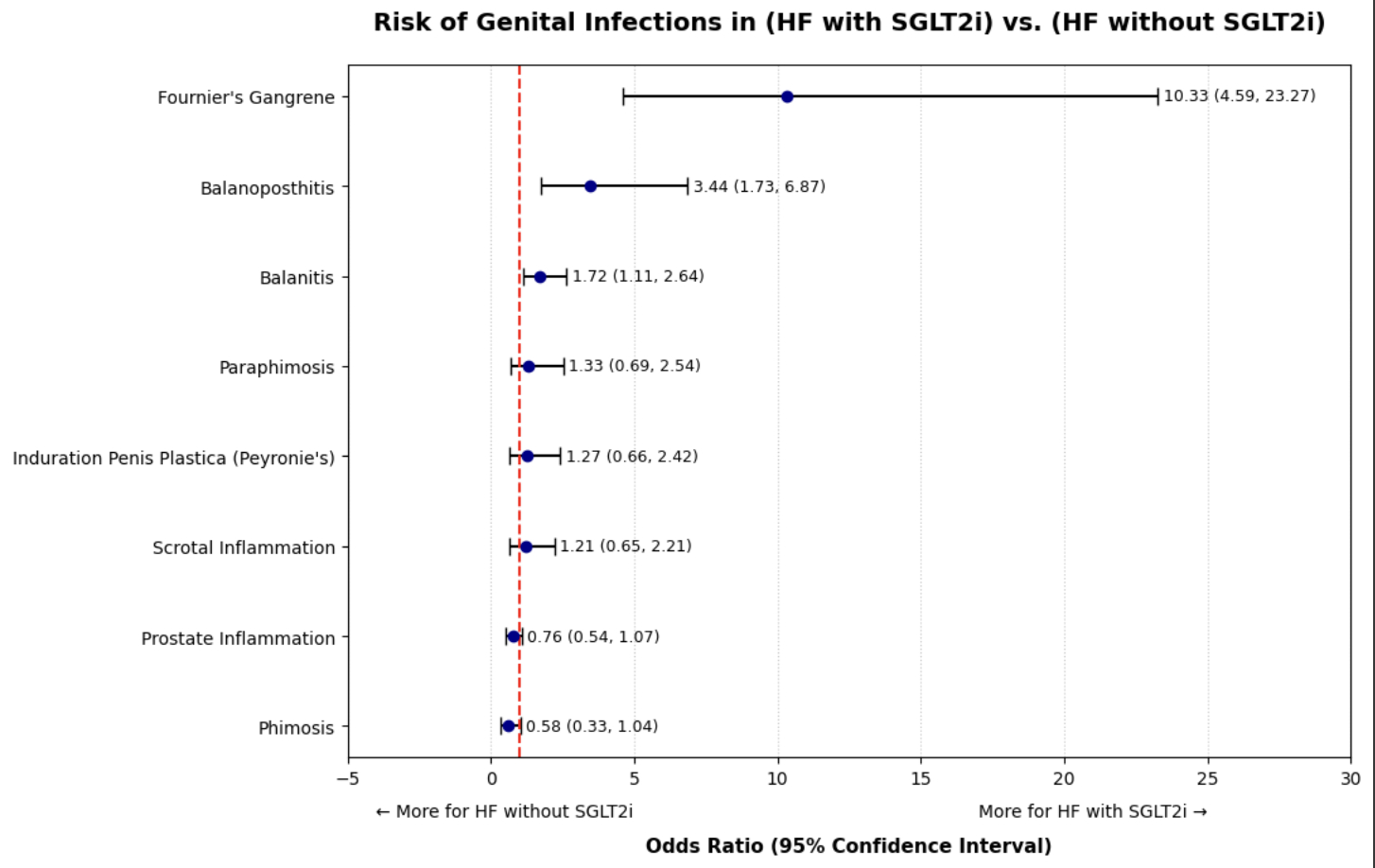
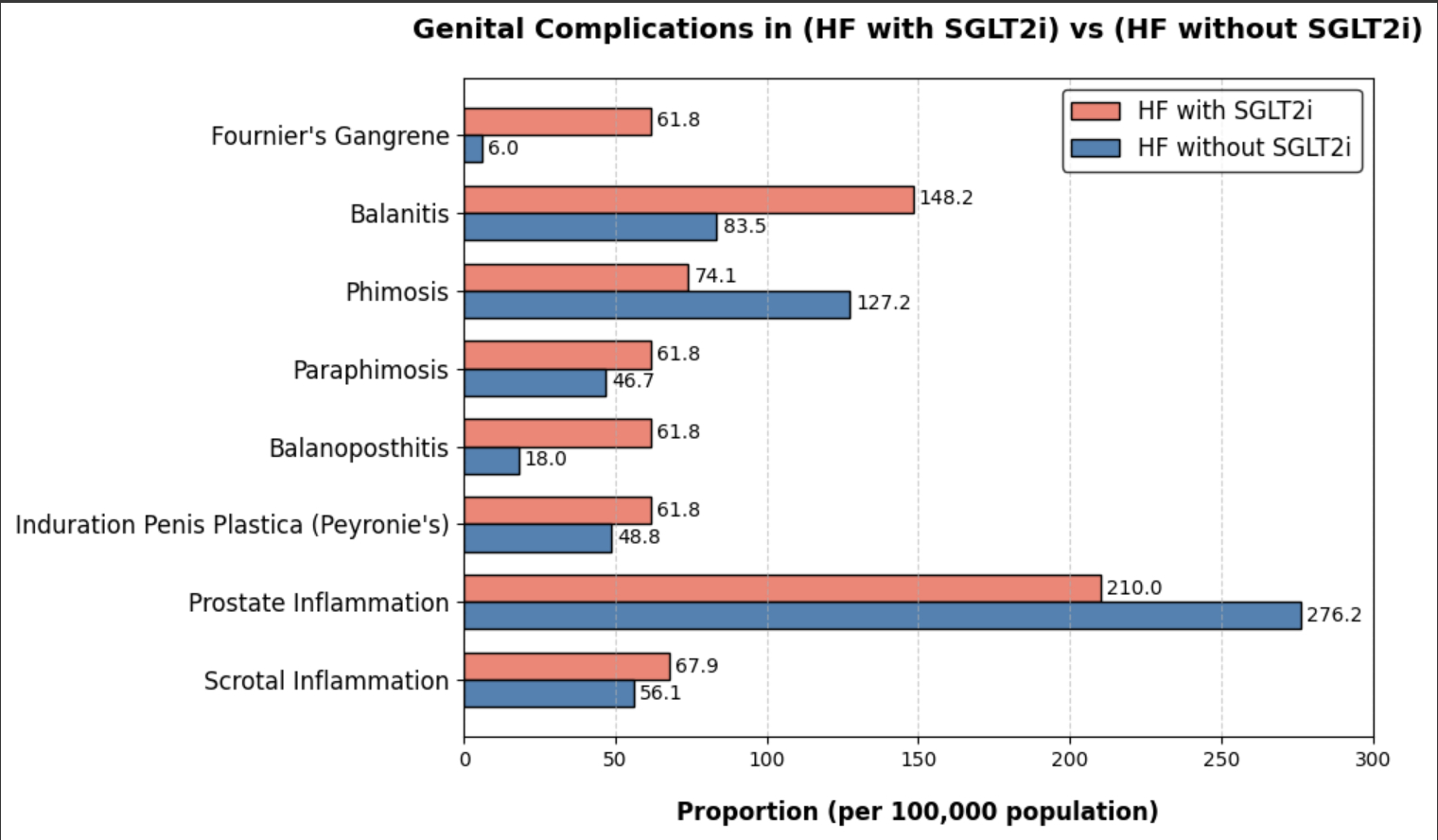
Abstract Body (Do not enter title and authors here): Introduction: Sodium-glucose cotransporter 2 inhibitors (SGLT2i) have demonstrated significant improvements in heart failure (HF) outcomes; however, the Food and Drug Administration (FDA) has raised concerns over rare but serious genitourinary (GU) complications, especially Fournier’s gangrene. Objective: We investigate the association of various GU inflammatory pathologies among HF patients with and without exposure to SGLT2 inhibitors using real-world data. Methodology: A retrospective cohort study was conducted using the TriNetX Global Network on ~250,000 heart failure (HF) patients diagnosed since January 1, 2015. Patients were grouped based on SGLT2i use. Those with diabetes, advanced kidney/liver disease, cancer, or immunodeficiency were excluded. Over a 5-year follow-up, GU outcomes-including Fournier gangrene, balanitis, phimosis, paraphimosis, induration of penis plastica (IPP), prostatitis, and scrotal inflammation-were assessed using ICD-9 and ICD-10 codes. Risk difference, risk ratio, and odds ratio (OR) were calculated with 95% confidence intervals (CI) and p-values. Results: In a cohort of 16,193 HF patients treated with SGLT2i and 233,309 without, certain GU complications were more frequent in the SGLT2i group. Fournier's gangrene, although rare, occurred significantly more often (10 vs. 14 cases; OR 10.33, 95% CI: 4.59-23.27, p = 0.001) Balanitis (23 vs. 194 cases; OR 1.72, CI: 1.11-2.64, p = 0.013) and balanoposthitis (10 vs. 42 cases; OR 3.44, CI: 1.73-6.86, p = 0.001) were also significantly increased. Phimosis (12 vs. 297 cases; OR 0.58, p = 0.065) was less frequent, but not statistically significant. Paraphimosis, IPP, prostatic inflammation, and scrotal inflammation showed higher odds in the SGLT2i group, but without statistical significance. Propensity score matching yielded insignificant results due to the rarity of outcomes. Conclusion: Our findings reveal a significant increase in the association between Fournier’s gangrene, balanitis, and balanoposthitis among SGLT2i users. Other outcomes—including phimosis, paraphimosis, IPP (Peyronie’s disease), prostatic inflammation, and scrotal inflammation— although reported as statistically insignificant, are still clinically significant considering the overall rarity of the GU complications. Clinicians should remain vigilant for rare but serious complications alongside hygiene counseling, especially in higher-risk individuals and populations.
Farooq, Minaam
(
South Texas Health System
, McAllen , Texas , United States )
Shabbir, Muhammad Raffey
(
Marshfield Clinic
, Marshfield , Wisconsin , United States )
Bin Amir, Mohammad
(
Lahore Medical and Dental College
, Lahore , Pakistan )
Yaseen, Haris
(
King Edward Medical University
, Lahore , Pakistan )
Zahra, Shah Gul
(
King Edward Medical University
, Lahore , Pakistan )
Farooq, Mukarram
(
South Texas Health System
, McAllen , Texas , United States )
Imtiaz, Mahrukh
(
Allama Iqbal Medical College
, Lahore , Pakistan )
Elahi, Asim
(
Harlingen Medical Center
, Harlingen , Texas , United States )
Author Disclosures:
Minaam Farooq:DO NOT have relevant financial relationships
| Muhammad Raffey Shabbir:DO have relevant financial relationships
;
Individual Stocks/Stock Options:NOVO NORDISK:Active (exists now)
; Individual Stocks/Stock Options:Eli Lilly:Active (exists now)
; Individual Stocks/Stock Options:BOSTON SCIENTIFIC:Expected (by end of conference)
| Mohammad Bin Amir:DO NOT have relevant financial relationships
| Haris Yaseen:No Answer
| Shah Gul Zahra:DO NOT have relevant financial relationships
| Mukarram Farooq:DO NOT have relevant financial relationships
| Mahrukh Imtiaz:DO NOT have relevant financial relationships
| asim elahi:DO NOT have relevant financial relationships