
Logo

American Heart Association

  34
  0


Final ID: MP2499

The effectiveness of the GLP-1 receptors agonists in improving obesity-related heart failure events: A systematic review and meta-analysis of randomized clinical trials.

Abstract Body (Do not enter title and authors here): Introduction: Glucagon-like peptide-1 receptor agonists (GLP-1 RAs) have recently shown cardiovascular benefits regarding heart failure (HF). Emerging evidence suggests that GLP-1 RAs may impact cardiovascular events in patients with HF and obesity. However, to date, a comprehensive synthesis of randomized clinical trials (RCTs) addressing this relationship has not been conducted. This study aims to evaluate the effectiveness of the GLP-1 RAs in ameliorating cardiovascular mortality and symptoms in patients with obesity-related HF.
Hypothesis: GLP-1 RAs improve HF clinical outcomes in patients with HF and obesity.
Methods: A systematic review and meta-analysis of RCT were performed in accordance with Cochrane guidelines and the Preferred Reporting Items for Systematic Reviews and Meta-analysis 2020 statement. A search of the PubMed and Cochrane Library databases was conducted to identify RCTs that assessed GLP-1 RAs use in patients with HF and obesity. 301 articles underwent screening, from which 4 were ultimately included for synthesis. Statistical analysis was performed using RevMan Web 7.2.0.
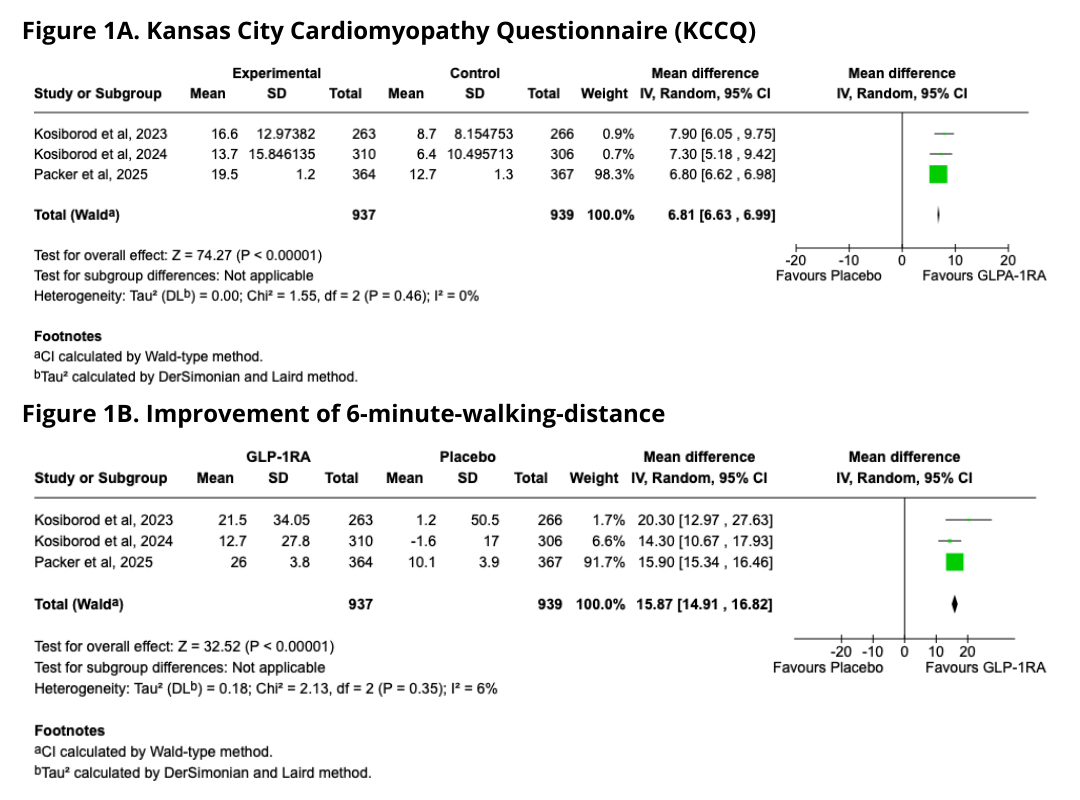
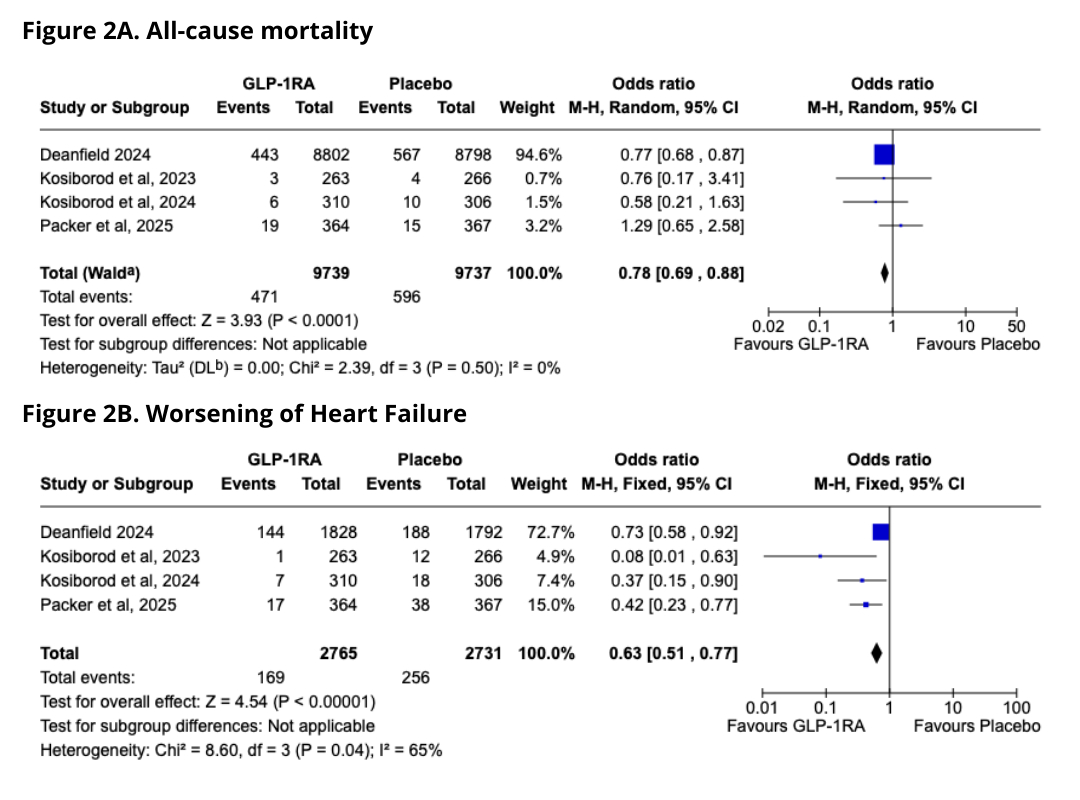
Results: The final studies incorporated data from 6.162 participants who received either semaglutide or tirzepatide. Most of these patients exhibited glycated hemoglobin levels below 6% or had no diabetes. Compared to placebo, GLP-1 RAs were significantly associated with a reduction in all-cause mortality (Odds Ratio [OR] 0.78; 95% Confidence Interval [CI]: 0.69–0.88; p = 0.5), and a decreased risk of worsening HF, defined as cardiovascular death, hospitalization, or urgent visits requiring intravenous therapy for HF (OR 0.63; 95% CI: 0.51–0.77; p = 0.04). Furthermore, GLP-1 RAs led to improvements in HF-related symptoms and functional capacity, evidenced by increased Kansas City Cardiomyopathy Questionnaire Score (Mean Difference [MD] 6.81; 95% CI: 6.63–6.99; p = 0.46) and an extended 6-minute walk test distance (MD 15.87 meters; 95% CI: 14.91–16.82; p = 0.35).
Conclusion: This study provides compelling evidence that GLP-1 RAs significantly improve cardiovascular outcomes in patients with obesity-related HF. The observed benefits occurred irrespective of a diabetes or glycemic control and underscore the therapeutic potential of GLP-1 RAs in this specific population. Nevertheless, further investigation into their long-term effects is warranted.
  • Melo, Gabriella  ( FCMSCSP , Sao Paulo , Brazil )
  • Ayala, Blas Ivan  ( University of Sao Paulo , Sao Paulo , Brazil )
  • Xavier, Marina  ( FCMSCSP , Sao Paulo , Brazil )
  • Ziotti, Sara  ( University of Sao Paulo , Sao Paulo , Brazil )
  • Author Disclosures:
    Gabriella Melo: DO NOT have relevant financial relationships | Blas Ivan Ayala: No Answer | Marina Xavier: No Answer | Sara Ziotti: No Answer
Meeting Info:

Scientific Sessions 2025

2025

New Orleans, Louisiana

Session Info:

Gut Hormones, Heart Gains: The Expanding Role of GLP-1 and Dual Agonists in Heart Failure

Monday, 11/10/2025 , 09:15AM - 10:30AM

Moderated Digital Poster Session

More abstracts on this topic:
A Body Shape Index at Age 25-64 Predicts Mortality and CHD Hospitalization

Shafran Itamar, Krakauer Nir, Krakauer Jesse, Cohen Gali, Gerber Yariv

Comparative Safety and Efficacy of Acoramidis Versus Tafamidis in Transthyretin Amyloid Cardiomyopathy: A Systematic Review

Garikipati Naga Alekhya, Cherukuri Anjani Mahesh Kumar, Jackson Anu Mary, Dommaraju Sowndarya, Krishnamaneni Vamsi

You have to be authorized to contact abstract author. Please, Login
Not Available