
Association Between Liberal Fluid Strategy and Postoperative Outcomes in Cardiac Surgery: A Systematic Review and Bayesian Meta-Analysis
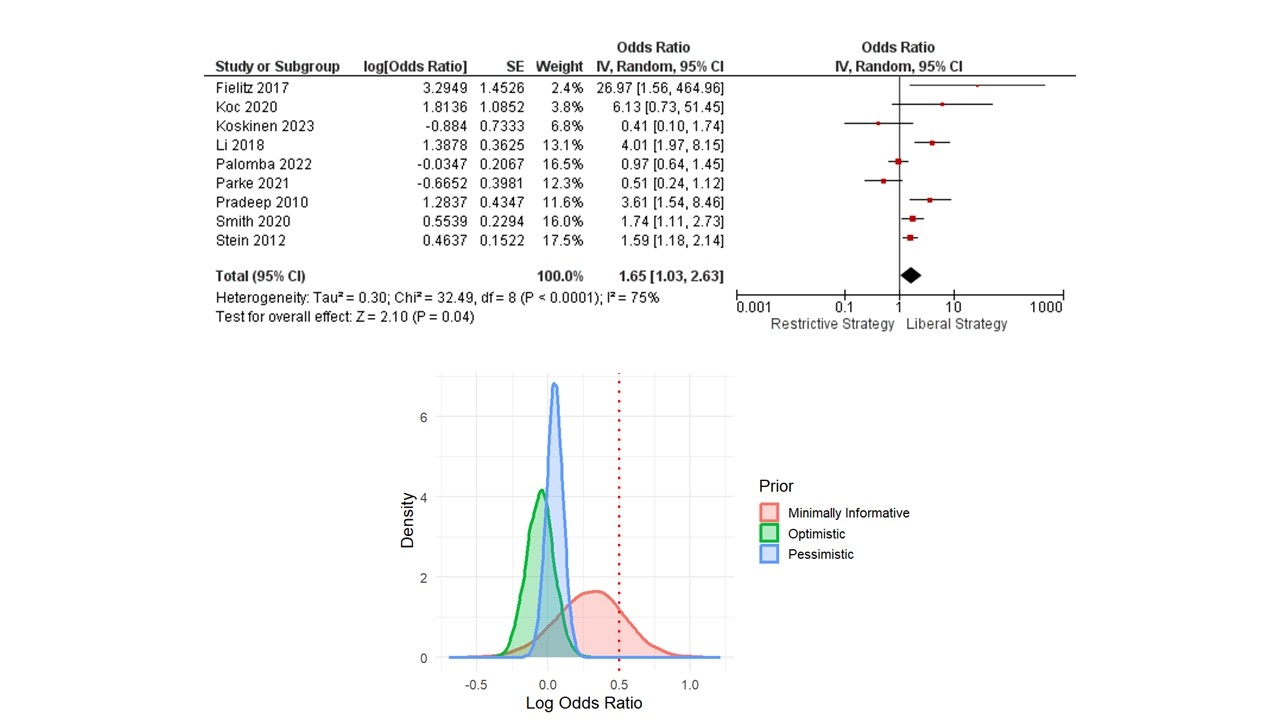
Abstract Body (Do not enter title and authors here): Background: Fluid overload is increasingly recognized as a contributor to poor outcomes in critically ill patients, but its impact in the context of cardiac surgery remains underexplored. Objectives: To evaluate the association between fluid overload and key postoperative outcomes in adult cardiac surgery patients. Methods: We conducted a systematic review and meta-analysis of randomized and observational studies comparing liberal versus restrictive fluid strategies in adult patients undergoing cardiac surgery. Outcomes included all-cause mortality, acute kidney injury (AKI), hospital length of stay (H-LOS), ICU length of stay (ICU-LOS), postoperative atrial fibrillation (POAF), duration of mechanical ventilation, and ICU readmissions. Effect estimates were pooled using both frequentist random-effects models and Bayesian random-effects models with minimally informative, optimistic, and pessimistic priors. Heterogeneity was assessed using I2 statistics. The study was registered in PROSPERO (CRD420251033118). Results: Seventeen studies comprising 13,530 patients were included. Compared to restrictive fluid strategies, liberal fluid management was associated with a significant increase in all-cause mortality (OR 1.65; 95% CI 1.03–2.63; p = 0.04) and longer H-LOS (MD -1.02 days; 95% CI -1.67 to -0.37; p = 0.002). The Bayesian analysis confirmed a high probability of mortality reduction (>90%) and a likely reduction in AKI risk (posterior probability >99%) with restrictive fluid strategy. No significant differences were observed for ICU-LOS, POAF, mechanical ventilation duration, or ICU readmissions across most models, with Bayesian outputs indicating low to moderate probabilities of benefit in these outcomes. Conclusions: Liberal fluid strategy is associated with increased mortality, longer hospital stay, and higher risk of AKI in cardiac surgery patients. These findings highlight the potential harm of liberal fluid strategies and support the adoption of more restrictive fluid management approaches in perioperative cardiac care.
Hortêncio Melo, Rafael
(
Hospital Israelita Albert Einstein
, Sao Paulo , Brazil )
Cappellaro, Anelise
(
Universidade Mauricio de Nassau
, Barreiras , Brazil )
Almeida, Luiz
(
Universidade Federal Fluminense
, Niteroi , Brazil )
Gomez, Victor
(
Hospital Auxilio Mutuo San Pablo
, Bayamon , Puerto Rico )
Author Disclosures:
Rafael Melo:DO NOT have relevant financial relationships
| Anelise Poluboiarinov Cappellaro:DO NOT have relevant financial relationships
| Luiz Almeida:No Answer
| Victor Gomez:DO NOT have relevant financial relationships