
Logo

American Heart Association

  26
  0


Final ID: MP2066

Guideline-Directed Medical Therapy and Clinical Outcomes in African American Women with Congestive Heart Failure from Low- to Medium-Income Backgrounds at a Safety Net Hospital

Abstract Body (Do not enter title and authors here): Background: Heart failure among African American women represents a significant public health challenge. The high prevalence of comorbidities often necessitates selective implementation of guideline-directed medical therapy (GDMT). This study examines which medication classes should be prioritized in this vulnerable population.
Methods: We conducted a retrospective study of 283 African American women with heart failure admitted to Cape Fear Valley Medical Center, a safety-net hospital serving low-income patients in North Carolina (2021-2022). We analyzed relationships between GDMT regimens and clinical outcomes.
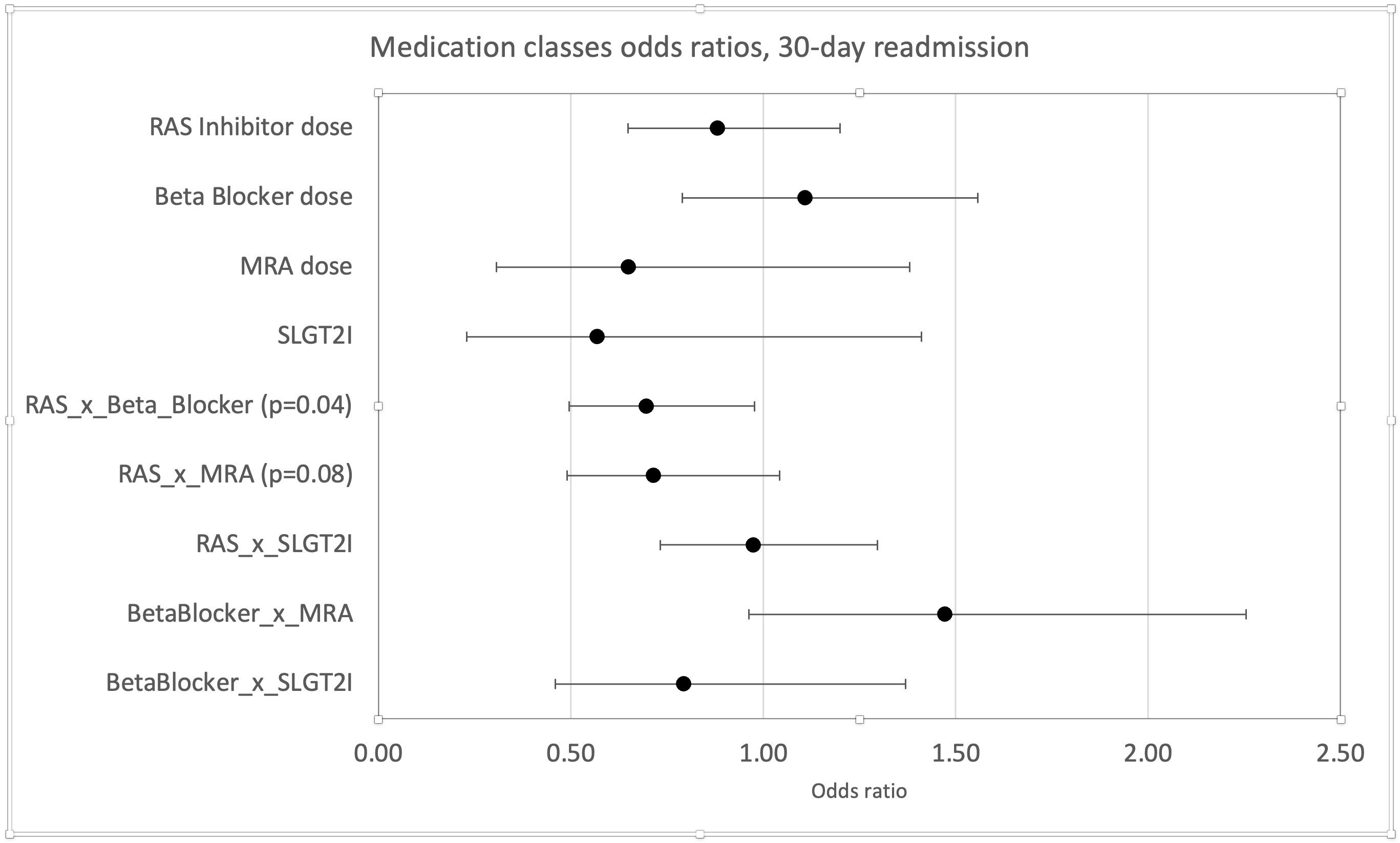
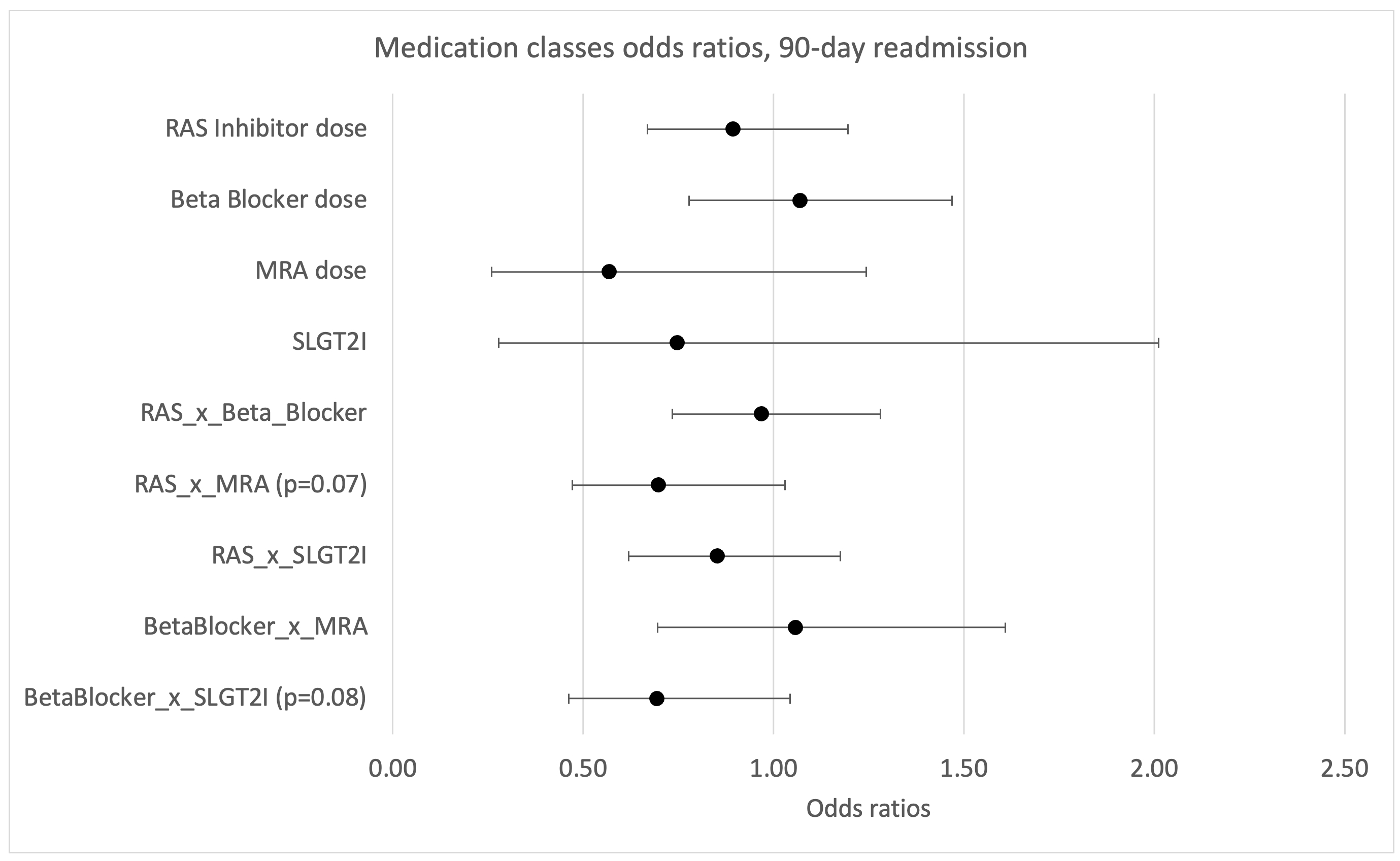
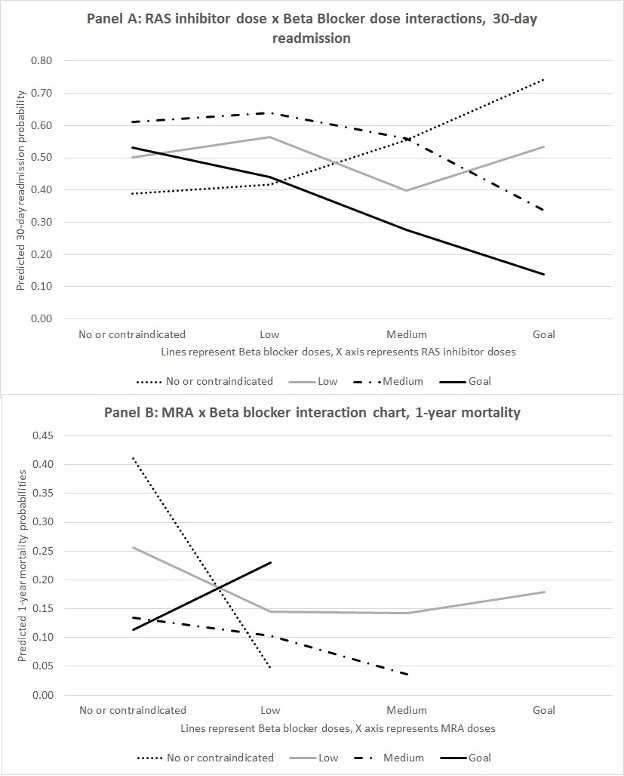
Results: Among patients, 50% experienced 30-day readmission, 57% 90-day readmission, and 23% died within 1 year. Medication utilization was suboptimal: 10% received goal doses of RAS inhibitors, 13% goal doses of beta blockers, 4% medium/goal doses of mineralocorticoid receptor antagonists (MRAs), and 11% SGLT2 inhibitors. Mean GDMT composite was 2.4±1.8, with only 8% achieving composite ≥5. Each one-point increase in GDMT composite reduced 30-day (OR=0.85, p=0.02) and 90-day readmission risk (OR=0.86, p=0.03). Higher GDMT composite was associated with decreased mortality in unadjusted analysis (OR=0.86, p=0.07). Concurrent optimization of RAS inhibitors and beta blockers reduced readmission risk (OR=0.70, p=0.04). Low-dose MRA lowered 30-day readmission (OR=0.27, p<0.01). Medium-dose beta blockers reduced 1-year mortality (OR=0.13, p=0.03), as did medium doses of MRA (OR<0.01, p<0.01).
Conclusions: Strategic prioritization of specific GDMT components improves outcomes in this population with multiple comorbidities. Each one-point increase in GDMT composite was associated with 15% reduced readmission risk. Beta blockers should be prioritized for mortality reduction, MRAs for both mortality and readmission reduction, and RAS inhibitors with beta blockers for reducing readmissions.
  • Rodriguez Mejia, Ricardo Antonio  ( Capefear Valey Medical Center , Fayetteville , North Carolina , United States )
  • Acker, Eric  ( Cape Fear Valley Health , Fayetteville , North Carolina , United States )
  • Abou-elmagd, Tark  ( Capefear Valey Medical Center , Fayetteville , North Carolina , United States )
  • Kammaripalle, Thirumala Keerthi Chandrika  ( cape fear valley medical center , Raeford , North Carolina , United States )
  • Rana, Humza  ( Capefear Valey Medical Center , Fayetteville , North Carolina , United States )
  • Author Disclosures:
    Ricardo Antonio Rodriguez Mejia : DO NOT have relevant financial relationships | Eric Acker: DO NOT have relevant financial relationships | Tark Abou-elmagd: DO NOT have relevant financial relationships | Thirumala Keerthi Chandrika Kammaripalle: DO NOT have relevant financial relationships | Humza Rana: No Answer
Meeting Info:

Scientific Sessions 2025

2025

New Orleans, Louisiana

Session Info:

Biological, Social, and Psychosocial Determinants of Cardiovascular Risk and Health Disparities

Monday, 11/10/2025 , 10:45AM - 11:55AM

Moderated Digital Poster Session

More abstracts on this topic:
More abstracts from these authors:
Efficacy of Beta-Blocker Therapy in Takotsubo Cardiomyopathy: A Systematic Review and Meta-Analysis

Rodriguez Mejia Ricardo Antonio, Dongol Merina, Gupta Ashish, Bahekar Amol, Singh Arminder

Impact of Type 2 Myocardial Infarction in Diabetic Ketoacidosis: Insights from a National Cohort

Momodu Ifeanyi, Pawar Shubhadarshini, Rodriguez Mejia Ricardo Antonio, Patil Nikita, Kammaripalle Thirumala Keerthi Chandrika, Rana Humza, Acker Eric, Mahankali Sridhar Arun Raghav

You have to be authorized to contact abstract author. Please, Login
Not Available