
Logo

American Heart Association

  100
  0


Final ID: MP228

Digital Heart Health: Improving Coronary Heart Disease Outcomes Through an Interactive Avatar Application

Abstract Body (Do not enter title and authors here): Introduction
Timely recognition and appropriate response to heart attack symptoms are critical in Coronary Heart Disease (CHD). Educational strategies that promote self-care may improve outcomes.
Hypothesis
We hypothesized that using an interactive avatar application, in addition to standard education, would improve self-care behaviors and symptom response in patients with coronary heart disease.
Methods
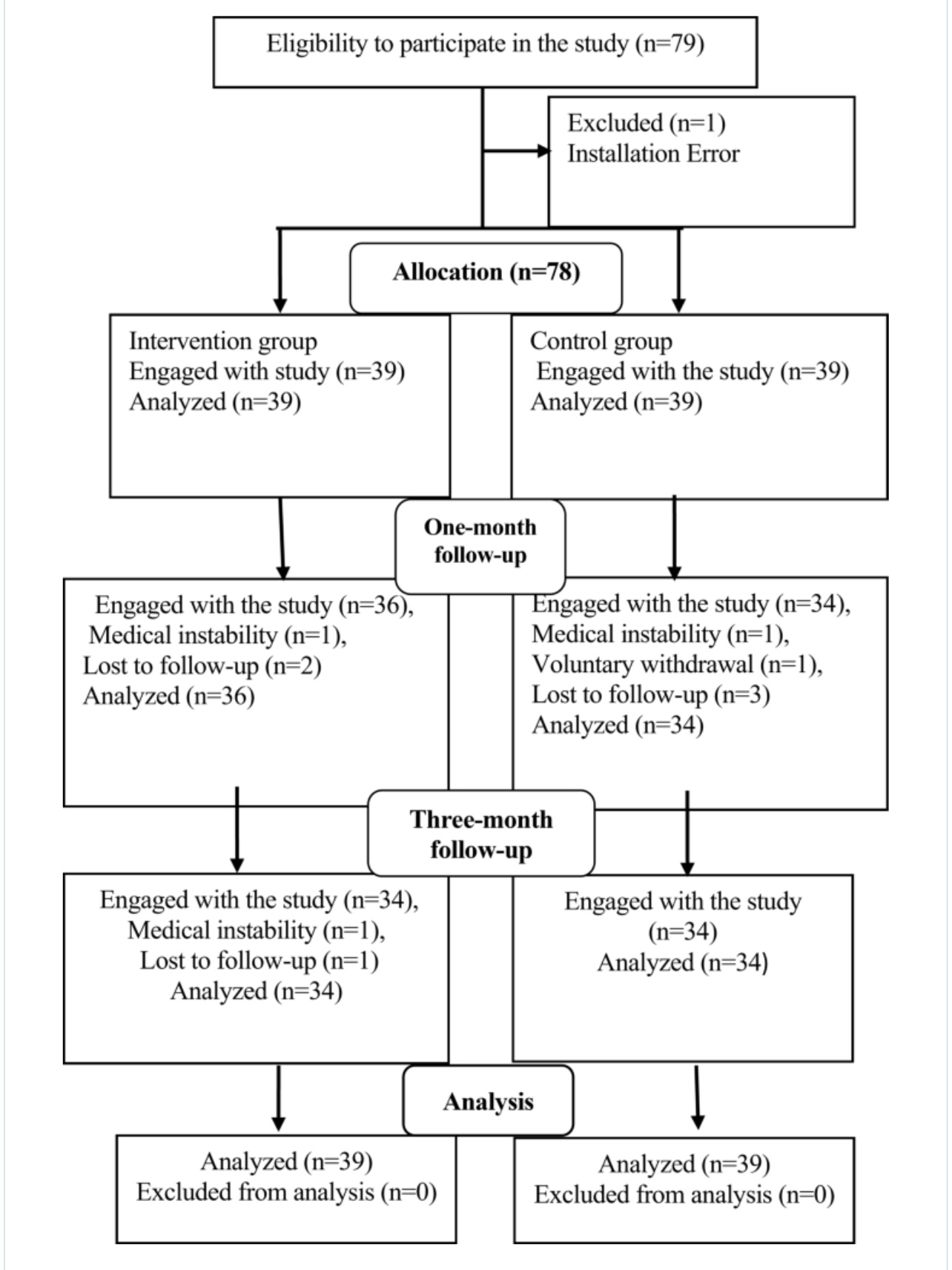
A non-blinded, two-arm randomized controlled trial included 78 coronary heart disease patients discharged from a cardiac ICU. Participants were assigned to either an intervention group (avatar app + conventional education) or a control group (conventional education only). The app featured education on symptom recognition, response actions to symptoms, and daily self-care. Data were collected at baseline, 1-month, and 3-month follow-ups using the Self-Care of Coronary Heart Disease Inventory and the Acute Coronary Syndrome (ACS) Response Index. Analyses included chi-square tests, t-tests, and Mann-Whitney U tests.
Results
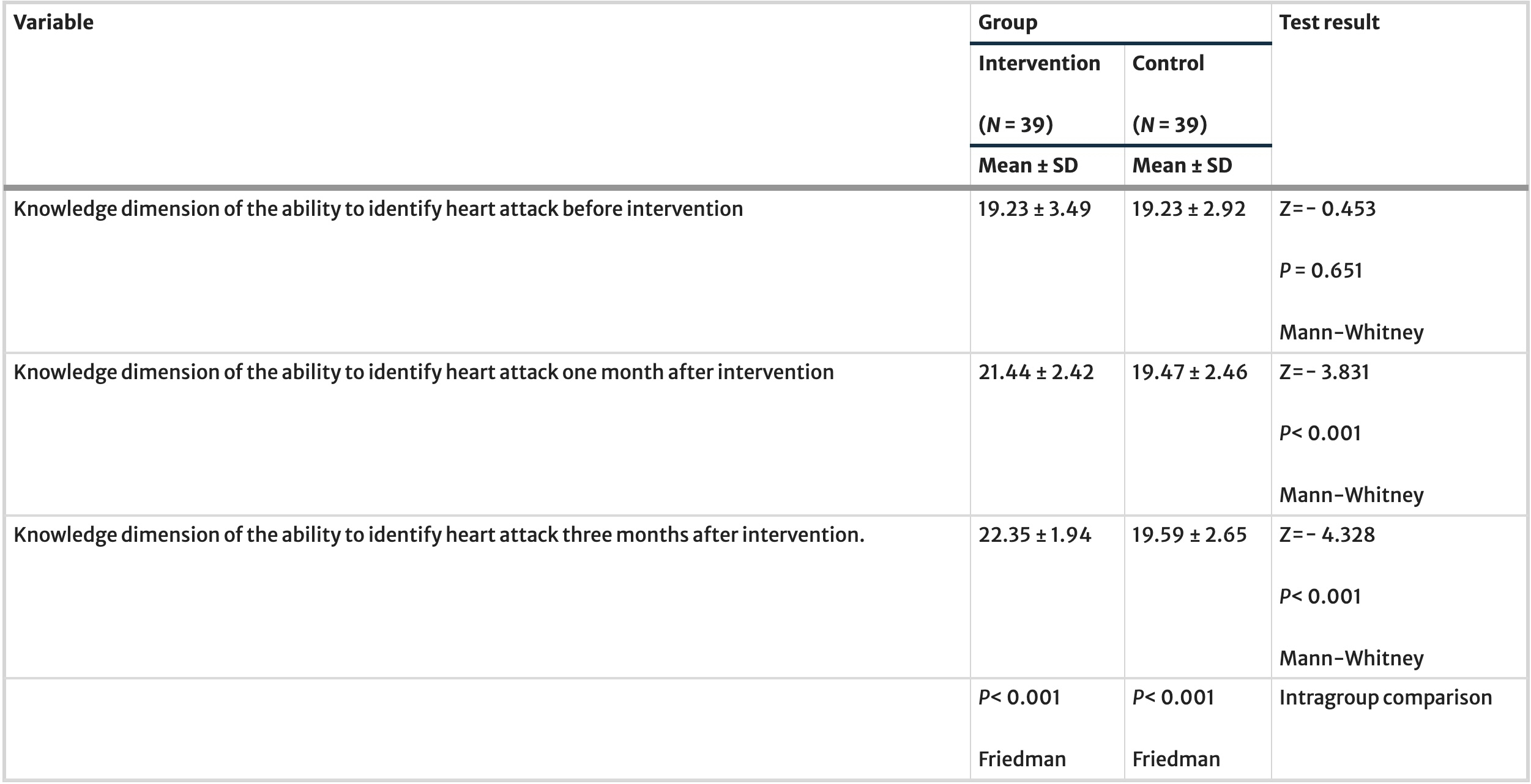
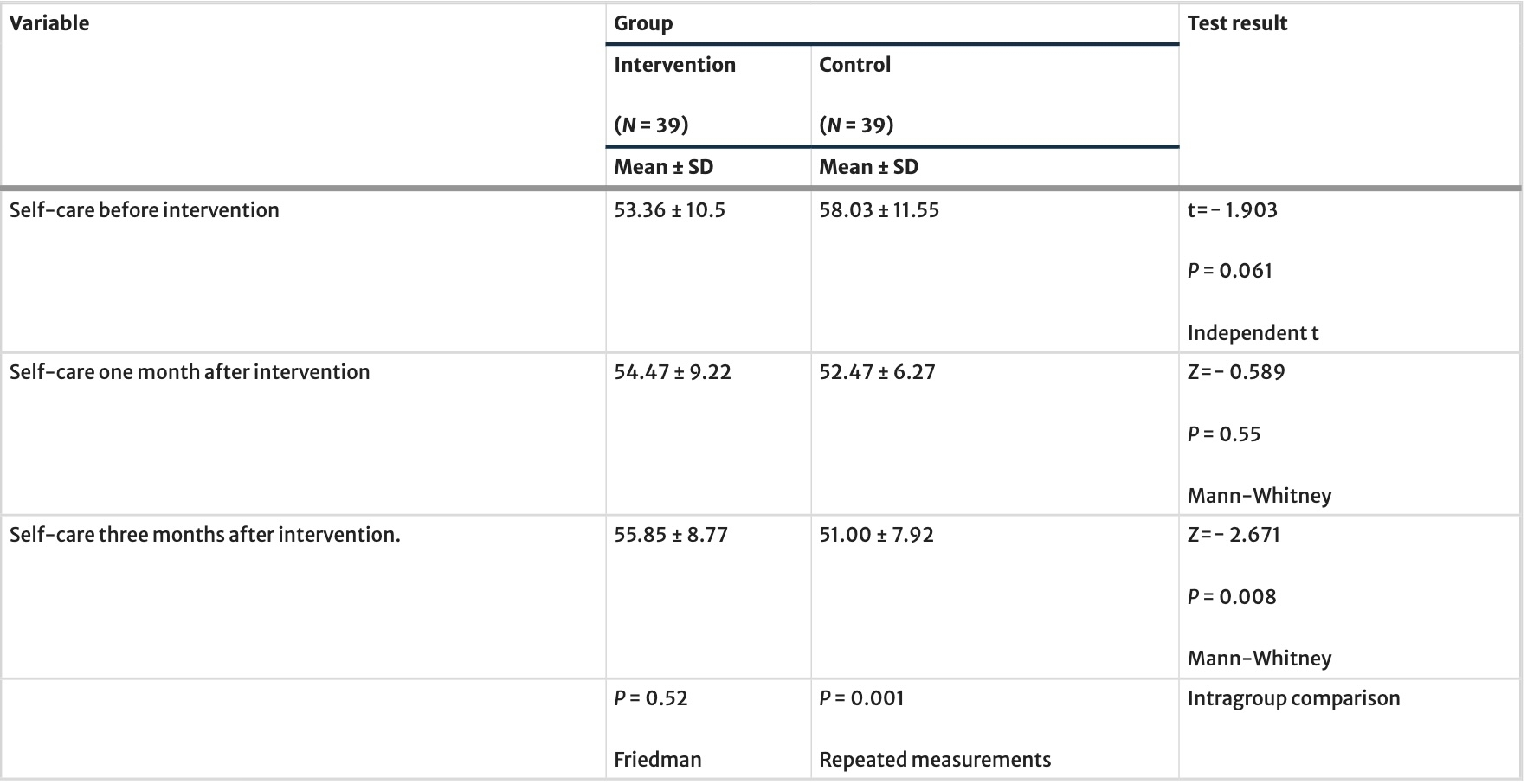
At 3 months, the intervention group showed significantly higher self-care and symptom response scores compared to controls (P < 0.05). All patients in the intervention group (100%) appropriately ceased activity and used sublingual nitroglycerin after the onset of symptoms, versus 80% in the control group.
Conclusions
The interactive avatar application effectively improved coronary heart disease patients’ knowledge, self-care behaviors, and symptom response. This digital tool may serve as a scalable, engaging complement to traditional cardiac education. Future studies should assess its long-term impact and potential for integration into routine care to enhance outcomes and reduce delays in treatment.
  • Babaieasl, Faezeh  ( Texas A M University-Corpus Christi , Corpus Christi , Texas , United States )
  • Keivanlou, Nahid  ( Mashhad University of Medical Sciences , Mashhad , Khorasan , Iran (the Islamic Republic of) )
  • Davoudi, Nayyereh  ( Mashhad University of Medical Sciences , Mashhad , Khorasan , Iran (the Islamic Republic of) )
  • Baghyari, Saeedeh  ( Rajaee , Iran , Iran (the Islamic Republic of) )
  • Author Disclosures:
    Faezeh Babaieasl: DO NOT have relevant financial relationships | Nahid keivanlou: No Answer | Nayyereh Davoudi: No Answer | Saeedeh Baghyari: No Answer
Meeting Info:

Scientific Sessions 2025

2025

New Orleans, Louisiana

Session Info:

Advancing Cardiovascular Health Through Engagement, Behavior, and Patient-Centered Interventions

Saturday, 11/08/2025 , 12:15PM - 01:25PM

Moderated Digital Poster Session

More abstracts on this topic:
Effects of a Nurse-led Common-sense Model of Self-regulation-Based Heart Failure Self-care Program on Patient Outcomes: A Randomized Controlled Trial

Huang Zehao, Chair Sek Ying

Ambulatory QT Interval Prolongation and Reduced T-Amplitude Help Identify Veterans with Heart Disease

Shah Amit, Colon-motas Kay, De Leon Katalina, Murtala Abdulkareem, Osei Jeffery, Mourad Rama, Chang Sarah, Ko Yi-an, Zeng Zhaohua, Sheikh Shafa-at, Xu Ying, Koscova Zuzana, Kim Kain, Akoto Natalie, Santana Eric, Alexander Abigail, Suvada Kara, Roberts Tatum, Stefanos Lewam, Vaccarino Viola, Clifford Gari, Li Qiao, Sameni Reza, Bahrami Rad Ali, Karimi Sajjad, Lampert Rachel, Mathew Lejy, Alagar Nikila

You have to be authorized to contact abstract author. Please, Login
Not Available