Systemic inflammation after STEMI – impact on infarct size and outcome –
Abstract Body (Do not enter title and authors here): Background: Systemic inflammation due to acute myocardial infarction (MI) leads to leukocyte accumulation inside cardiac tissue. Three days after MI the reparative phase is initiated, where cardiac macrophages adopt anti-inflammatory phenotypes and support scar formation and cardiac healing. Delayed resolution of inflammation leads to adverse cardiac remodeling after MI.
Objective: To correlate persistent inflammation and delayed resolution of inflammation with infarct size and mortality in patients with ST-elevation myocardial infarction (STEMI).
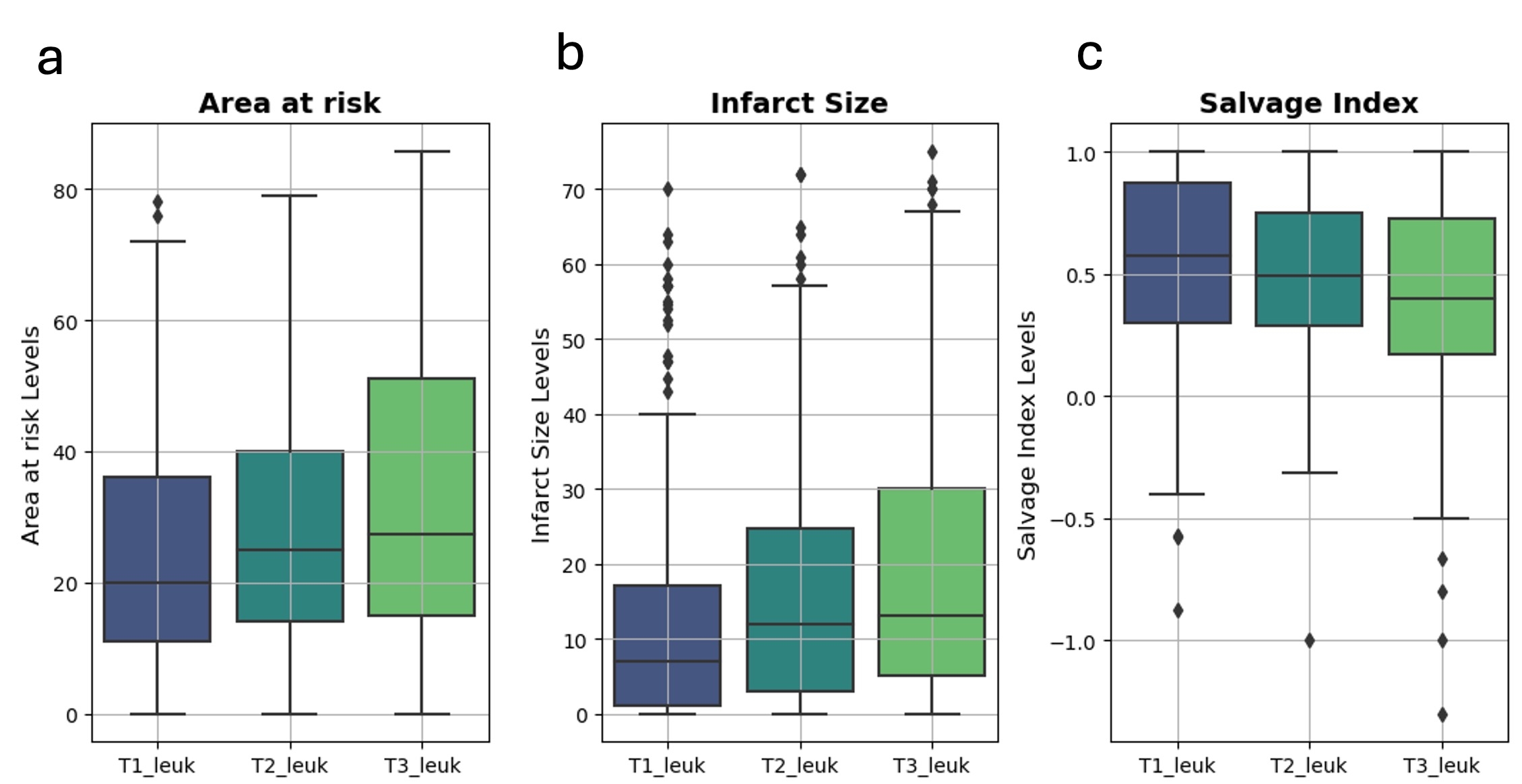
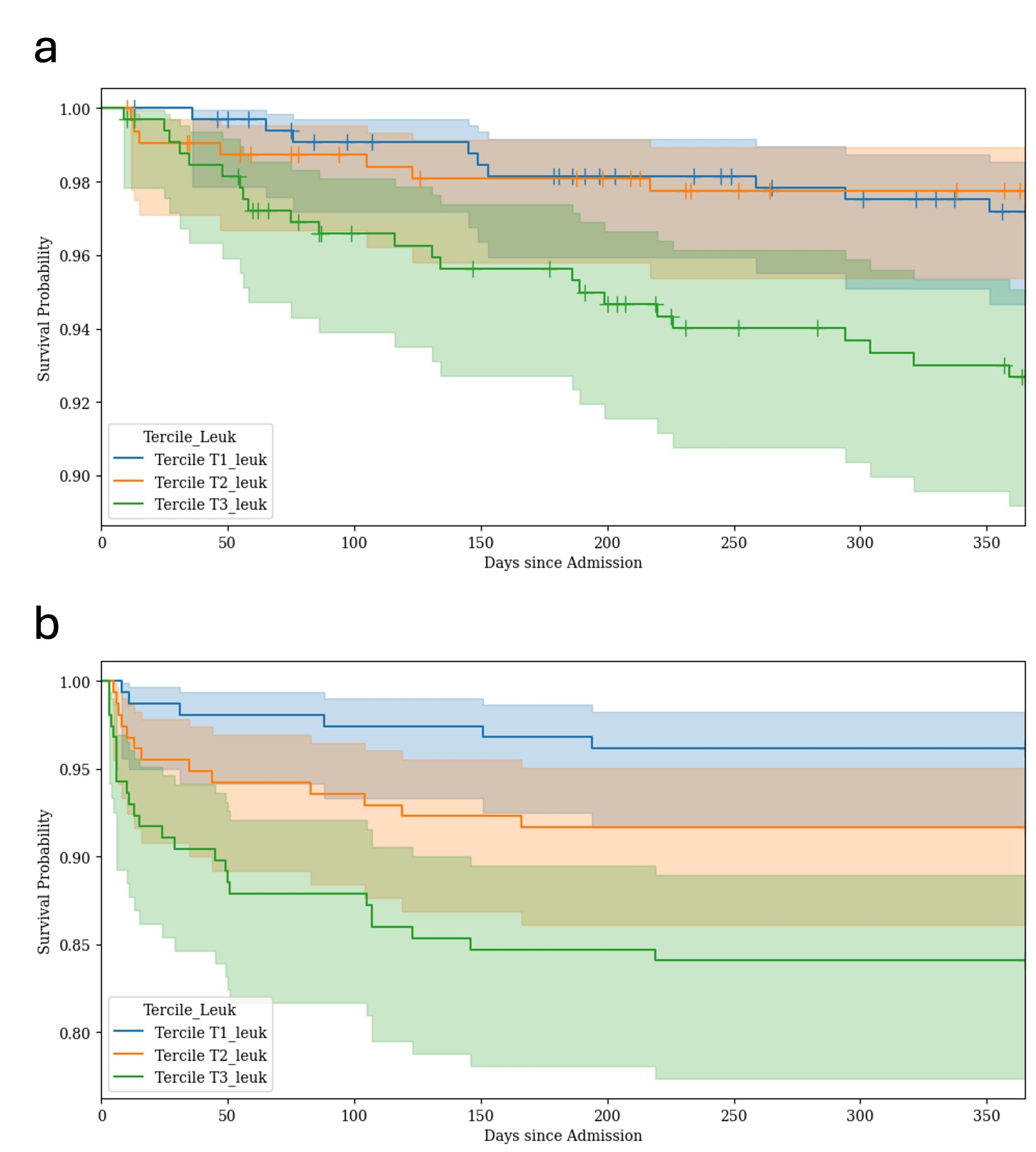
Methods and Results: This retrospective study, included data of STEMI patients treated with primary percutaneous coronary intervention (PPCI) from a historical (n=1155, 2002-2007) and contemporary (n=698, 2014-2022) cohort. Patients were grouped in tertiles according to leukocyte counts on day 3 after MI, as a surrogate parameter for delayed resolution of inflammation. In the historical cohort Serial single-photon emission computerized tomography imaging was available on admission and 7 to 14 days. Patients with elevated leukocyte counts after 72 h (T3 group) showed greatest area at risk (AAR) before PPCI (T1, AAR (median): 20.0% (IQR 11.0–36.0%); T2, AAR (median): 25.0% (IQR 14.0–40.0%), T3, AAR (median): 27.4% (IQR, 15.0–51.0%) and final infarct size (FIS) after 7 to 14 days after MI (T1, FIS (median): 7.0% (IQR 1.0–17.0%); T2, FIS (median): 12.0% (IQR 3.0–24.7%); T3, FIS (median): 13.0% (IQR 5.0–30.0%)) of the left ventricle. In line with these scintigraphic findings, peak creatine kinase myocardial band (CK-MB) values, as an enzymatic estimate of the infarct size, were also highest in T3. Additionally left ventricular ejection fraction (LV-EF) was lowest in the T3. At one year, 8 patients in T1, 7 patients in T2, and 22 patients in T3 had died (Kaplan–Meier estimates of 1-year mortality: 2.6%, 2.3%, and 7.3%, respectively (log-rank test: T1 vs. T3: p=0.01; T2 vs. T3: p=0.03). In the contemporarycohort we also found that patients with elevated leukocyte counts after 72 h (T3 group) showed greatest enzymatic infarct size, estimated by peak CK-MB values and reduced LV-EF. At one year, 6 patients in T1, 13 patients in T2 and 25 patients in T3 had died (Kaplan–Meier estimates of 1-year mortality: 3.8%, 8.3%, and 15.9%, respectively (log-rank test: T1 vs. T3: p<0.005, T2 vs. T3: p=0.004).
Conclusion: Delayed resolution of inflammation following MI, is associated with poorer outcomes at one year in STEMI patients.
Graesser, Christian
(
German Heart Centre Munich
, Munich , Germany )
Krefting, Johannes
(
German Heart Centre Munich
, Munich , Germany )
Voll, Felix
(
German Heart Centre Munich
, Munich , Germany )
Trenkwalder, Teresa
(
German Heart Centre Munich
, Munich , Germany )