Impact of SLGT2-I on Clinical Outcomes in Heart Transplant Recipients with Type 2 Diabetes Mellitus
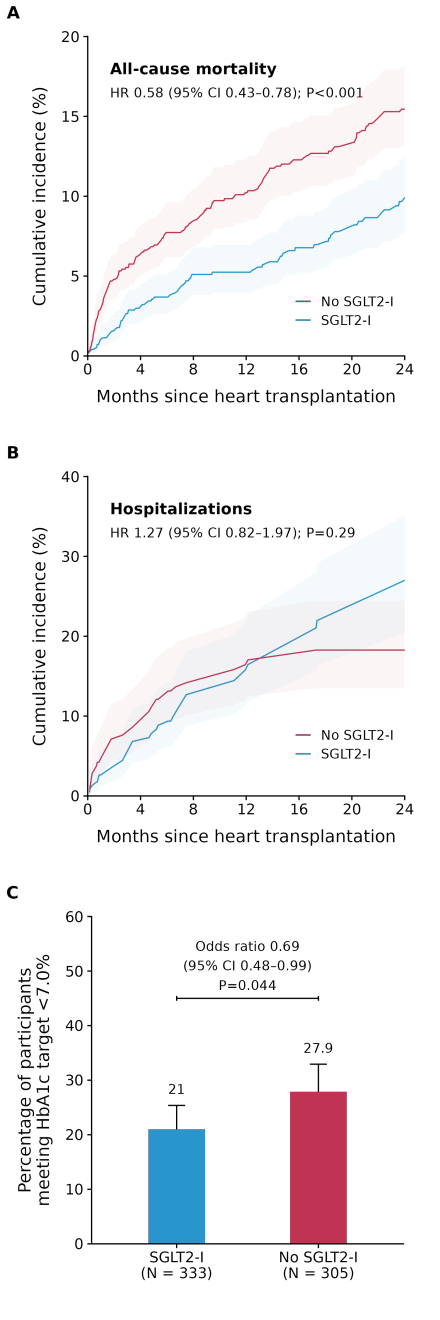
Abstract Body (Do not enter title and authors here): Background: Type 2 diabetes mellitus (T2DM) is common among heart transplant recipients and is associated with increased morbidity and mortality. Whether there is a need for a specific approach to managing T2DM post-heart transplantation remains unclear, and there is a paucity of data regarding the use of sodium-glucose cotransporter type-2 inhibitors (SLGT2-I) in this patient population. Hypothesis: SGLT2-I use impacts mortality and hospitalization in T2DM patients and hospitalization while providing effective glycemic control. Aim: To evaluate the impact of SGLT2-I use on mortality, hospitalization, and the achievement of glycated hemoglobin ≤ 7.0% among heart transplant recipients with T2DM. Methods: We conducted a retrospective cohort study using de-identified, aggregated data from 120 centers via the TriNetX research network. We identified patients ≥ 18 years of age with T2DM who had undergone heart transplantation from April 1, 2013, to January 1, 2024, using Current Procedural Terminology codes. Patients were stratified based on baseline SGLT2-I use and underwent propensity-score matching. Patients with end-stage kidney disease were excluded. The outcomes were collected within a 2-year time window and included: all-cause mortality, all-cause hospitalizations, and achievement of HbA1c ≤ 7.0%. Results: Propensity-score matching resulted in 1,015 patients in each cohort, with a mean age of 57. The mean follow-up was 463 ± 257 and 561 ± 245 days in the SGLT2-I and control cohorts, respectively. SGLT2-I use in heart transplant recipients with T2DM was associated with a significantly lower risk of 2-year all-cause mortality (HR 0.58: 95% CI 0.43-0.78; p<0.001) and higher odds of meeting HbA1c ≤ 7.0% (aOR 0.69; 95% CI 0.48-0.99; p=0.04). However, the rates of all-cause hospitalizations did not differ between groups (HR 1.27; 95% CI 0.82-1.97; p=0.29). Conclusions: In this propensity score-matched cohort study comprising 2,030 patients with T2DM and a history of heart transplant, the use of SGLT2-Is was associated with better glycemic control and a significantly lower risk of all-cause mortality over a two-year follow-up period, with no significant difference in all-cause hospitalization.
Costa, Thomaz
( University of Colorado School of Medicine
, Fortaleza
, Ceara
, Brazil
)
Tramujas, Lucas
( Hcor Research Institute
, São Paulo
, Brazil
)
Nogueira, Alleh
( Hcor Research Institute
, São Paulo
, Brazil
)
Felix, Nicole
( Hcor Research Institute
, Cajazeiras
, Brazil
)
Lima, Neiberg
( Hartford Hospital
, Hartford
, Connecticut
, United States
)
Author Disclosures:
Thomaz Costa:DO NOT have relevant financial relationships
| Lucas Tramujas:DO NOT have relevant financial relationships
| Alleh Nogueira:No Answer
| Nicole Felix:DO NOT have relevant financial relationships
| Neiberg Lima:No Answer