
Scientific Sessions 2024
/
Interventional Insights
/
Mechanical Circulatory Support in Cardiogenic Shock Secondary to Acute Myocardial Infarction: A Systematic Review and Network Meta-analysis of Randomized Controlled Trials
American Heart Association
127
0
Final ID: Su4095
Mechanical Circulatory Support in Cardiogenic Shock Secondary to Acute Myocardial Infarction: A Systematic Review and Network Meta-analysis of Randomized Controlled Trials
Abstract Body (Do not enter title and authors here): Background Cardiogenic shock is a leading cause of mortality in acute myocardial infarction. The efficacy of mechanical circulatory support devices in reducing mortality is uncertain.
Research Question Which mechanical circulatory support device is associated with lower mortality and better safety outcomes in patients with cardiogenic shock?
Goals/Aims To compare different mechanical circulatory support devices in patients with cardiogenic shock.
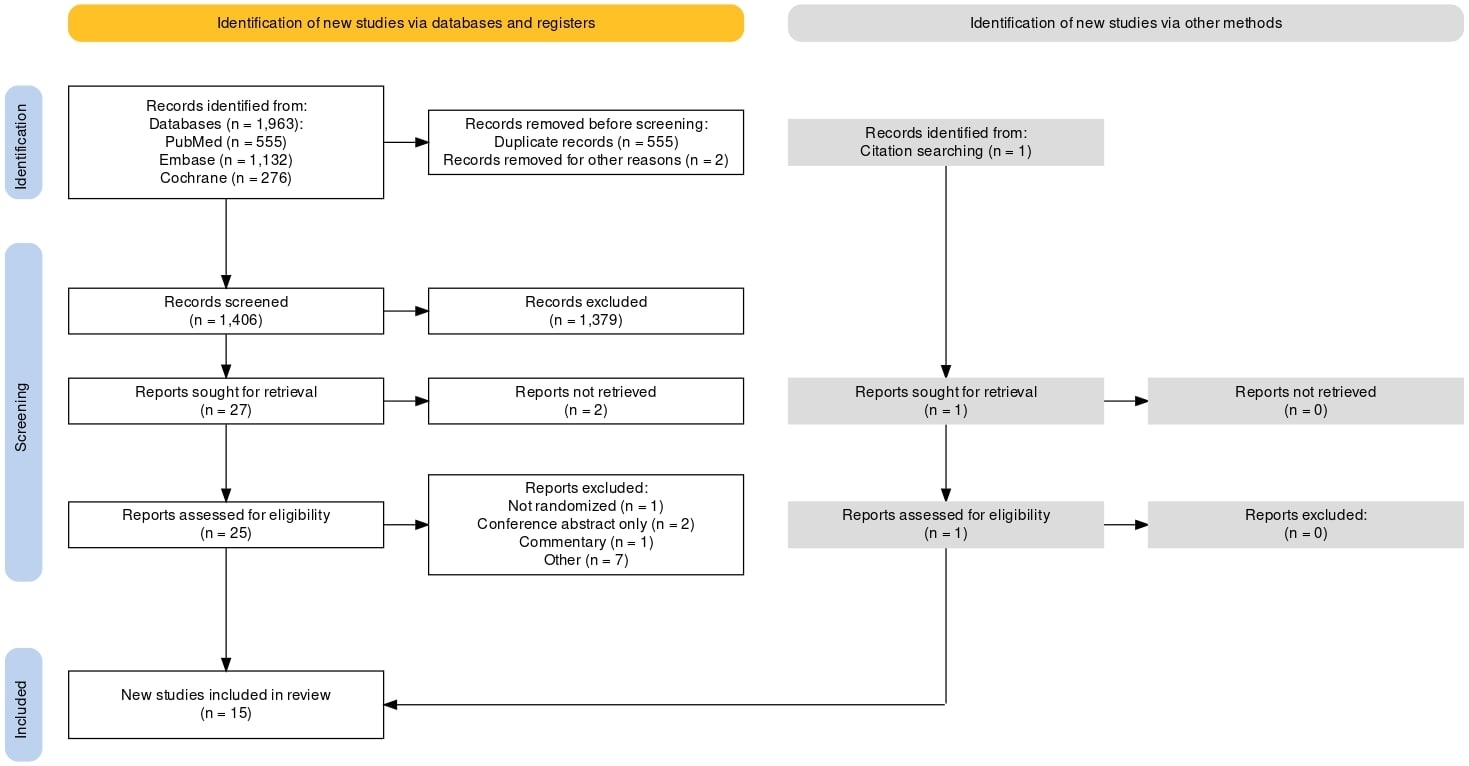
Methods We conducted a systematic search of PubMed, Embase, and Cochrane Library databases up to April 2024 for randomized controlled trials (RCTs) involving mechanical circulatory support devices (e.g., Impella, ECMO, IABP, percutaneous ventricular assist device) reporting at least 30-day mortality or safety outcomes (bleeding, cerebrovascular events, sepsis). Two reviewers independently extracted data on mortality and safety outcomes. A frequentist network meta-analysis with random-effects models was used, calculating risk ratios (RR) with 95% confidence intervals (CI) and treatment ranking probabilities (P-SCORE).
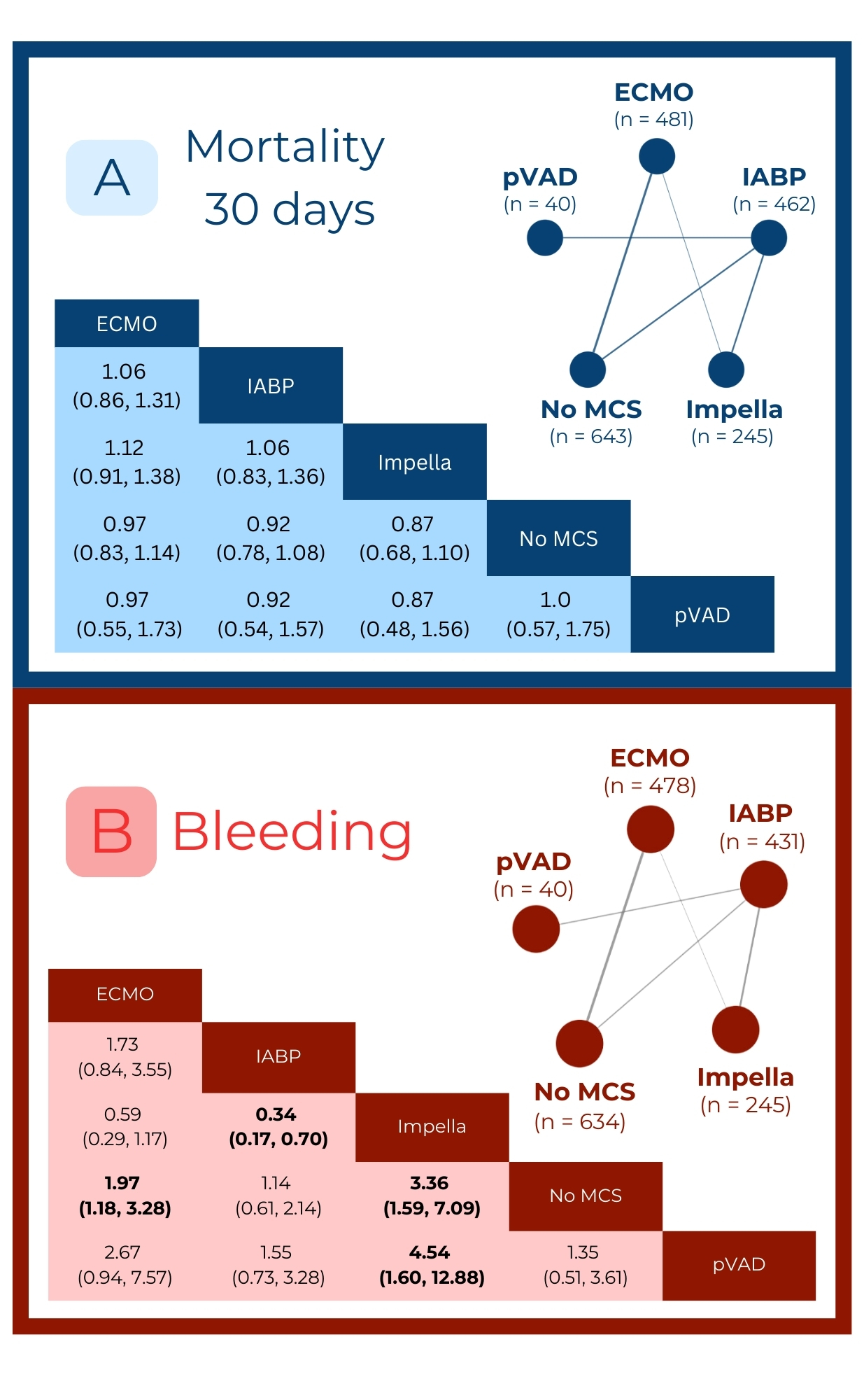
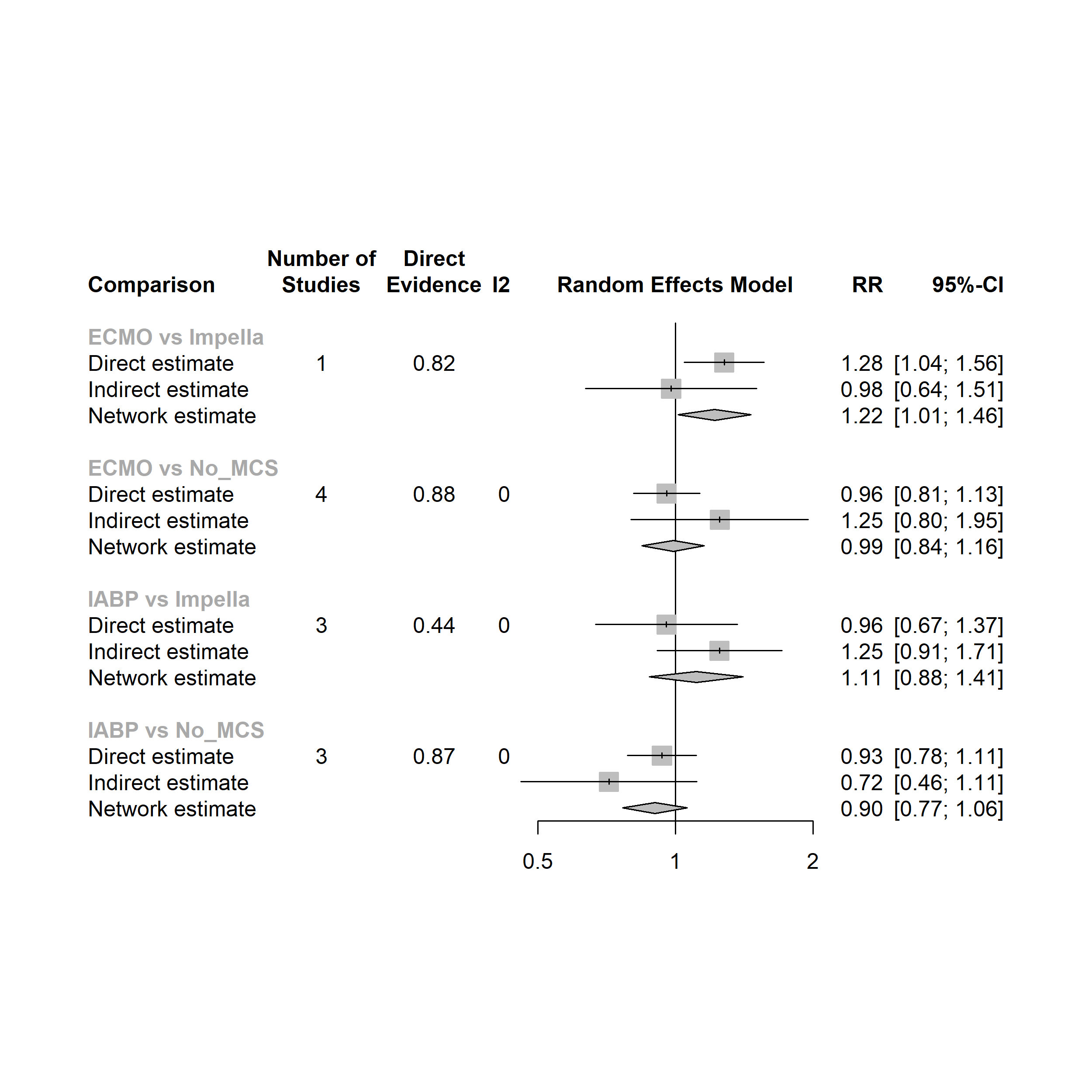
Results Our systematic review and network meta-analysis included 15 RCTs, involving 1,927 patients, comprised of 77.6% of males with a mean age of 63.1 years, from Europe, North America, and Asia. No device reduced 30-day mortality. IABP had a lower risk of bleeding compared with Impella (RR 0.34; 95% CI 0.17-0.7), while ECMO had a higher bleeding risk compared with no support (RR 1.97; 95% CI 1.18-3.28). Regarding long-term mortality (30 + 180 days), ECMO showed a higher risk compared with Impella (RR 1.22; 95% CI 1.01-1.46). IABP led to fewer cerebrovascular events (RR 0.37; 95% CI 0.15-0.93) and sepsis (RR 0.54; 95% CI 0.35-0.83) compared with Impella. No significant differences were found in other comparisons.
Conclusion No mechanical circulatory support device significantly reduced 30-day mortality in patients with cardiogenic shock. IABP was associated with lower risks of bleeding, cerebrovascular events, and sepsis compared with Impella. ECMO showed a higher risk of bleeding compared with no support and higher long-term mortality compared with Impella. Further research should focus on identifying safer strategies and optimal patient profiles for these devices to improve outcomes.
Neves, Henrique Alexsander
( Federal University of Paraná
, Curitiba
, Brazil
)
Lenci Marques, Gustavo
( Federal University of Paraná
, Curitiba
, Brazil
)
Romaniello, Gabriela
( Federal University of Paraná
, Curitiba
, Brazil
)
Collini, Michelle
( Federal University of Paraná
, Curitiba
, Brazil
)
Reginato, Pedro Henrique
( Federal University of Paraná
, Curitiba
, Brazil
)
Makita, Luana
( Federal University of Paraná
, Curitiba
, Brazil
)
Kojima, Giovana Schlichta Adriano
( Federal University of Paraná
, Curitiba
, Brazil
)
Da Rocha, Guilherme
( Federal University of Paraná
, Curitiba
, Brazil
)
Amarilla, Victor Galvani
( Federal University of Paraná
, Curitiba
, Brazil
)
Antunes, Vanio Do Livramento Junior
( UFCSPA
, Porto Alegre
, Brazil
)
Author Disclosures:
Henrique Alexsander Neves:DO NOT have relevant financial relationships
| Gustavo Lenci Marques:No Answer
| Gabriela Romaniello:No Answer
| Michelle Collini:DO NOT have relevant financial relationships
| Pedro Henrique Reginato:No Answer
| Luana Makita:DO NOT have relevant financial relationships
| Giovana Schlichta Adriano Kojima:No Answer
| Guilherme da Rocha:DO NOT have relevant financial relationships
| Victor Galvani Amarilla:No Answer
| Vanio do Livramento Junior Antunes:DO NOT have relevant financial relationships