
Wenckebach conduction from ventricular endocardium to epicardium induced by class Ic INa blockers: implications for mechanical dysfunction and arrhythmias
Abstract Body (Do not enter title and authors here): Background: It is known that the Class Ic antiarrhythmic drugs exhibit strong use-dependent blockade of fast sodium current (INa) due to their slow dissociation kinetics from the sodium channel. Clinically, Class Ic INa blockers are linked to increased mortality in patients with coronary artery disease or ventricular systolic dysfunction. However, the mechanisms by which Class Ic INa blockers influence ventricular conduction and mechanical function, thereby contributing to increased mortality, have not been well studied. We hypothesized that Class Ic INa blockers may transition conduction of normal ventricular myocytes from an "all-or-none" pattern to Wenckebach or decremental conduction, features typically associated with slow response action potentials (APs). This change could markedly alter ventricular electrophysiology and mechanical function.
Methods: APs, with ECG and contractility, were recorded concurrently from ventricular epicardium (Epi) and endocardium (Endo) in the isolated arterially perfused rabbit ventricular wedge in control and in presence of flecainide, a class Ic INa blocker, at 10 microM. The preparations were paced from Endo at basic cycle lengths (BCL) ranging from 300 to 1000 ms.
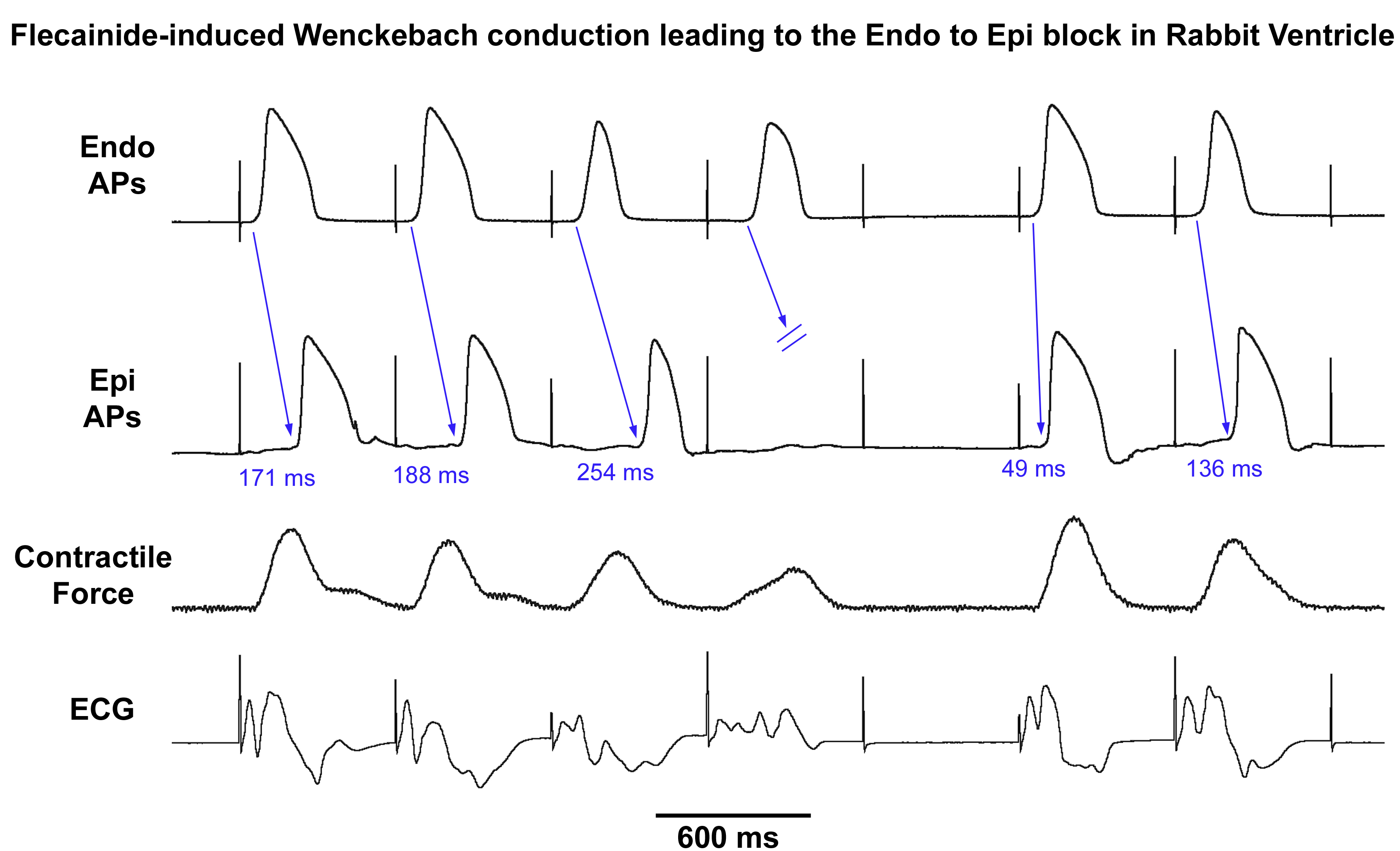
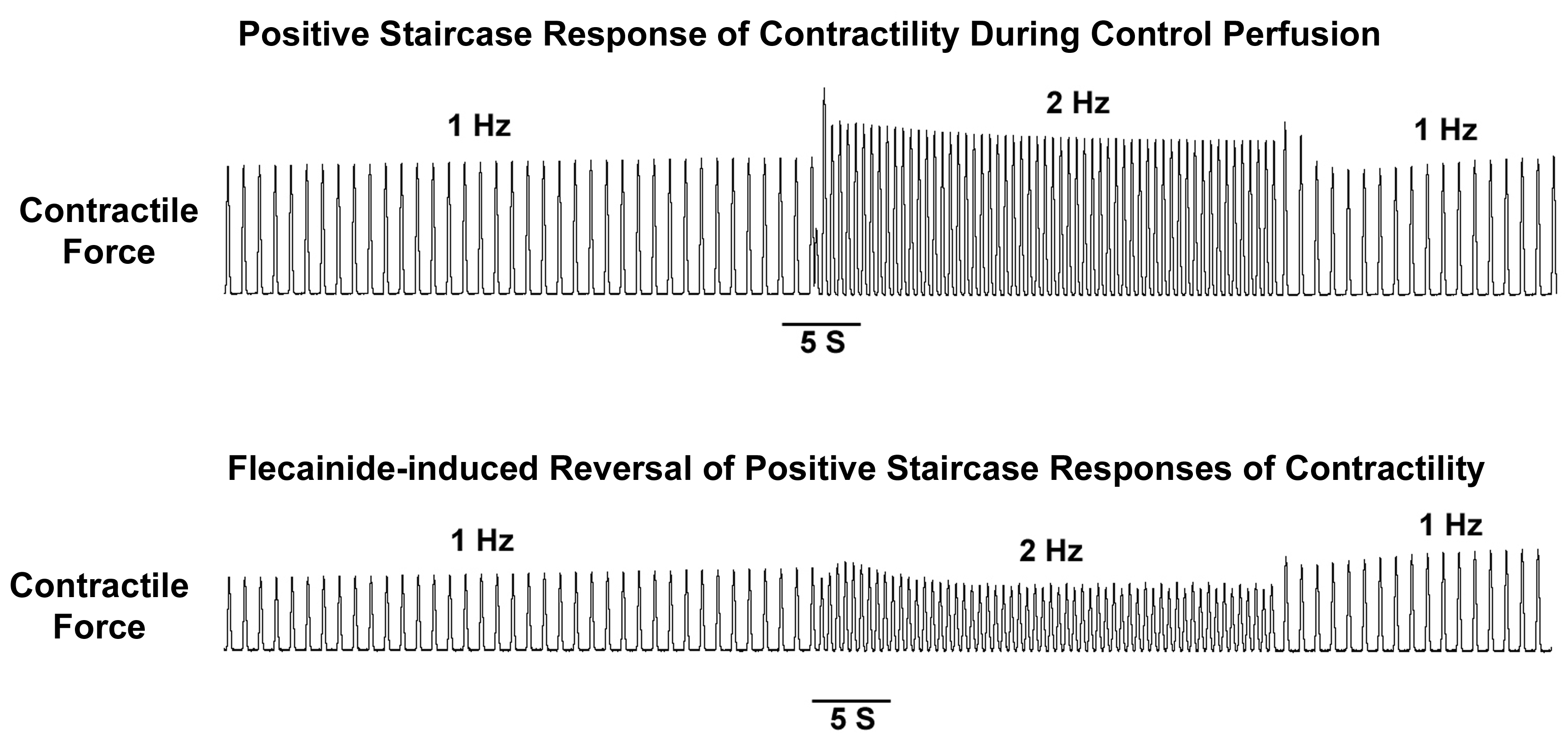
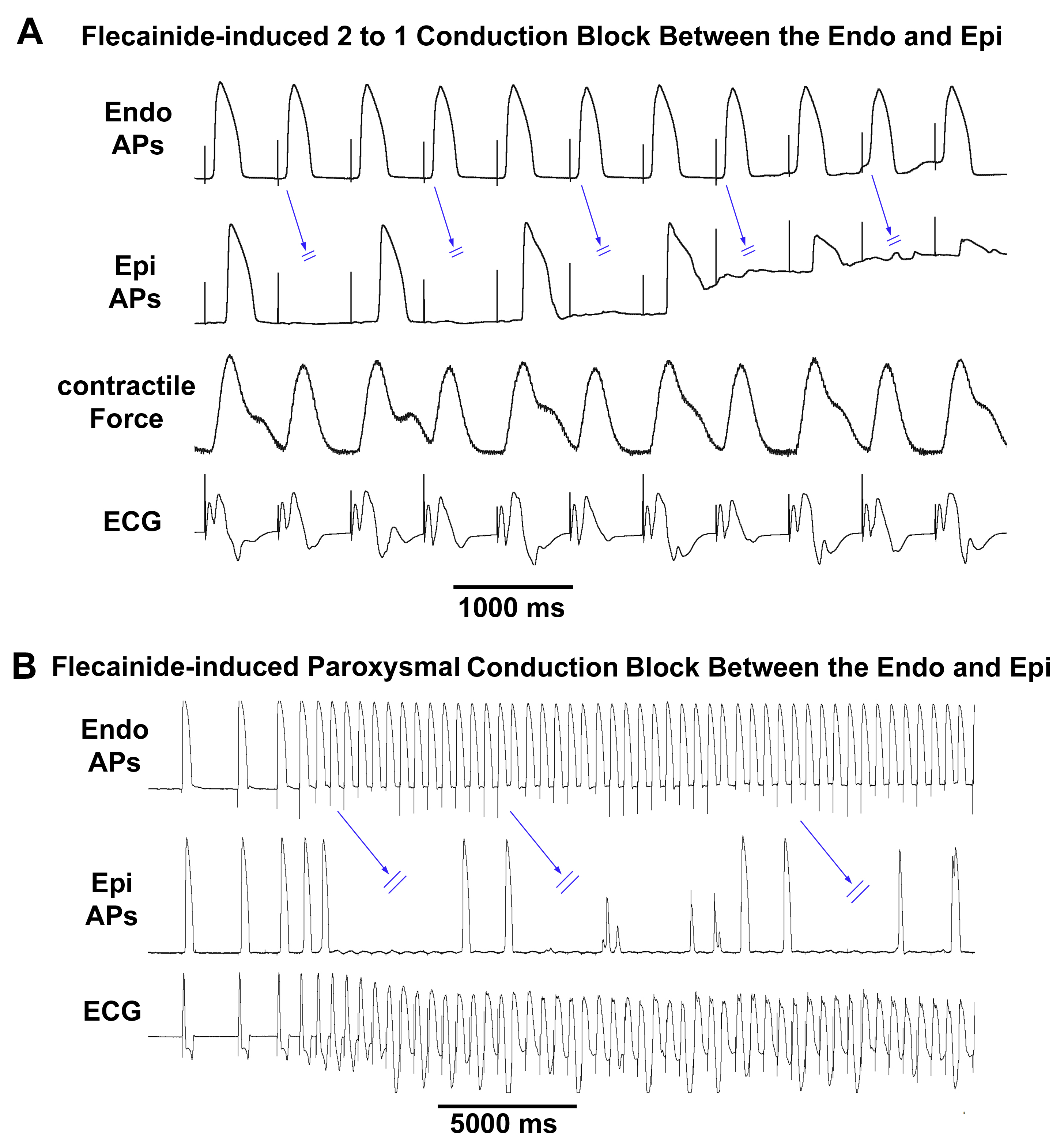
Results: Pacing from a BCL of 1000 ms down to BCLs of 300 to 600 ms resulted in decremental conduction between the ventricular Endo and Epi during pacing rate acceleration or Wenckebach conduction at a constant rapid pacing rate in the presence of flecainide. This unique conduction (Figure 1) was observed in 8 of 8 preparations under flecainide perfusion versus 0 of 8 in the control perfusion (p<0.01). Decremental and Wenckebach conduction was always associated with reduced and dyssynchronous contraction. Additionally, flecainide blunted or even reversed physiologically positive staircase response of contractility (Figure 2). Notably, 2 to 1 conduction and paroxysmal conduction block between the Endo and Epi occurred in 4 of 8 (Figure 3). On the other hand, conduction delay between the ventricular Endo and Epi also promoted echo beats and non-sustained ventricular tachycardia via a reentrant mechanism.
Conclusions: Flecainide due to its strong use-dependent blockage of INa has a capability to transition ventricular fast response APs to slow response APs, leading to Wenckebach or decremental conduction. This conduction not only reduces ventricular contraction but also induces dyssynchrony. Intraventricular conduction block also promotes reentrant arrhythmias.
Gao, Yuan
(
The First Affiliated Hospital of Henan University of Chinese Medicine
, Zhengzhou , China )