
Intensive Risk Factor Modification for Secondary Prevention of Ischemic Stroke – a Feasibility Study
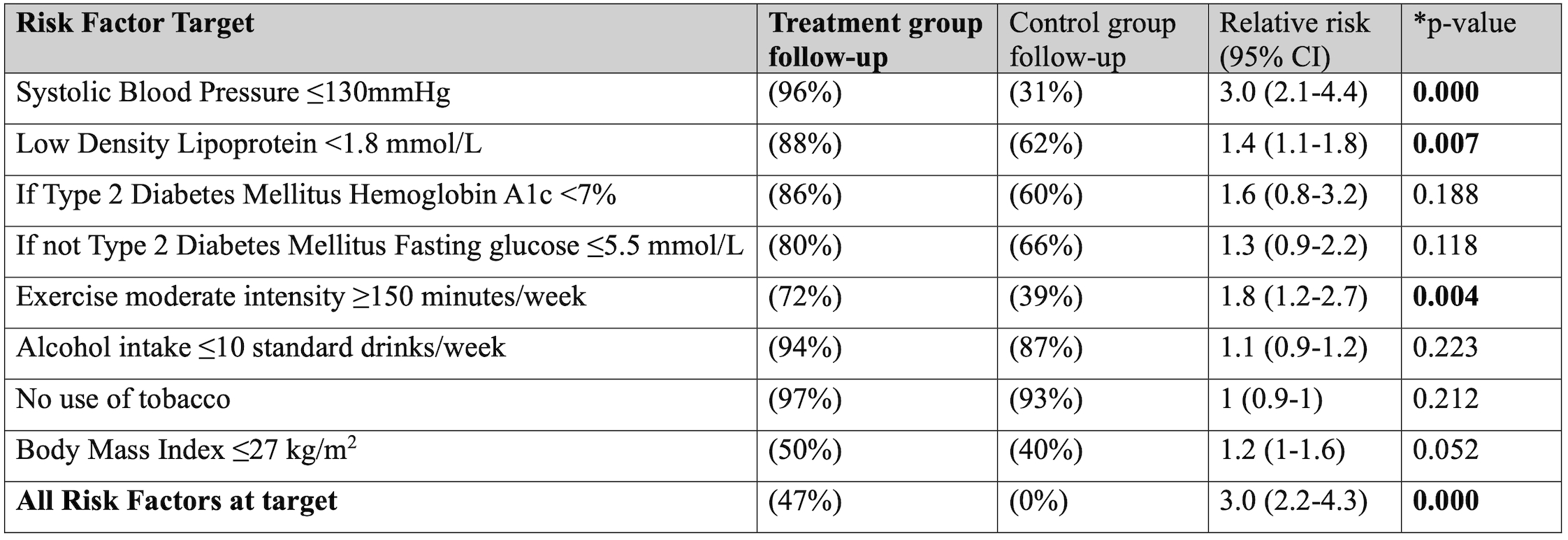
Abstract Body (Do not enter title and authors here): Background Secondary prevention targets for embolic stroke or transient ischemic attack (TIA) are clearly described in guidelines, but many patients do not achieve consistent follow-up or adequate cardiovascular risk factor control. Aim This study evaluated the feasibility of an intensive risk factor modification clinic model following embolic stroke compared to usual care. Methods Eligible participants 18 to 85 years old with embolic stroke were randomly allocated to 3-monthly physician-led multi-disciplinary risk factor clinic (RFC) review or to standard follow-up for up to 3 years. Lifestyle and cardiovascular risk factors were evaluated including hypertension, hyperlipidemia, diabetes or impaired fasting glucose, physical activity, obesity, sleep apnea, alcohol and tobacco use. In the RFC group, structured advice and medication titration were provided to achieve the secondary prevention targets for each risk factor in accordance with stroke guidelines. Results A total of 140 participants were enrolled (39% female, mean age 71±9 years), at 100±70 days post embolic stroke. Mean follow-up was 545±264 days. Risk factor clinic intervention was associated with greater likelihood of control to target for blood pressure, low density lipoprotein cholesterol (LDL-C) and achievement of target exercise volume. Average percentage weight change in participants with a body mass index (BMI) >27kg/m2 was 7.5±5.4% in the treatment group compared with 1.3±4.9% in the control group (p<0.001). Differences in blood sugar control, alcohol intake and tobacco use did not reach statistical significance. Moderate or severe sleep apnea was diagnosed in 37% of those tested, with 50% acceptance of continuous positive airways pressure. Achievement of all risk factors to target including a BMI ≤27kg/m2 (47% versus 0%) was significantly more likely in the risk factor intervention group, compared to the control group. Conclusions The structured risk factor modification in this study was feasible and led to greater risk factor control than standard follow-up. Adopting this approach routinely following embolic stroke has the potential to reduce cardiovascular adverse outcomes and should now be tested in a large, randomized trial.
Fitzgerald, John
(
Centre for Heart Rhythm Disorders, University of Adelaide and Royal Adelaide hospital
, Adelaide , South Australia , Australia )
Shahmohamadi, Elnaz
(
Centre for Heart Rhythm Disorders, University of Adelaide and Royal Adelaide hospital
, Adelaide , South Australia , Australia )
Emami, Mehrdad
(
Centre for Heart Rhythm Disorders, University of Adelaide and Royal Adelaide hospital
, Adelaide , South Australia , Australia )
Middeldorp, Melissa
(
University Medical Center Groningen
, Gronien , Netherlands )
Jayakumar, Mohanaraj
(
Centre for Heart Rhythm Disorders, University of Adelaide and Royal Adelaide hospital
, Adelaide , South Australia , Australia )
Elliott, Adrian
(
Centre for Heart Rhythm Disorders, University of Adelaide and Royal Adelaide hospital
, Adelaide , South Australia , Australia )
Gallagher, Celine
(
Australian Dysautonomia and Arrhythmia Research Collaborative, University of Adelaide
, Adelaide , South Australia , Australia )
Kleinig, Timothy
(
University of Adelaide and Royal Adelaide Hospital
, Adelaide , South Australia , Australia )
Sanders, Prashanthan
(
Centre for Heart Rhythm Disorders, University of Adelaide and Royal Adelaide hospital
, Adelaide , South Australia , Australia )
Author Disclosures:
John Fitzgerald:DO NOT have relevant financial relationships
| Elnaz Shahmohamadi:DO NOT have relevant financial relationships
| Mehrdad Emami:DO NOT have relevant financial relationships
| Melissa Middeldorp:DO NOT have relevant financial relationships
| Mohanaraj Jayakumar:DO NOT have relevant financial relationships
| Adrian Elliott:DO NOT have relevant financial relationships
| Celine Gallagher:DO NOT have relevant financial relationships
| Timothy Kleinig:DO NOT have relevant financial relationships
| Prashanthan Sanders:DO have relevant financial relationships
;
Advisor:Medtronic:Active (exists now)
; Research Funding (PI or named investigator):Medtronic:Active (exists now)
; Research Funding (PI or named investigator):Abbott :Active (exists now)
; Research Funding (PI or named investigator):Boston Scientific:Active (exists now)
; Advisor:Pacemate:Active (exists now)
; Advisor:CathRx:Active (exists now)
; Advisor:Abbott :Active (exists now)
; Advisor:Boston Scientific:Active (exists now)