Impact of multiple cardiovascular events on mortality and bleeding risks in Asian acute coronary syndrome patients: a nationwide population-based cohort study
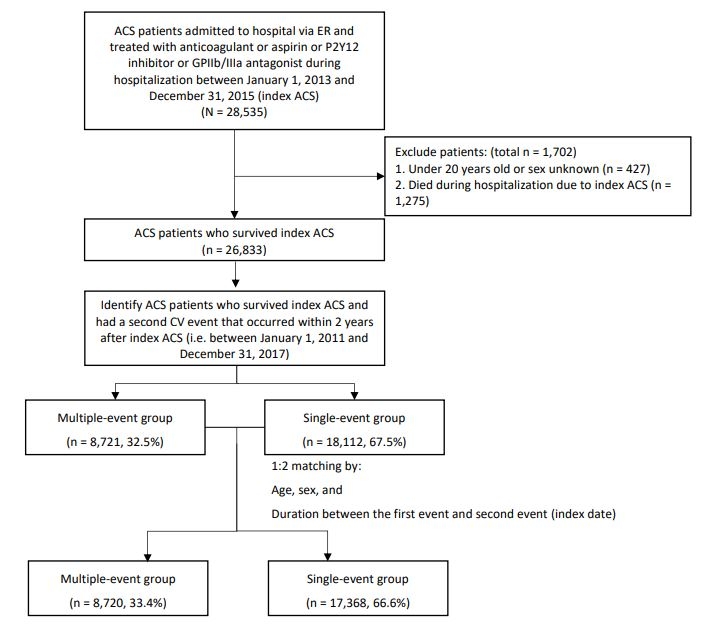
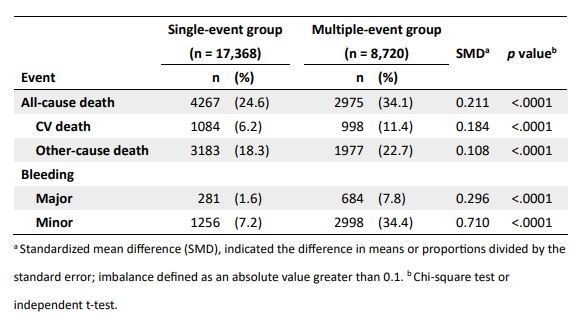
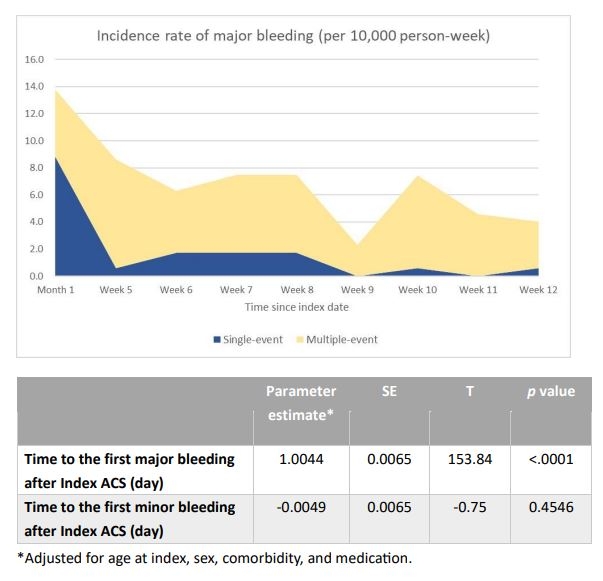
Abstract Body (Do not enter title and authors here): Introduction: Patients with acute coronary syndrome (ACS) face significant risks of recurrent cardiovascular (CV) events and bleeding complications. These bleeding risks are particularly pronounced in Asian populations, who may have a higher predisposition to bleeding complications due to genetic and physiological factors. This study aims to compare the long-term outcomes and characteristics of ACS patients who experienced only a single ACS event with those who had multiple CV events. Methods: Utilizing Taiwan's National Health Insurance Research Database, this retrospective cohort study categorized patients into single-event and multiple-event groups based on the occurrence of major adverse cardiovascular events within two years after index ACS. In this cohort study, 28,535 patients were considered. After 1:2 matching by age, sex, and interval between the first and second CV events, the final cohorts included 8,720 patients in the multiple-event group and 17,368 in the single-event group. Results: The multiple-event group had higher rates of comorbidities, including hypertension, prior coronary artery disease, heart failure, stroke, atrial fibrillation, peripheral vascular disease, and chronic kidney disease. Over a 5-year period, the multiple-event group exhibited higher all-cause mortality (34.1% vs. 24.6%, p < 0.0001) and CV mortality (11.4% vs. 6.2%, p < 0.0001) compared to the single-event group. Non-CV deaths (22.7% vs. 18.3%, p < 0.0001) and major bleeding events (7.8% vs. 1.6%, p < 0.0001) were also more frequent in the multiple-event group, as were minor bleeding events (34.4% vs. 7.2%, p < 0.0001). Additionally, we found that compared to the single-event group, which showed a significant decrease in major bleeding events after one month from the index ACS, the multiple-event group continued to have a higher rate of major bleeding events within three months following the index ACS. A previous major bleeding event in the multiple-event group was linked to earlier subsequent CV events, with each day preceding of the major bleeding advancing the CV event onset by 1.0044 days. Conclusion: ACS patients with multiple CV events have higher rates of all-cause mortality, CV mortality, and major bleeding compared to the single-event group. However, major bleeding events may be associated with subsequent CV events, highlighting the importance of implementing a tailored antiplatelet strategy in Asian populations.
Chen, Chih-wei
( Taipei medical university hospital
, Taipei
, Taiwan
)
Lin, Yi-cheng
( Taipei Medical University Hospital
, Taipei
, Taiwan
)
Chang, Chia-li
( Taipei Medical University
, Taipei
, Taiwan
)
Huang, Chun-yao
( Taipei Medical University Hospital
, Taipei
, Taiwan
)
Shao, Yu-hsuan
( Taipei Medical University
, Taipei
, Taiwan
)
Hsu, Chien-yi
( Taipei Medical University Hospital
, Taipei
, Taiwan
)
Author Disclosures:
Chih-Wei Chen:No Answer
| Yi-cheng Lin:DO NOT have relevant financial relationships
| Chia-Li Chang:DO NOT have relevant financial relationships
| Chun-Yao Huang:No Answer
| Yu-Hsuan Shao:No Answer
| Chien-Yi Hsu:DO NOT have relevant financial relationships
Tran Dieu Hien, Do Chau, Nguyen Thi Kim Chuc, Pham Ngoc Anh Vu, Phan Hoang Son, Phan Tri Cuong, Han Nguyen Le My, Nguyen Thi Huong Dung, Vo Le Y Nhi, Cao Doan Thi Bich Huyen, Tran Thanh Phong, Truyen Thien Tan Tri Tai, Tran Van Duong, Nguyen Ngoc Huyen, Pham Thanh Phong, Nguyen Minh Nghiem, Nguyen Van Khoa, Vo Phuc Dai, Le Hoang Phuc, Dinh Quang Minh Trí, Vu Loc, Kieu Doan Thi