
Logo

American Heart Association

  93
  0


Final ID: MDP797

Chimpanzee Induced Pluripotent Stem Cells (iPSCs)-derived Cardiomyocytes as Surrogates for Human iPSCs in Cardiomyocyte Research and Cross-Species Chimeric Embryo Development

Abstract Body (Do not enter title and authors here): Induced pluripotent stem cells (iPSCs) provide valuable insights into early tissue and organ development, with potential applications in cross-species comparative studies. Nonhuman primate (NHP) iPSCs, particularly those derived from chimpanzees (Pan troglodytes), which share the closest evolutionary relationship with humans, offer a unique opportunity to study cardiomyocyte comparative developmental physiology. Given the limitations of using human cells, chimpanzee iPSCs can serve as an effective surrogate in earliest stages of embryonic development.

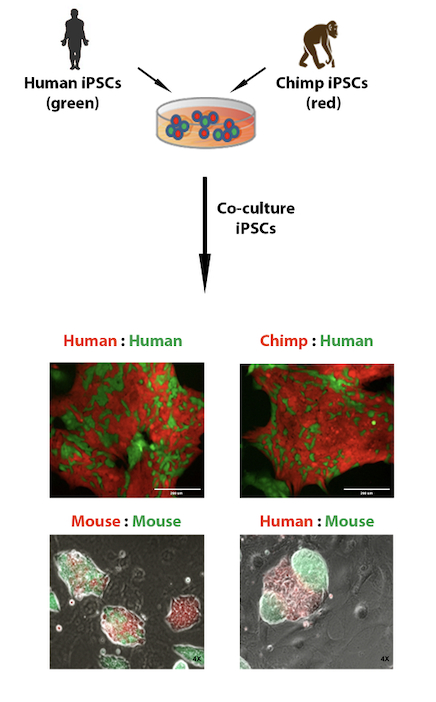
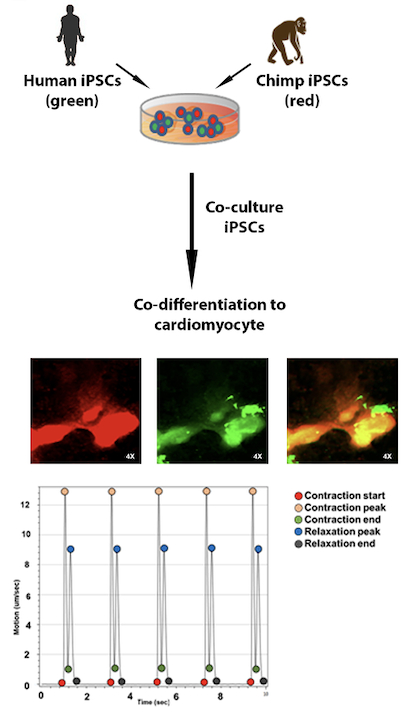
In this study, we derived and maintained chimpanzee iPSCs under novel optimized conditions. We investigated the compatibility of human and chimpanzee iPSCs and their derived cardiomyocytes by co-culturing and differentiating these cells into cardiomyocytes. Our results demonstrate that mixed colonies of human and chimpanzee iPSCs can form homologous intermix colonies and differentiate into synchronized beating cardiomyocyte layers. This high level of compatibility suggests similar differentiation pathways in both species.

Utilizing chimpanzee iPSCs as surrogates for human iPSCs, we assessed their potential in forming primate cross-species chimeric preimplantation embryos. When injected into early rhesus macaque blastocysts, chimpanzee iPSCs were able to survive and proliferate near the inner cell mass. Our study not only introduces a new resource of NHP iPSCs with detailed transcriptome and proteomics characterizations but also highlights the high compatibility of chimpanzee and human iPSC-derived cardiomyocytes, evidenced by the formation of synchronized beating layers during co-culture experiments. These findings hold significant implications for advancing our understanding of cardiomyocyte development and potential therapeutic applications.
  • Roodgar, Morteza  ( Stanford University , Menlo Park , California , United States )
  • Parham, Maryam  ( Rajaei Cardiovascular Medical and Research Institute , Tehran , Tehran , Iran (the Islamic Republic of) )
  • Suchi, Fabian  ( Stanford University , Stanford , California , United States )
  • Bajpai, Vivek  ( University of Oklahoma , Norman , Oklahoma , United States )
  • Nakauchi, Hiromitsu  ( Stanford Unviersity , Stanford , California , United States )
  • Wu, Joseph  ( STANFORD UNIV SCH OF MEDICINE , Stanford , California , United States )
  • Snyder, Michael  ( Stanford University School Medicine , Stanford , California , United States )
  • Author Disclosures:
    Morteza Roodgar: DO NOT have relevant financial relationships | Maryam Parham: No Answer | Fabian Suchi: No Answer | Vivek Bajpai: No Answer | Hiromitsu Nakauchi: No Answer | Joseph Wu: DO NOT have relevant financial relationships | Michael Snyder: No Answer
Meeting Info:

Scientific Sessions 2024

2024

Chicago, Illinois

Session Info:

Cardiac Repair and Regeneration

Sunday, 11/17/2024 , 11:10AM - 12:35PM

Moderated Digital Poster Session

More abstracts on this topic:
ChREBP Drives Brown Adipocyte Differentiation and Lipid Utilization for Excess Energy Expenditure

Inoue Oto, Ginugu Meghana, Singh Archana, Sanchez-gurmaches Juan

Development of a Reproducible Human Cardiac Organoid Model

Kim Yong Sook, Yoo Sooji, Cho Meeyoung, Cho Dong-im, Yoo Jin, Ahn Youngkeun

You have to be authorized to contact abstract author. Please, Login
Not Available