Chronic Kidney Disease Prevalence and Outcomes in Patients with Type 2 Diabetes or Prediabetes at High Cardiovascular Risk: Results from the CINEMA Program
Abstract Body (Do not enter title and authors here): Introduction: Chronic kidney disease (CKD) is a global health concern, particularly among patients with type 2 diabetes mellitus (T2DM) and prediabetes, who are at high risk of cardiovascular disease (CVD). The Center for Integrated and Novel Approaches in Vascular-Metabolic Disease (CINEMA) program at University Hospitals Cleveland Medical Center aims to address these challenges through a multidisciplinary, patient-centered intervention. This study evaluates CKD prevalence, outcomes, and guideline-directed treatments within the CINEMA program.
Methods: Patients with T2DM or prediabetes at high-risk for cardiovascular events, including those with established atherosclerotic CVD, elevated coronary artery calcium score ≥100, chronic heart failure, ischemic stroke, peripheral arterial disease, CKD (defined as eGFR<60mL/min/1.73m2 and/or by the presence of albuminuria, UACR ≥30 mg/g) and obesity with metabolic syndrome were included.
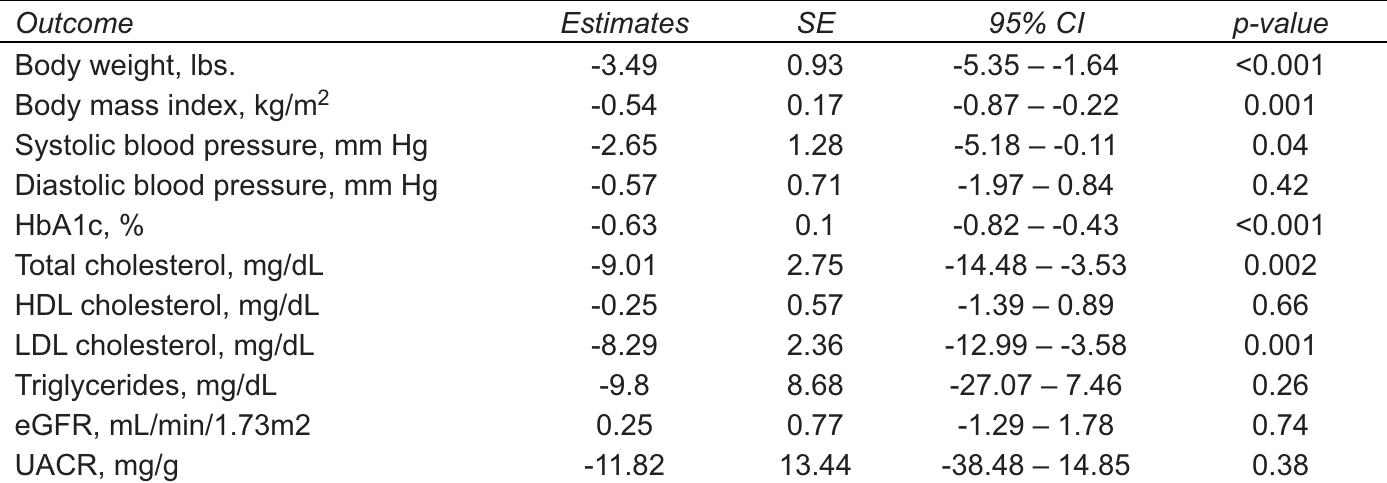
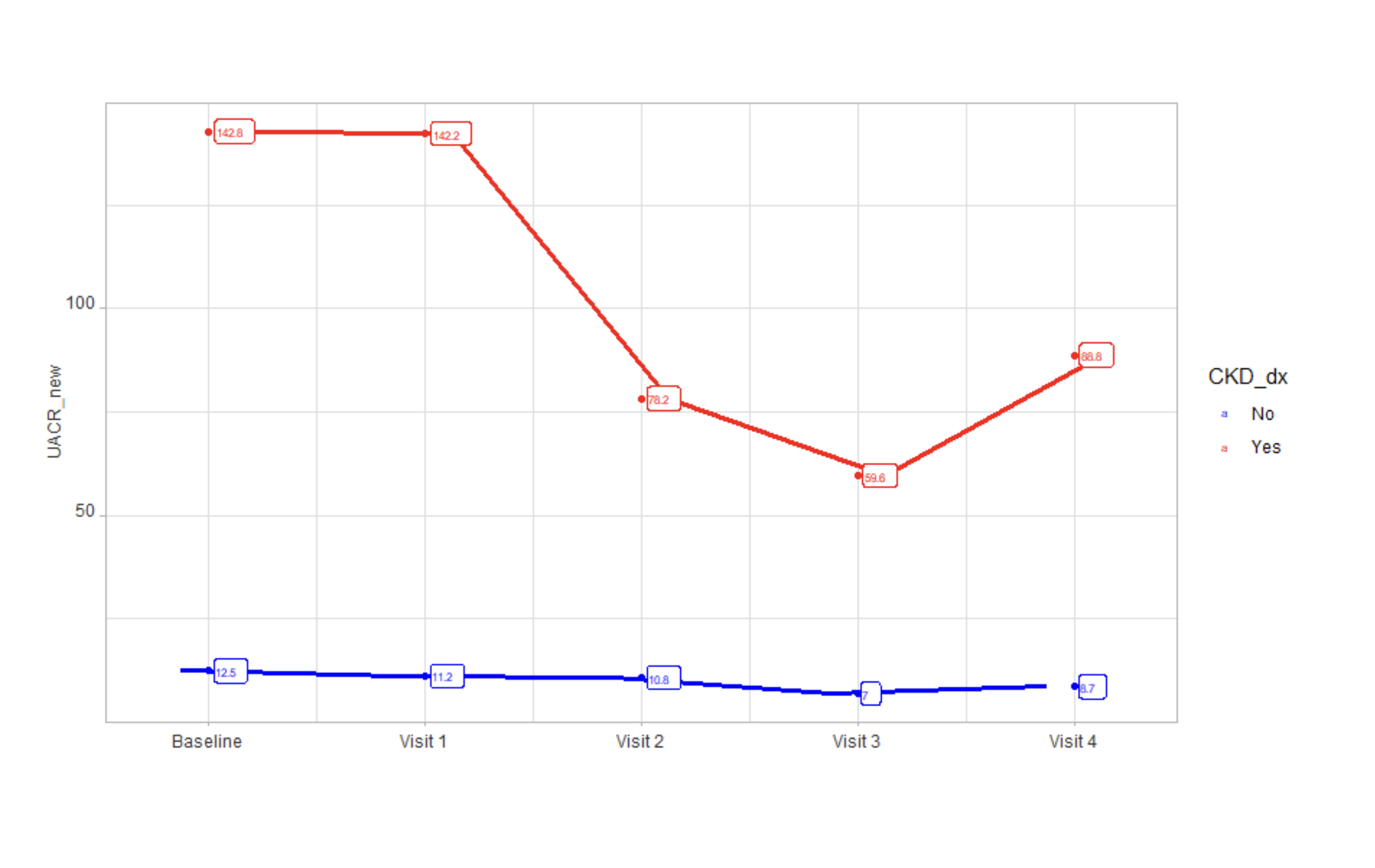
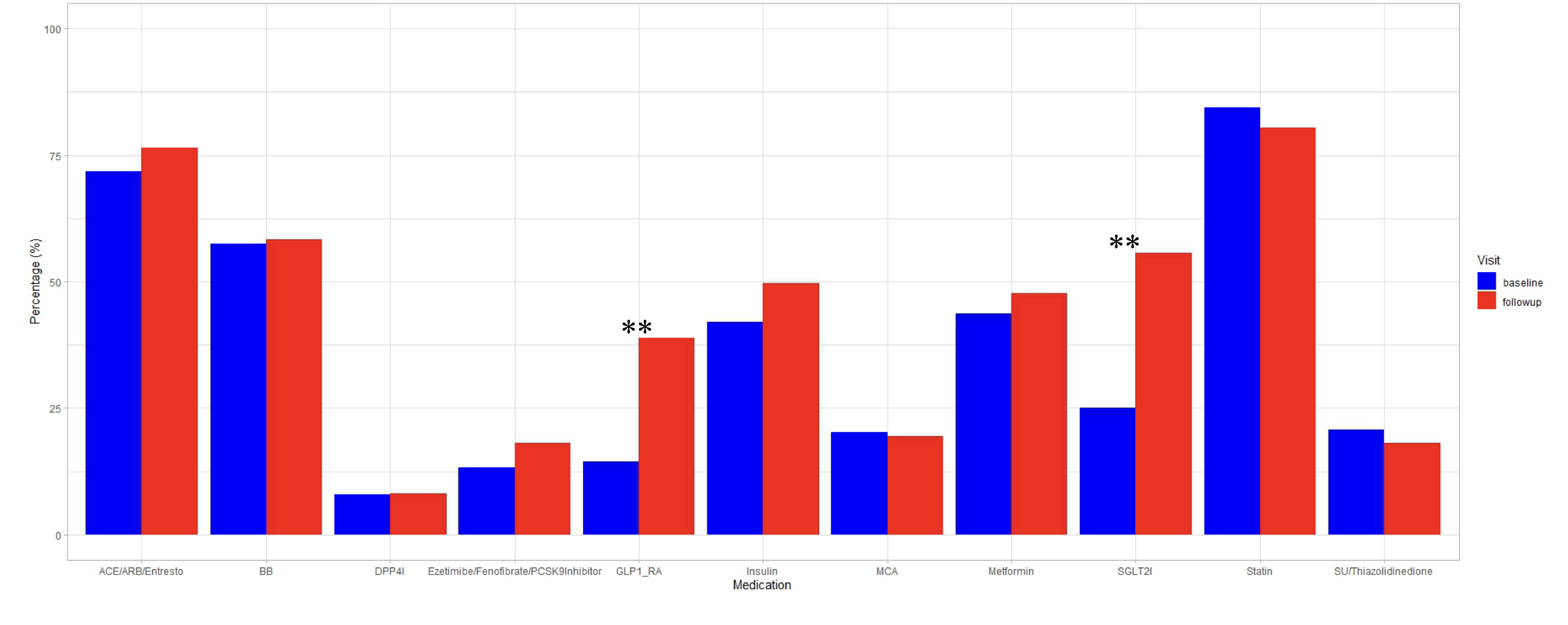
Results: From May 2020 to September 2022, 454 patients were enrolled in the CINEMA program with 45% having a diagnosis of CKD. Among those with CKD, the median age was 64 years, 48% were women, and 47% were Black. 93% had T2DM, 82% had HTN, 52% had established coronary artery disease, and 39% had heart failure. Median eGFR was 49 mL/min/1.73m2 and median UACR was 42 mg/g. Over two-thirds of those with CKD were stage G3 or greater and 50% were stage A2 or greater. Persons with CKD were more likely to be older, Black, have diabetes and heart failure (p<0.05 for all). UACR screening increased ~8-fold with the CINEMA program. The CINEMA intervention was associated with statistically significant improvements in cardiometabolic risk factors with reductions in body weight (-3.49 lbs), BMI (-0.54 kg/m2), systolic blood pressure (-2.65 mmHg), Hb A1c (-0.63%), total cholesterol (-9.01 mg/dL) and LDL cholesterol (-8.29 mg/dL) with p<0.05 for all. No significant changes were seen in eGFR (p=0.58) or UACR (p=0.41). Notably, there was significant increase in prescription rates of SGLT2i (25% to 55%) and GLP-1RA (14% to 38%) in the CKD population from baseline to follow-up visit (p<0.05).
Conclusions: The CINEMA program demonstrates effectiveness in improving ASCVD risk factors and shows promise in addressing CKD outcomes among high-risk patients with T2DM or prediabetes. Enhanced screening for CKD, proper risk stratification, and aggressive implementation of guideline directed medical therapies in patients with CKD can lead to improved outcomes.
Datla, Sanjana
(
University Hospitals Cleveland Medical Center
, Cleveland , Ohio , United States )
Albar, Zainab
(
University Hospitals Cleveland Medical Center
, Cleveland , Ohio , United States )
Eaton, Elke
(
University Hospitals Cleveland
, Cleveland , Ohio , United States )
Porges, Jodie
(
UNIV HOSP CLEVELAND MEDICAL CTR
, Cleveland , Ohio , United States )
Nennstiel, Matthew
(
UNIV HOSP CLEVELAND MEDICAL CTR
, Cleveland , Ohio , United States )
Sullivan, Claire
(
University Hospitals - Case Western
, Cleveland , Ohio , United States )
Greene, Lloyd
(
University Hospitals - Case Western
, Cleveland , Ohio , United States )
Al-kindi, Sadeer
(
UH Cleveland
, Cleveland , Ohio , United States )
Padiyar, Aparna
(
CASE WESTERN RESERVE UNIVERSITY
, Cleveland , Ohio , United States )
Rahman, Mahboob
(
Case Western Reserve University
, Solon , Ohio , United States )
Rajagopalan, Sanjay
(
UNIV HOSP CLEVELAND MEDICAL CTR
, Cleveland , Ohio , United States )
Neeland, Ian
(
University Hospitals - Case Western
, Cleveland , Ohio , United States )
Author Disclosures:
Sanjana Datla:DO NOT have relevant financial relationships
| Mahboob Rahman:DO have relevant financial relationships
;
Research Funding (PI or named investigator):Bayer:Active (exists now)
; Other (please indicate in the box next to the company name):Astra Zeneca - attended advisory board meeting:Past (completed)
; Research Funding (PI or named investigator):Duke Clinical Research Institute:Active (exists now)
| Sanjay Rajagopalan:DO NOT have relevant financial relationships
| Ian Neeland:DO have relevant financial relationships
;
Consultant:Novo Nordisk:Past (completed)
; Advisor:Eli Lilly and Co.:Past (completed)
; Speaker:Bayer Pharmaceuticals:Active (exists now)
; Speaker:Boehringer Ingelheim/Lilly Alliance:Active (exists now)
| Zainab Albar:No Answer
| Elke Eaton:No Answer
| Jodie Porges:No Answer
| Matthew Nennstiel:No Answer
| Claire Sullivan:No Answer
| lloyd greene:No Answer
| Sadeer Al-Kindi:No Answer
| Aparna Padiyar:DO have relevant financial relationships
;
Research Funding (PI or named investigator):Bayer:Active (exists now)