Socioeconomic status, race, and ethnicity in management of pediatric SVT
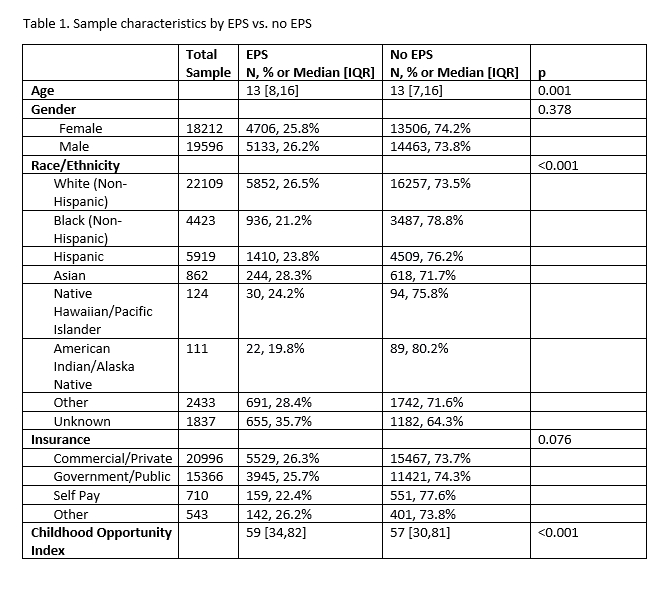
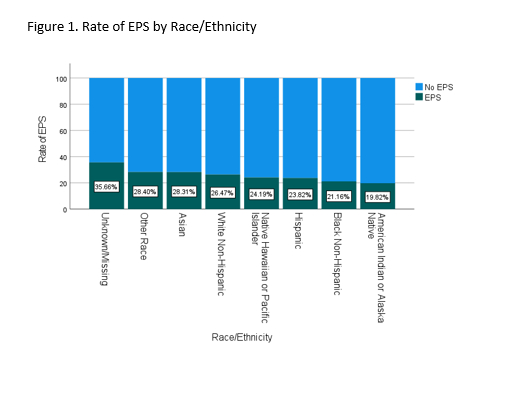
Abstract Body (Do not enter title and authors here): Introduction: Electrophysiology study and ablation (EPS) is often the preferred approach to management of supraventricular tachycardia (SVT) and/or ventricular pre-excitation (WPW) in older children/adolescents. There are inequities in arrhythmia management in adults, and in other areas of pediatric cardiology, but little is known about disparities in management of SVT in children. Research question: Do racial/ethnic and socioeconomic inequities affect referral for EPS in patients with SVT and/or WPW? Methods: This retrospective observational study utilized the Pediatric Health Information System of 49 children’s hospitals’ administrative data from 2016-2022. We included patients with SVT or WPW seen in the emergency department, admitted for observation, or inpatient. We excluded patients with congenital heart disease. The outcome was having a procedure code for EPS. The childhood opportunity index (COI, scale 1-100) based on zip code was used to measure socioeconomic status (SES). Results: Among 37,818 patients with primary diagnosis of SVT (27620, 73%) or WPW (10198, 27%), 9840 (26%) underwent EPS (Table 1). COI was higher in patients who underwent EPS than those who did not (median 59 [IQR 34,82] vs 57 [IQR 30,81]). In addition, time from initial visit with diagnosis of SVT/WPW to EPS was longer in patients with lower COI (beta= -0.026, p=0.007). Black (21.2%), Hispanic (23.8%), and American Indian (19.8%) patients were less likely to undergo EPS than White (26.5%) and Asian (28.31%) patients and those with other (28.4%) or unknown/missing (35.7%) race (p<0.001, Figure 1). In both subgroups of patients with SVT and WPW, EPS differed by race and COI, and higher COI predicted shorter time to EPS. Conclusions: In this hospital database of pediatric patients, we found disparities in use of EPS for the management of SVT and/or WPW. Patients of minoritized race/ethnicity and lower SES were less likely to undergo EPS.
Javalkar, Karina
(
Boston Childrens Hospital
, Somerville , Massachusetts , United States )
Sleeper, Lynn
(
Boston Childrens Hospital
, Somerville , Massachusetts , United States )
Newburger, Jane
(
Boston Childrens Hospital
, Somerville , Massachusetts , United States )
Dionne, Audrey
(
Boston Childrens Hospital
, Somerville , Massachusetts , United States )
Author Disclosures:
Karina Javalkar:DO NOT have relevant financial relationships
| Lynn Sleeper:No Answer
| Jane Newburger:DO have relevant financial relationships
;
Research Funding (PI or named investigator):Pfizer:Active (exists now)
; Royalties/Patent Beneficiary:UpToDate:Active (exists now)
; Other (please indicate in the box next to the company name):Daichii Sankyo (trial Steering Committee):Past (completed)
; Other (please indicate in the box next to the company name):BMS (Chair of DSMB for pediatric mavacamten trial):Active (exists now)
; Other (please indicate in the box next to the company name):Novartis (Chair, Independent EAC):Past (completed)
; Other (please indicate in the box next to the company name):BMS (Chair, Independent EAC):Active (exists now)
; Other (please indicate in the box next to the company name):Pfizer (Chair Independent EAC):Active (exists now)
| Audrey Dionne:DO have relevant financial relationships
;
Research Funding (PI or named investigator):Boston Scientific:Active (exists now)
; Research Funding (PI or named investigator):Pfizer:Active (exists now)